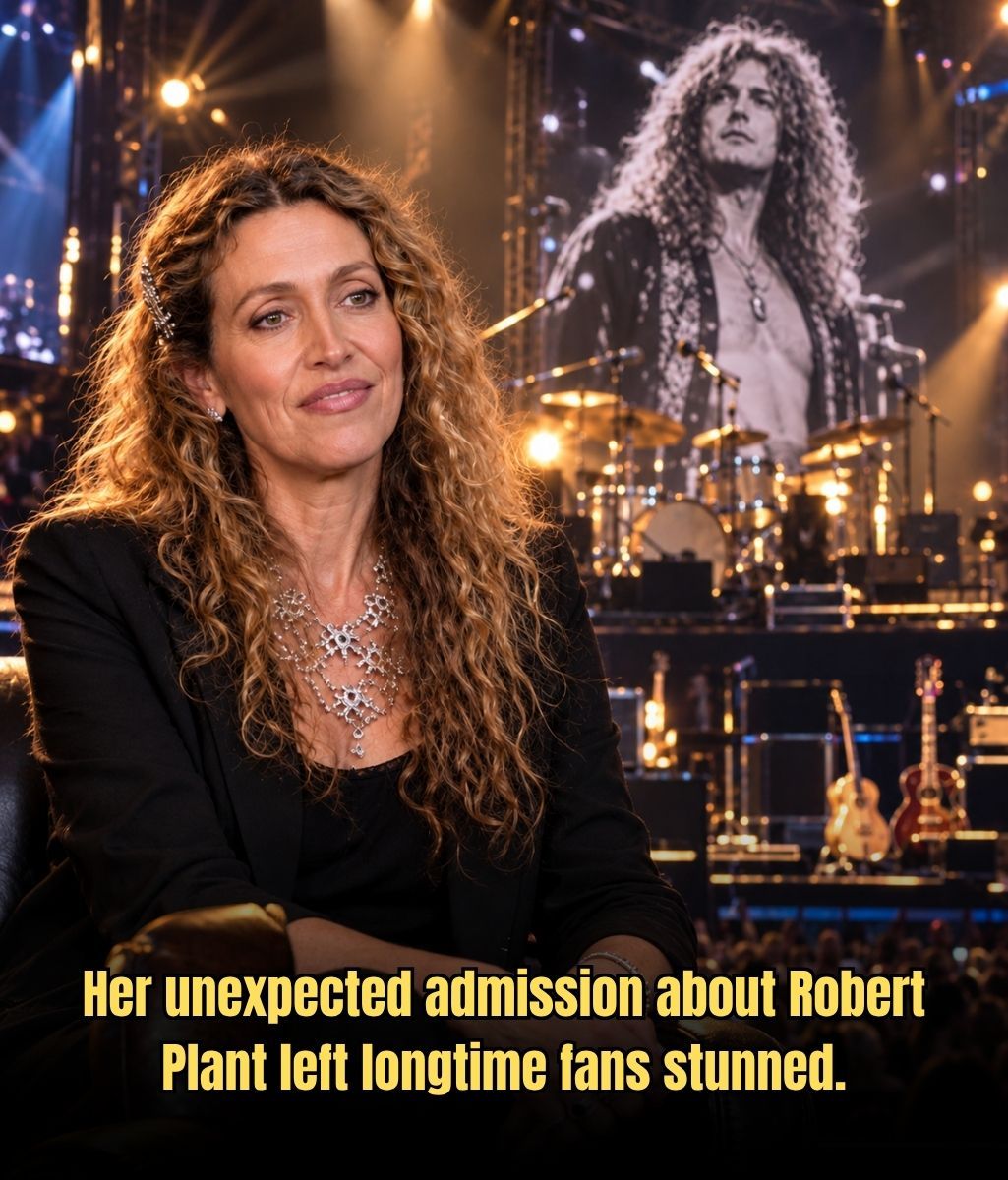
To millions of people, Robert Plant will always be the golden-haired voice standing at the front of Led Zeppelin. His performances on “Whole Lotta Love,” “Black Dog,” “Rock and Roll,” “Kashmir” and “Stairway to Heaven” helped create one of rock music’s most recognizable figures. But to his eldest daughter, Carmen Jane Plant, Robert belonged to a very different world. Before he was the man roaring beneath stadium lights, he was simply her father—and his extraordinary career meant that the Plant family experienced Led Zeppelin from a perspective no fan could ever completely understand.
Carmen was born in 1968, the same year Led Zeppelin began taking shape. In a strange way, she and the band grew up almost simultaneously. As Zeppelin moved from clubs to theaters and eventually enormous arenas, Carmen’s childhood unfolded alongside her father’s transformation into an international rock star. For audiences, those years became mythology. For a child, however, fame could also mean long tours, long absences and a father whose work repeatedly carried him thousands of miles away.
That contrast is important because the public tends to remember only what happened onstage. Led Zeppelin’s rise during the early 1970s was astonishing. Albums arrived one after another, American tours became enormous, and the four musicians seemed almost unstoppable. Yet every additional city on a tour schedule represented another period when Robert was away from home. The same success that gave his family extraordinary opportunities also demanded enormous amounts of his time.
Then came the events that changed the Plant family forever. In 1975, Robert and his family were involved in a serious automobile accident while on the Greek island of Rhodes. Plant suffered significant injuries, and Led Zeppelin’s plans had to be altered while he recovered. For the first time, the seemingly indestructible rock star was forced to confront how quickly everything could change.
Two years later came a tragedy far worse.
While Led Zeppelin was touring the United States in 1977, Robert learned that his five-year-old son, Karac, had died suddenly. The tour was immediately abandoned. Plant returned home to a family experiencing a loss no amount of fame, money or applause could soften.
For Carmen, this was not a chapter in Led Zeppelin history.
It was the loss of her little brother.
That distinction changes the way the story looks. Fans remember the canceled concerts and the effect Karac’s death had on Robert’s music. His family remembers the empty place inside their home. Robert later poured some of that grief into “All My Love,” the deeply personal song associated with Karac that appeared on Led Zeppelin’s 1979 album In Through the Out Door.
During those painful years, John Bonham was more than Robert’s drummer. Plant and Bonham had known each other before Led Zeppelin, and their friendship stretched back to England’s Midlands music scene. Bonham was among the people connected to Robert during the darkest period surrounding Karac’s death.
Then, on September 25, 1980, Bonham himself died at only 32.
Once again, Robert was confronted with sudden loss.
Only weeks later, Led Zeppelin announced that it could not continue as before. For the outside world, one of history’s greatest rock bands had ended. For the Plant family, however, Robert was entering another uncertain chapter. The man who had spent more than a decade being “Robert Plant of Led Zeppelin” suddenly had to determine who he was without the band.
Carmen watched her father continue.
He built a solo career rather than spending the rest of his life trying to recreate Zeppelin. He explored new sounds and later moved through folk, blues, Americana and other musical traditions. His collaborations with Alison Krauss introduced another generation to a quieter and more reflective side of his voice.
That willingness to keep moving forward helps explain why Plant has repeatedly resisted turning Led Zeppelin into a permanent reunion project. He has never completely abandoned the songs—he has continued performing and reimagining some of them—but he has also refused to spend his entire later life pretending that the 1970s never ended.
Seen through the perspective of family, that choice becomes easier to understand.
Robert Plant’s Zeppelin years were not composed solely of triumph.
They also contained absence.
A terrible accident.
The death of a child.
The death of a close friend.
And eventually the collapse of the band that had defined his adult life.
There is no need to invent a dramatic new confession from Carmen at 57 to make her story powerful. The documented history already reveals what fans have often sensed: behind one of rock’s greatest careers was a family living through consequences the audience could not see from its seats.
Fans heard “All My Love” as a beautiful Led Zeppelin song.
The Plant family knew the child behind it.
Fans saw Robert Plant standing before thousands of people.
Carmen knew the father who eventually came home.
And perhaps that is the part of the Led Zeppelin story that becomes more moving with time.
The world remembers Robert Plant the rock legend.
His daughter remembers the man who had to walk through the front door after the music stopped—and somehow find a way to become Dad again.
Follow Led Zeppelin for more rare stories, legendary recordings, unforgettable performances, and memories from the golden age of rock. ❤️🎸