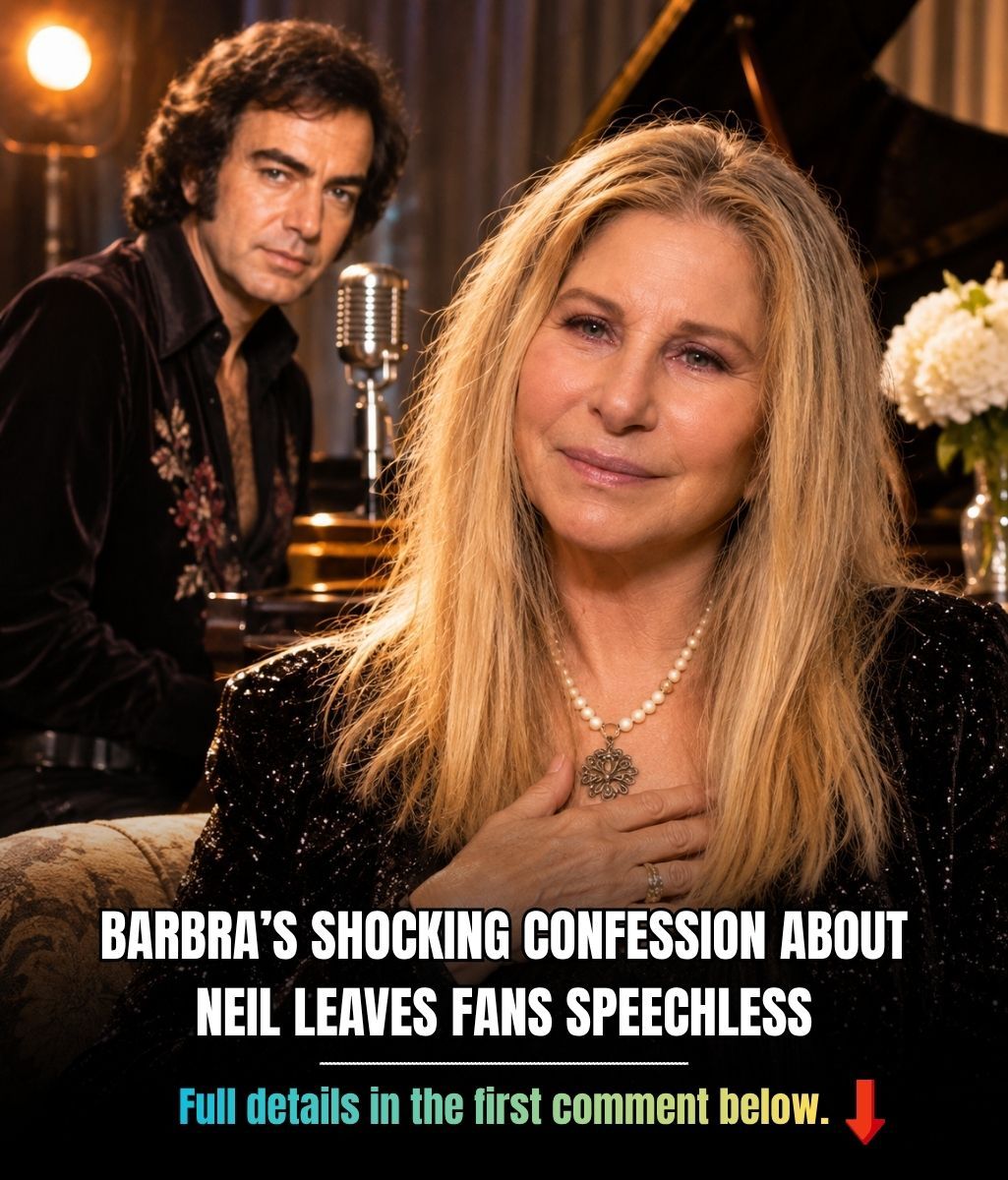
For decades, Barbra Streisand and Neil Diamond have occupied special places in the history of American music. Their voices are unmistakable, their careers have crossed generations, and their songs have accompanied millions of people through some of the most memorable moments of their lives.
But there is something particularly fascinating about these two legendary performers: their paths crossed long before the world understood just how extraordinary their musical legacies would become.
And when they finally came together to record a duet, they created a moment that would remain part of music history.
The story began long before the recording of You Don’t Bring Me Flowers became an international sensation.
In the early 1960s, Barbra Streisand and Neil Diamond were both young performers trying to establish themselves in the entertainment industry. Their careers developed in different directions, but both shared an extraordinary ability to communicate emotion through music.
Barbra was already attracting attention for her powerful voice and remarkable stage presence. Neil was developing his reputation as a songwriter, gradually discovering the musical identity that would eventually make him one of America’s most celebrated performers.
Neither could have fully imagined how far their careers would eventually take them.
Years later, their musical worlds would come together through a song that captured something audiences immediately recognised: the emotional distance that can sometimes develop between two people who once shared a meaningful connection.
You Don’t Bring Me Flowers became one of the most memorable duets of their careers.
The song tells the story of two people reflecting on how their relationship has changed. Its emotional power comes from the contrast between the voices, the lyrics, and the sense that something meaningful has gradually been lost.
For listeners, it felt remarkably personal.
Many people recognised their own experiences in the song. They thought about conversations left unfinished, relationships that had changed with time, and the importance of expressing appreciation before opportunities disappeared.
But the story behind the duet was almost as interesting as the recording itself.
Neil Diamond originally released his version of You Don’t Bring Me Flowers in 1977. Barbra Streisand subsequently recorded her own version for her 1978 album Songbird.
Radio listeners began noticing that the two recordings could be combined into a duet. The idea gained momentum, and the two artists eventually recorded a joint version in 1978.
The result became a major success, reaching the top of the Billboard Hot 100 in December of that year.
Two extraordinary voices had created something that neither recording could have achieved in quite the same way on its own.
The success of the duet also demonstrated how powerful a simple musical idea could become when two artists brought their individual personalities to the same song.
For Barbra, the experience represented another remarkable achievement in an already extraordinary career. For Neil, it was an opportunity to hear one of his compositions interpreted through the voice of another major performer.
Their collaboration became a defining moment in both artists’ musical histories.
Over the years, fans have continued to wonder about the relationship between these two stars. Did they always understand each other musically? What did they think when they first heard the combined recording? Was there a particular moment during the collaboration that they remembered most?
These questions have helped keep the story alive.
However, the dramatic suggestion that Barbra recently revealed a secret she had deliberately hidden about Neil for 40 years should be treated cautiously. There is no established evidence of a newly disclosed scandal or a confirmed confession matching that description.
What is documented is already fascinating enough.
Their collaboration demonstrated how two artists with different musical journeys could create something timeless when their voices and artistic instincts came together.
And perhaps there is another reason why the story continues to resonate.
Both performers understood that music was not simply about hitting the right notes. It was about communicating experiences that people could recognise in their own lives.
Barbra’s expressive voice could make a single lyric feel like an entire story. Neil’s songwriting could transform ordinary emotions into melodies that stayed with listeners long after the music ended.
Together, they created a recording that continues to remind audiences of the importance of emotional connection.
As the years passed, both artists continued building extraordinary careers. Barbra became celebrated not only for her music but also for her achievements in film and directing. Neil continued performing and writing songs that became part of American musical culture.
Their individual journeys were remarkable, but their shared musical moment remained especially memorable.
Sometimes, a collaboration becomes unforgettable not because two artists are alike, but because each brings something the other does not.
For longtime fans, hearing You Don’t Bring Me Flowers today can bring back memories of another era — a time when radio played an enormous role in bringing new music into people’s homes, when families gathered around television sets, and when a great duet could become the subject of conversations for weeks.
That is the lasting power of this recording.
It reminds us that music can preserve a moment long after the people who created it have moved into different chapters of their lives.
And perhaps the most beautiful part of Barbra Streisand and Neil Diamond’s story is that they did not need a mysterious secret to leave an unforgettable mark on each other’s musical journeys.
Their voices met, their music connected, and generations of listeners were given a song that time has never managed to erase.