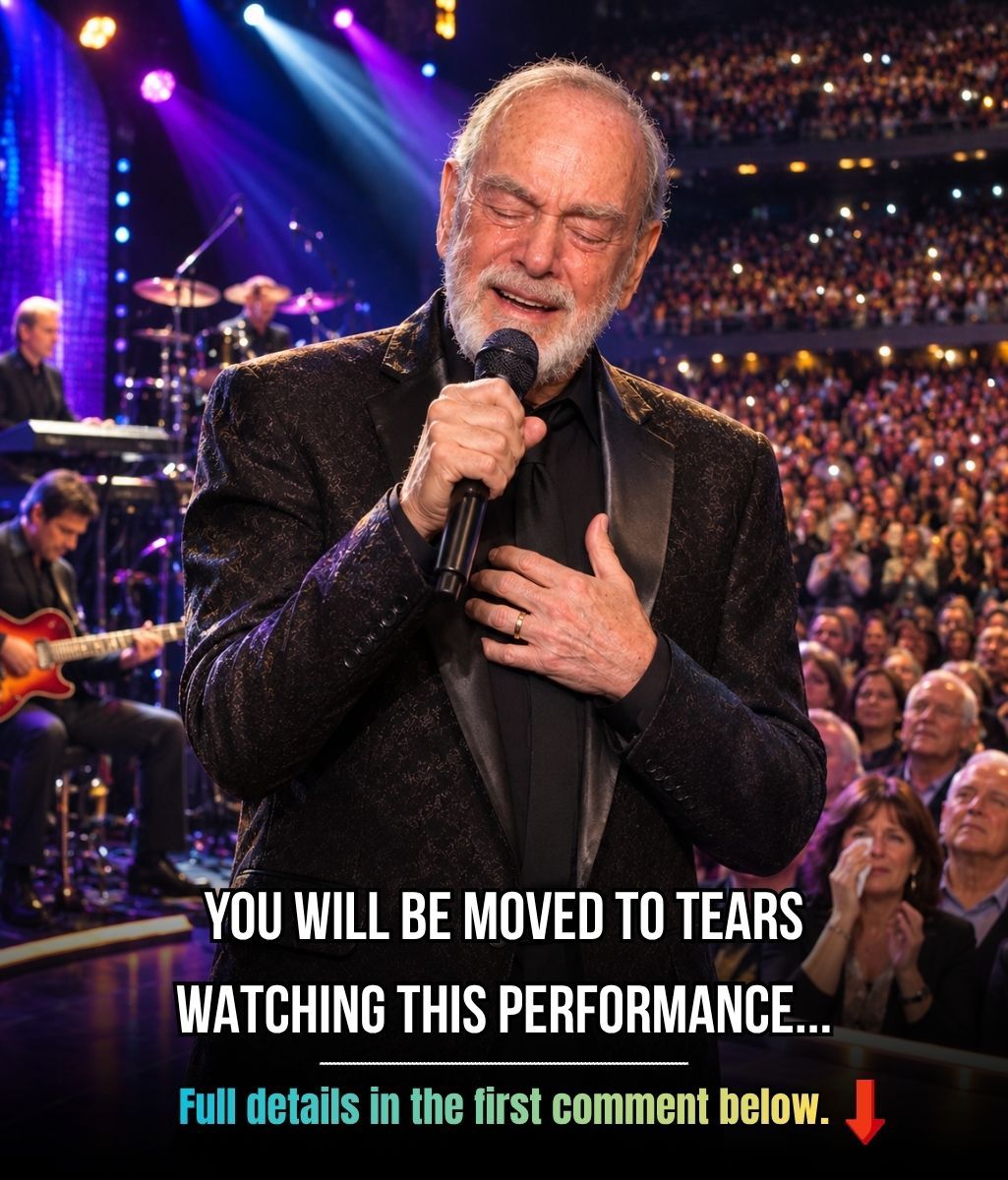
There are songs that entertain us, songs that remind us of another time, and then there are songs that reach somewhere deep inside the heart, bringing back memories we thought we had forgotten. For Neil Diamond, one particular song carried an emotional weight that went far beyond its melody. It was the kind of song that could bring even the man who wrote and performed it to tears. And when people imagined hearing it again from the legendary singer at the age of 85, they could hardly have anticipated just how powerful that moment would be.
For more than six decades, Neil Diamond has given the world a remarkable collection of songs. His unmistakable voice, heartfelt lyrics, and ability to turn personal emotions into unforgettable music have made him one of America’s most beloved entertainers. From “Sweet Caroline” to “Hello Again,” “I Am… I Said,” and “Song Sung Blue,” his music has accompanied generations through love, loss, celebrations, and the quiet moments in between.
But behind those familiar melodies was a songwriter who understood that music could express feelings that ordinary words sometimes could not.
The song at the centre of this emotional story was especially meaningful because it reflected something deeply personal. Neil never needed elaborate arrangements or dramatic gestures to communicate its message. Sometimes, a few carefully chosen words and a simple melody were enough to remind listeners of the people, places, and moments that had shaped their lives.
That was part of his extraordinary gift. He could stand before thousands of people and somehow make each listener feel as though he were singing directly to them.
Imagine an audience of 20,000 people, gathered beneath the lights, waiting for a familiar voice to fill the evening air. Some would have followed Neil Diamond since the earliest days of his career. Others might have discovered his music through their parents, grandparents, or the timeless recordings that continued playing on American radio.
For many, his songs were connected to memories that had lasted an entire lifetime. They recalled young love, family celebrations, long journeys, old friendships, and people who were no longer there to share those moments.
And that is what makes the idea of such a performance so moving. At 85, the passage of time would carry a meaning that it could not have held during the earliest years of his career. Every lyric would feel different. Every pause might invite another memory. Every familiar note could remind someone in the audience of how quickly the years had passed.
Neil Diamond’s own journey had also changed dramatically. In 2018, he announced his retirement from touring after being diagnosed with Parkinson’s disease. The announcement saddened millions of admirers who had grown accustomed to seeing him command enormous stages with his guitar and unmistakable presence.
Yet his retirement from touring never meant that his music would disappear.
His recordings continued to reach listeners around the world. His songs remained part of family gatherings, nostalgic radio programmes, and special occasions where people wanted to remember the soundtrack of their younger years.
Perhaps that is why the thought of hearing Neil perform an emotionally significant song again carries such extraordinary appeal. It represents more than a concert. It represents the connection between an artist and the people who have carried his music in their hearts for generations.
For an audience filled with longtime admirers, the most powerful moment would not necessarily be the loudest note or the biggest musical arrangement. It might simply be the recognition of a familiar voice, followed by the quiet realisation that the music had never stopped meaning so much.
Because some songs do not grow old. They grow deeper with every passing year.
And that is the enduring magic of Neil Diamond. His music has accompanied people through the happiest days of their lives and remained beside them during the hardest ones. Long after the concert lights go dark, those melodies continue living in the memories of everyone who has ever found a piece of their own story inside his songs.
At the end of the day, the greatest performances are not always measured by the number of people in the audience. They are measured by how many hearts a song manages to touch.