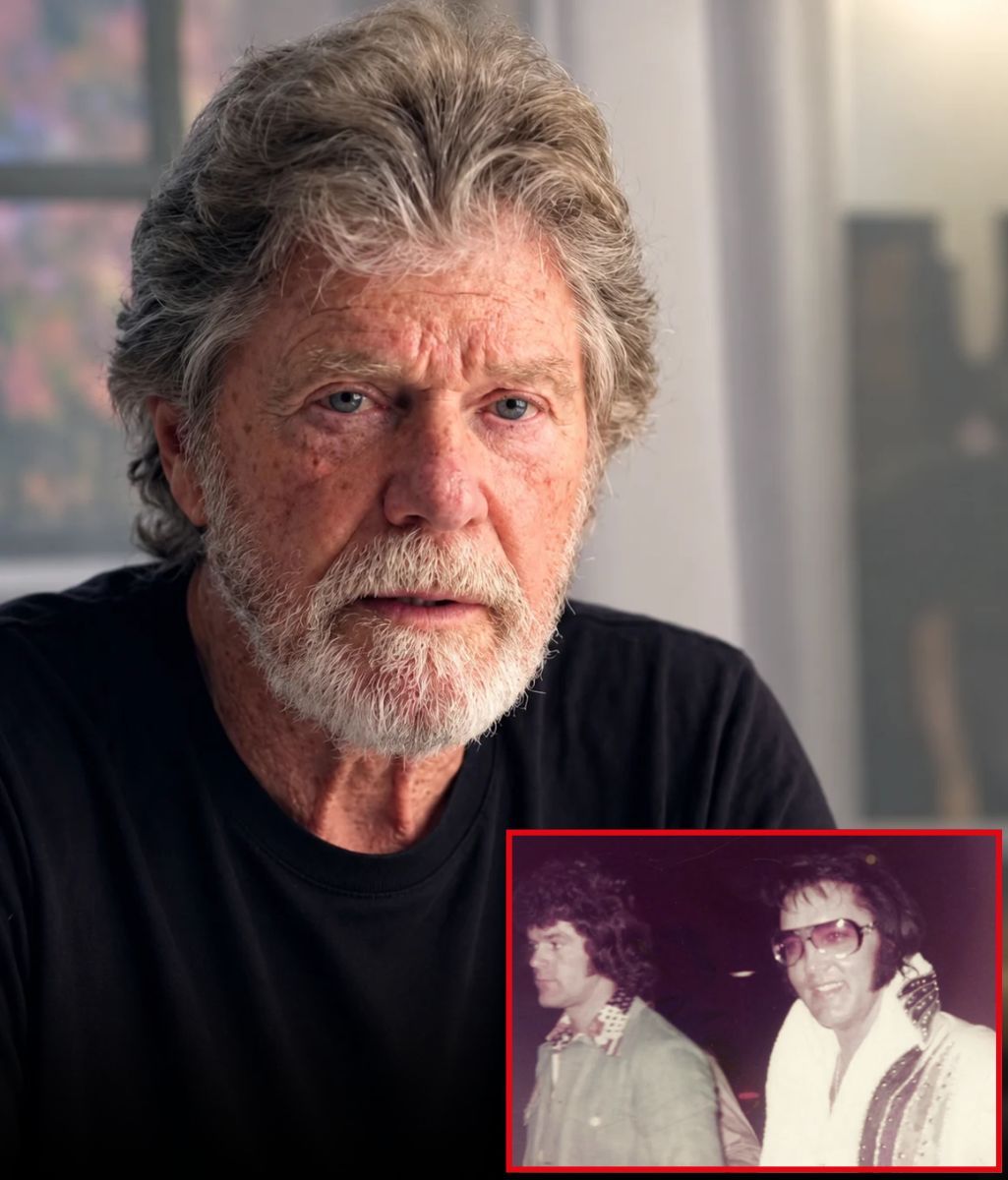
There are moments in history that remain difficult to revisit, no matter how many years have passed. For those who loved Elvis Presley, August 16, 1977, will always be one of them. The world lost the King of Rock and Roll that afternoon, but the people who knew him beyond the stage lights lost something far more personal: a friend, a familiar presence, and a man whose life had become intertwined with their own. Among those who shared that extraordinary journey was Jerry Schilling, one of Elvis’s closest longtime friends. Their friendship stretched back to the 1950s, long before the young singer became an international phenomenon.
The YouTube video titled “What Elvis Told Jerry the Night Before He Died Will Haunt You” presents a dramatic suggestion: that Schilling had a deeply revealing conversation with Elvis shortly before his death. It is an intriguing premise, especially for fans who have spent decades trying to understand the private thoughts of a man who lived so much of his life in public. However, the video’s title and description alone do not establish the exact words supposedly spoken. Without a verifiable interview transcript or a reliable account identifying the conversation, those words should not be repeated as confirmed history. What can be explored with confidence is the remarkable friendship behind the story.
Jerry first met Elvis in 1954, when both were young and their lives seemed to be heading in very different directions. Elvis was beginning to attract attention for his unusual sound and magnetic personality, while Jerry was simply a boy from North Memphis who enjoyed playing football. Their friendship developed naturally, long before fame transformed Elvis into a household name. Years later, Schilling recalled how that early connection eventually brought him into Elvis’s professional and personal world. It was a friendship that survived changing circumstances, enormous success, and the pressures that surrounded the singer’s life.
Schilling witnessed a side of Elvis that concert audiences could rarely see. Onstage, Elvis possessed a presence that seemed almost larger than life. His voice could fill an arena, his movements could command an audience, and his performances could turn an ordinary evening into a memory that lasted for generations. Away from the spotlight, however, he was a man who enjoyed conversation, movies, music, friendship, and moments of ordinary companionship. In interviews, Schilling has often emphasized the complexity of the person behind the public image. Elvis could be generous and thoughtful, but he could also experience frustration, disappointment, and the exhaustion that came with a demanding career.
By the final years of his life, Elvis was facing serious personal and professional difficulties. His health had become a growing concern, his touring schedule was demanding, and the pressures surrounding his career had not disappeared. Yet the public continued to see the familiar figure in the elaborate jumpsuits, standing beneath bright lights and singing songs that millions knew by heart. The distance between that celebrated image and the private struggles of the man behind it remains one of the most heartbreaking aspects of his story. His final months deserve to be remembered with compassion rather than reduced to sensational rumors.
On August 15, 1977, Elvis was at Graceland in Memphis. He had returned home after a dental appointment and spent the remaining hours before his death within the familiar surroundings of his estate. The following afternoon, he was found unresponsive in his bathroom. He was only 42 years old. The announcement sent shock waves around the world. Radio stations played his recordings, fans gathered outside Graceland, and people who had never met him felt as though they had lost someone they had known for years.
For Jerry Schilling and the others who had shared Elvis’s life, the loss was not simply the end of a remarkable musical career. It was the end of a friendship that had begun when they were young boys. In a 2005 appearance on Larry King Live, Schilling joined other people close to Elvis to remember the singer and discuss the difficult experience of losing him. The emotion surrounding those recollections made clear that the man they remembered was not merely a cultural icon. He was someone whose presence had shaped their lives in ways that could never be replaced.
Perhaps that is why stories about Elvis’s final conversations continue to attract so much attention. Fans are not only searching for mysterious words or hidden predictions. Many are trying to understand what the King was thinking during those last days, whether he knew how deeply he was loved, and whether the people closest to him understood how much he was struggling. Those questions may never receive complete answers. But they reveal the enduring affection that audiences still feel for him.
Nearly five decades after his passing, Elvis Presley’s voice remains alive in the memories of millions. His recordings continue to travel from one generation to another, and his performances still carry the power to make listeners stop and remember. Jerry Schilling’s recollections offer something valuable because they remind us that behind the legend stood a real person, surrounded by friendships and ordinary moments that fame could never fully capture. The exact conversation suggested by the video’s headline remains unverified, but the deeper truth needs no sensational revelation: Elvis was more than the King of Rock and Roll. He was a friend whose absence left an emptiness that time could never entirely erase.