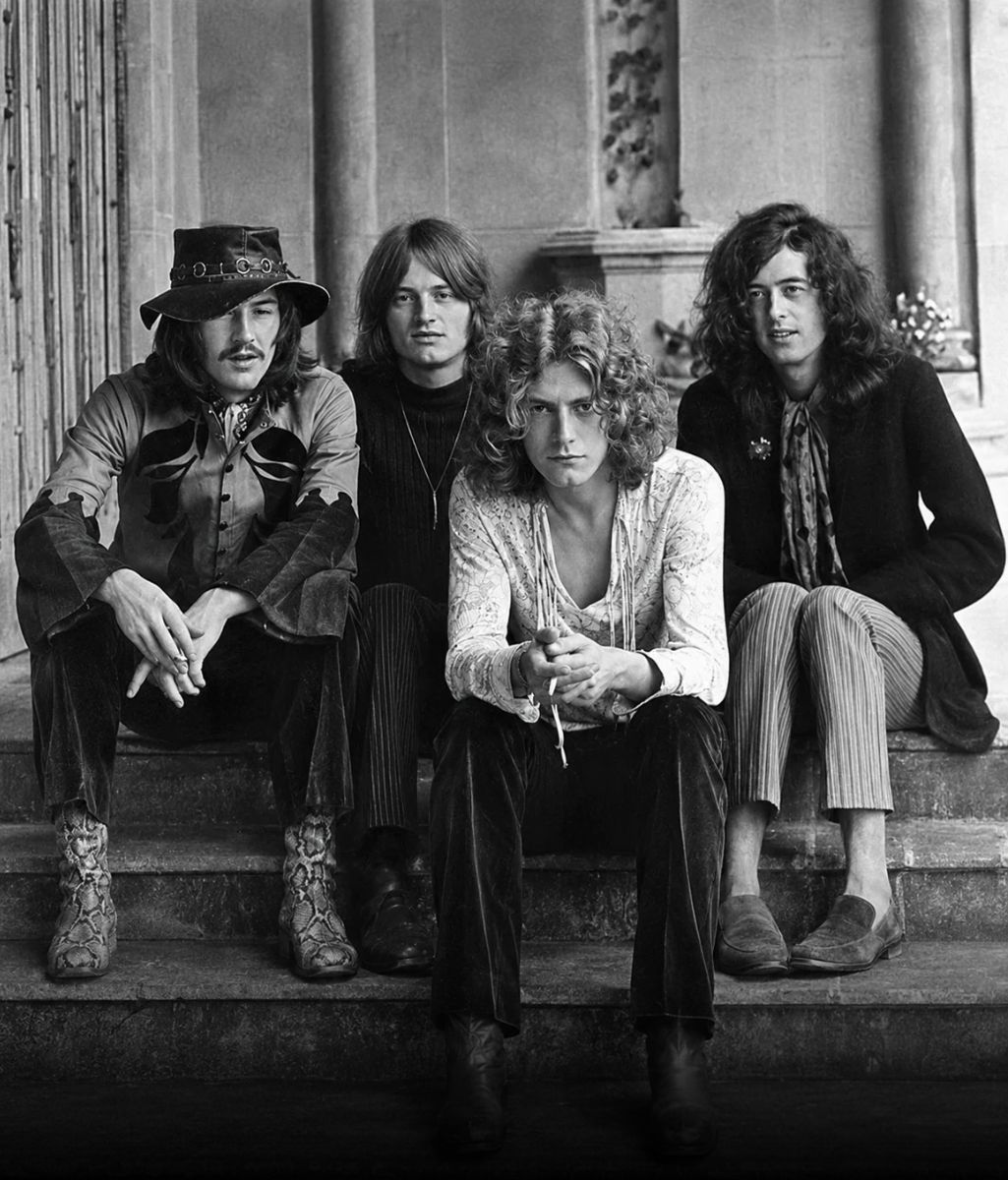
When Led Zeppelin emerged in 1968, rock music was standing at the edge of a new era. The four English musicians—Jimmy Page, Robert Plant, John Paul Jones, and John Bonham—brought together a sound that was powerful, unpredictable, and unlike anything audiences had experienced before. Their music carried the spirit of the blues, the mystery of folk traditions, and the thunder of hard rock. Yet what made Led Zeppelin extraordinary was not simply their volume. It was their ability to turn a song into an entire world, one filled with emotion, atmosphere, and unforgettable musical moments. <Cite refs={[“turn606164search0″,”turn606164search4”]}/>
The band’s journey began with Jimmy Page, an accomplished guitarist who had already made his mark as a session musician and member of the Yardbirds. When that group came to an end, Page set out to build a new band around his musical vision. Robert Plant brought a powerful, expressive voice, John Paul Jones offered remarkable versatility on bass and keyboards, and John Bonham supplied a drumming style that was both explosive and deeply rhythmic. Together, they created a chemistry that could not be manufactured. Their debut album, Led Zeppelin, released in 1969, announced their arrival with a mixture of blues-inspired intensity and bold experimentation.
One of their earliest defining songs, “Whole Lotta Love,” opened Led Zeppelin II with a guitar riff that seemed to burst straight through the speakers. Page’s guitar, Bonham’s pounding drums, Jones’s commanding bass, and Plant’s unmistakable vocals formed a sound that would influence generations of rock musicians. The song’s famous middle section, with its swirling effects and experimental textures, revealed that Led Zeppelin were not content to make straightforward hard rock. They were willing to take listeners somewhere unfamiliar. The track became one of the band’s signature recordings and helped establish their reputation as musical innovators. <Cite refs={[“turn606164search0″,”turn606164search4”]}/>
Then came “Immigrant Song,” a compact but unforgettable burst of energy from 1970’s Led Zeppelin III. Its opening vocal cry and driving rhythm gave the song an almost mythic atmosphere. The lyrics drew on imagery of journeys, distant lands, and northern legends, reflecting the band’s growing interest in themes beyond traditional blues storytelling. Although the track was shorter than many of their extended compositions, it carried an enormous impact. It showed that Led Zeppelin could create a song that was brief, fierce, and instantly recognizable—one that could ignite a crowd within seconds. <Cite refs={[“turn606164search0″,”turn606164search4”]}/>
Few songs in rock history have achieved the enduring emotional reach of “Stairway to Heaven.” Released on the band’s untitled fourth album in 1971, the composition begins with a delicate acoustic passage before gradually building toward a powerful electric climax. Jimmy Page and Robert Plant wrote the song, while John Paul Jones’s recorder parts contribute to its early atmosphere. Its carefully layered structure gives the listener a sense of movement, as though the music itself is climbing toward a distant horizon. “Stairway to Heaven” became one of the most celebrated album tracks in rock history, despite never being released as a commercial single. Its lasting power lies in the way it balances mystery, beauty, and intensity. <Cite refs={[“turn606164search3″,”turn606164search4”]}/>
Yet Led Zeppelin’s musical identity was never confined to one famous song. “When the Levee Breaks,” also featured on Led Zeppelin IV, transformed a traditional blues composition into something monumental. Bonham’s drum performance, recorded with a distinctive echoing sound, gives the track its unmistakable weight. The harmonica, guitar, and vocal parts seem to emerge from a vast landscape, creating an atmosphere of tension and impending disaster. The band’s version demonstrates how deeply they understood the blues—not as a musical formula to copy, but as a foundation they could reshape into something entirely their own. Their ability to honor their influences while creating a new sonic language became one of the defining features of their career. <Cite refs={[“turn606164search0″,”turn606164search4”]}/>
By the time “Kashmir” appeared on the 1975 double album Physical Graffiti, Led Zeppelin had reached a new level of musical ambition. The song’s origins were unusual: Robert Plant drew inspiration from a long journey through southern Morocco, not from a visit to Kashmir itself. Its lyrics evoke a seemingly endless road through a vast landscape, while Page’s repeating guitar figure creates a hypnotic sense of forward motion. John Paul Jones expanded the arrangement with Mellotron and orchestral parts, while Bonham’s drums gave the composition its commanding pulse. Plant later described “Kashmir” as one of the band’s most perfect achievements, and its sweeping sound remains one of the clearest expressions of Led Zeppelin’s artistic vision. <Cite refs={[“turn606164search1″,”turn606164search2”]}/>
Behind these iconic recordings was a band whose members brought very different strengths to the studio and stage. Page’s production instincts helped shape the group’s layered sound, Plant’s voice gave their music its emotional reach, Jones’s musicianship brought depth and flexibility, and Bonham’s drumming supplied a force that was both powerful and remarkably precise. The Rock & Roll Hall of Fame has recognized how Led Zeppelin blended blues, folk, soul, and other musical traditions while expanding the possibilities of rock. Their influence can be heard in hard rock, heavy metal, progressive music, and countless artists who followed. <Cite refs={[“turn606164search0″,”turn606164search4”]}/>
The band’s story also carries a profound sense of loss. In September 1980, John Bonham died, and the remaining members chose not to continue Led Zeppelin under the same name. Their decision reflected the unique bond at the heart of the group: Bonham was not simply the drummer, but an essential part of the sound and spirit they had created together. Although the band’s active years came to an end, their recordings continued to travel across generations. From the opening riff of “Whole Lotta Love” to the final rise of “Stairway to Heaven,” Led Zeppelin left behind music that remains alive in the memories of listeners around the world. <Cite refs={[“turn606164search4″,”turn606164search0”]}/>
Today, Led Zeppelin stands as one of the most influential bands in the history of rock. Their songs continue to be discovered by young listeners and cherished by those who remember hearing them for the first time decades ago. Their legacy is not simply a collection of celebrated recordings—it is a reminder of what can happen when four extraordinary musicians bring their talents together with fearless imagination. Led Zeppelin redefined rock because they refused to stand still. They reached beyond familiar boundaries, transformed their influences, and created music that could be fierce, tender, mysterious, and monumental. The years have passed, but the sound of Led Zeppelin still rises like thunder—and the stories behind their songs continue to deepen the legend.