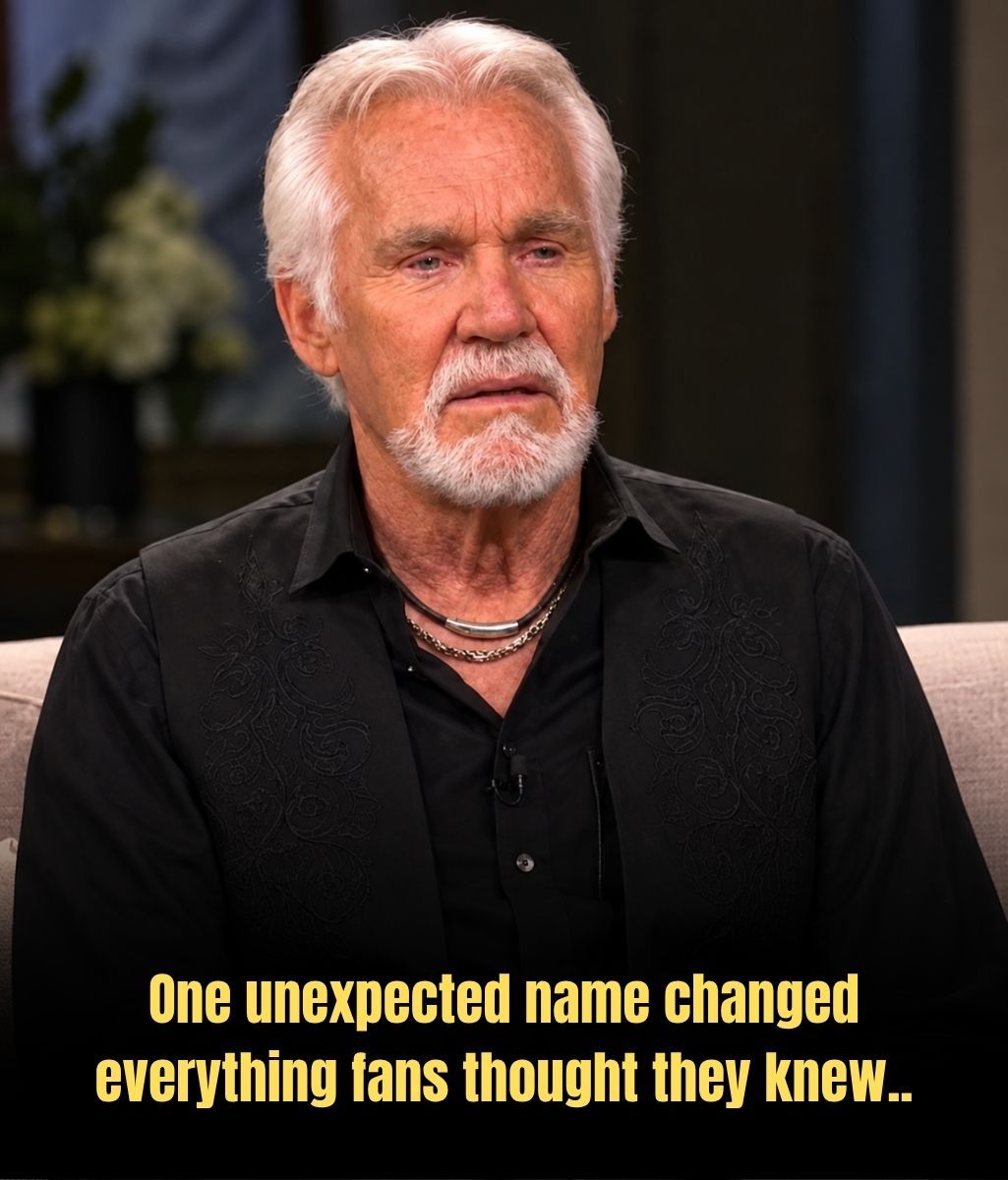
For decades, Kenny Rogers was one of the most recognizable voices in American music. His songs carried the weight of experience, the tenderness of love, and the quiet wisdom of a man who seemed to understand that life rarely unfolds the way we expect. With his unmistakable voice, silver beard, and thoughtful presence, he became more than a country music superstar. He became a familiar companion to millions of listeners who found pieces of their own lives reflected in his music.
From the unforgettable storytelling of The Gambler to the emotional warmth of Through the Years, Rogers built a remarkable career that crossed musical boundaries and connected generations. His songs were played in family living rooms, on long drives across the American countryside, and during some of life’s most meaningful moments. For many fans, hearing his voice was like revisiting an old memory, one that remained precious no matter how much time had passed.
Yet behind the extraordinary success was a man who experienced the same complicated realities as everyone else. Fame brought applause, financial opportunities, and professional achievements, but it also brought difficult decisions, strained relationships, disappointments, and moments of reflection. The public saw the polished performer standing beneath the stage lights. Far fewer people understood the private thoughts and personal struggles that accompanied his journey.
That contrast is part of what makes stories about the personal lives of music legends so compelling. Fans naturally wonder what their favorite artists thought about the people who influenced their careers, supported them through difficult times, or disappointed them along the way. They want to understand the human being behind the songs, not simply the celebrated figure whose name appeared on album covers and concert marquees.
THE MAN BEHIND THE LEGEND
Kenny Rogers was born on August 21, 1938, in Houston, Texas. His journey to international recognition was not an overnight success. Before becoming a household name, he explored different musical styles, performed with various groups, and gradually discovered the distinctive sound that would eventually make him famous.
His early career included time with the jazz group the Bobby Doyle Three and the folk ensemble the New Christy Minstrels. He later became a member of the First Edition, a group that achieved considerable success with songs such as Just Dropped In (To See What Condition My Condition Was In).
Eventually, Rogers established himself as a solo artist, building a career defined by memorable melodies and stories that spoke directly to ordinary people. His success with Lucille, The Gambler, She Believes in Me, and Lady demonstrated his ability to move comfortably between country, pop, and adult contemporary music.
His collaborations also became an important part of his legacy. His duet with Dolly Parton on Islands in the Stream remains one of the most beloved recordings of its era. Their musical chemistry, warmth, and playful friendship created a lasting connection that audiences continued to appreciate for decades.
But a career lasting more than half a century inevitably involved complicated professional relationships. The music business can be demanding, and even successful artists must navigate competing interests, difficult negotiations, changing creative priorities, and the occasional disappointment.
Rogers understood that success required more than talent. It required perseverance, adaptability, and the ability to keep moving forward when circumstances did not unfold as planned.
THE FIVE NAMES THAT SPARKED CURIOSITY
The claim that Rogers revealed five people he resented most before his death is an attention-grabbing one. It invites listeners to reconsider the relationships that shaped his life and wonder whether there were private conflicts hidden behind his public image.
However, there is no verified evidence establishing that Kenny Rogers publicly identified five people he resented most before his passing. Without a reliable interview, recording, or firsthand account, it would be unfair to attach names to such a personal accusation or present an unsubstantiated story as a confirmed revelation.
That distinction matters, especially when discussing an artist whose legacy has brought comfort to millions of people.
Nevertheless, the broader question remains interesting: What happens when the relationships that help build a successful career also become sources of disappointment?
For performers who spend decades in the public eye, friendships and professional partnerships can become complicated. People enter their lives during periods of ambition and uncertainty, and some remain close long after the spotlight fades. Others gradually drift away as careers change direction and personal priorities evolve.
Sometimes, a disagreement begins with something relatively small. A promise is misunderstood. A professional decision creates hurt feelings. A friendship becomes strained by distance, competing obligations, or expectations that were never fully expressed.
Over time, these experiences can influence how people remember particular chapters of their lives.
Yet disappointment is not necessarily resentment, and a difficult professional relationship does not automatically mean that two people became enemies. The difference is important, particularly when discussing individuals who are no longer here to explain their own experiences.
The truth behind a person’s relationships is often more complicated than a dramatic headline suggests.
WHY EVEN THE GREATEST LEGENDS EXPERIENCE DISAPPOINTMENT
It is tempting to imagine that extraordinary success protects people from ordinary human difficulties. In reality, fame does not eliminate disappointment. It can sometimes make personal challenges more difficult because private disagreements may attract public attention, speculation, and competing interpretations.
Kenny Rogers experienced several major transitions throughout his career. Musical trends changed, the entertainment industry evolved, and the demands of touring placed considerable pressure on his personal life.
Like many performers of his generation, he also experienced the challenges of balancing professional commitments with family responsibilities. His career required years of travel, rehearsals, recording sessions, interviews, and performances before audiences around the world.
Behind every celebrated concert was a tremendous amount of work that fans rarely witnessed.
There were decisions about which songs to record, which opportunities to pursue, and how to preserve a recognizable artistic identity while remaining relevant to changing audiences. Every major decision carried consequences, and not every choice could satisfy everyone involved.
Still, Rogers continued to create music that resonated with listeners. His greatest strength was his ability to communicate emotion without making it feel forced. He sang about people who had made mistakes, taken risks, lost their way, and searched for something meaningful in the middle of life’s uncertainties.
That honesty was central to his appeal.
In The Gambler, the lessons about knowing when to hold on and when to walk away became part of American popular culture. The song offered more than a memorable chorus. It presented a philosophy of life built around judgment, patience, and understanding one’s limitations.
Perhaps that is one reason his music continues to endure. Rogers did not portray life as a simple journey in which every decision leads to happiness. His songs acknowledged that wisdom often comes through experience, and experience frequently includes disappointment.
THE PEOPLE WHO SHAPED HIS MUSICAL JOURNEY
No artist reaches lasting success entirely alone. Behind a remarkable career are collaborators, musicians, songwriters, producers, friends, and family members who contribute in ways both visible and unseen.
Rogers worked with many talented people throughout his life. His partnership with Dolly Parton became an enduring example of how two distinctive performers could bring out the best in one another. Their recordings demonstrated that musical collaboration could create something greater than the sum of its individual parts.
He also benefited from the work of songwriters whose stories gave his voice some of its most memorable material. Songs became the foundation of his relationship with audiences, allowing listeners to connect their own experiences with the stories he performed.
But the importance of a relationship cannot always be measured by its public visibility. Some of the people who influence an artist’s life never appear in concert photographs or television interviews. They may offer encouragement during difficult periods, provide honest advice when success becomes overwhelming, or simply remain present when the demands of fame grow exhausting.
Other relationships may end without a dramatic confrontation. People change, circumstances shift, and paths that once ran together eventually separate.
These realities are part of the human experience, regardless of whether someone is a famous singer or an ordinary person working to provide for a family.
For that reason, it is worth approaching stories about Rogers’ private relationships with both curiosity and care. His legacy deserves an honest examination rather than a collection of accusations that cannot be substantiated.
A FINAL CHAPTER THAT LEFT MILLIONS REMEMBERING
Kenny Rogers announced his retirement from touring in 2015, explaining that he wanted to devote more time to his family. His farewell tour gave audiences an opportunity to celebrate a career that had touched generations of music lovers.
In 2017, health difficulties forced him to cancel the remaining dates of his farewell tour. His public appearances became less frequent, and fans increasingly looked back on the extraordinary body of work he had created.
On March 20, 2020, Kenny Rogers died at the age of 81 at his home in Georgia. His family announced that he had passed away peacefully under hospice care, with natural causes cited in the announcement.
The news brought an outpouring of tributes from fans, fellow musicians, and people who had admired his contributions to American music. For many listeners, his passing felt like losing an old friend whose voice had accompanied them through decades of change.
His songs continued to play on radio stations and streaming services, carrying familiar melodies into homes where listeners remembered first hearing them years earlier.
Some remembered dancing to Islands in the Stream. Others recalled the advice woven into The Gambler or the tenderness of Through the Years. Still others remembered seeing Rogers perform live, his voice filling a concert hall while thousands of people sang along.
Those memories are a more enduring measure of his influence than any unverified story about personal grievances.
The greatest part of Kenny Rogers’ legacy was not the controversy people might imagine surrounding his private life, but the music he left behind and the emotions it continues to awaken.
WHAT SHOULD WE REMEMBER ABOUT KENNY ROGERS?
The idea that a legendary performer might have carried private disappointments throughout his life naturally invites curiosity. Fame can create an illusion that audiences know everything about the people they admire, when in reality, even decades of interviews reveal only fragments of a person’s experiences.
Rogers was a gifted storyteller, a successful recording artist, and a performer whose songs became part of the soundtrack of American life. His career included triumphs, transitions, collaborations, and challenges, just as any long and complicated life would.
Whether he experienced private disagreements is a different question from whether he publicly named five people he resented. The latter claim requires evidence, and it should not be treated as established fact without a reliable source.
In the end, perhaps the most meaningful way to remember Kenny Rogers is to return to the songs themselves.
Listen again to the quiet wisdom of The Gambler. Remember the warmth of his duets with Dolly Parton. Let Through the Years bring back the faces, places, and moments that time has carried into memory.
His voice may no longer fill concert halls, but the stories he sang remain alive wherever people gather to remember the past.
Some legends leave behind awards and records. Kenny Rogers left behind something even more personal: songs that helped people understand their own lives.
And long after the final curtain has fallen, that connection remains.