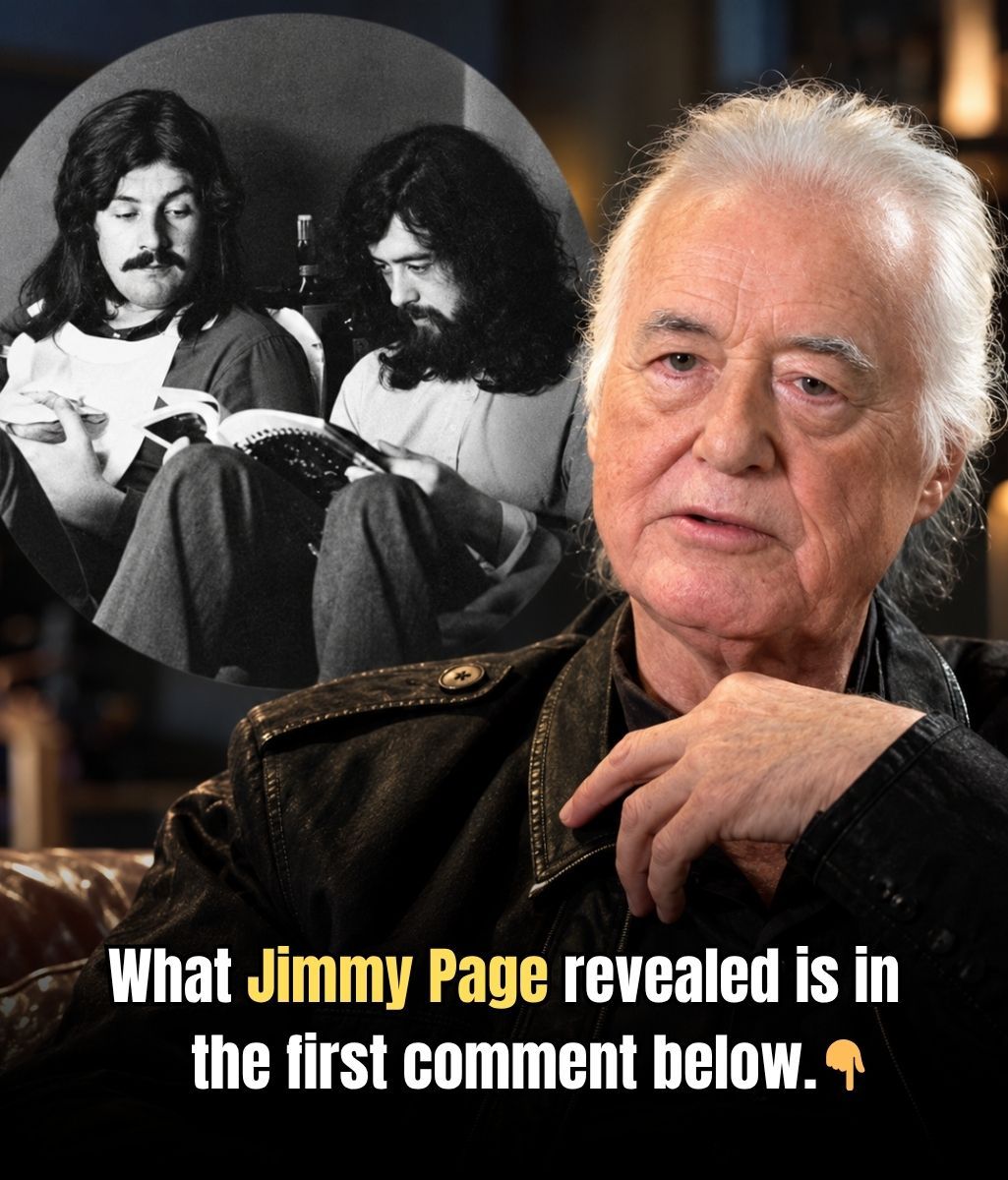
There are moments in music history when a band loses a member and somehow finds a way forward. But when John Bonham died on September 25, 1980, at only 32, Led Zeppelin faced something far deeper than the question of finding another drummer. For Jimmy Page, Robert Plant, and John Paul Jones, Bonham was not simply the musician sitting behind the drum kit. He was one quarter of the chemistry that had made Led Zeppelin unlike any other band. His death did not merely leave an empty seat onstage. It changed the identity of the group itself.
The tragedy was especially painful because Led Zeppelin had not been preparing to end. The band was rehearsing for a planned North American tour, and Page later recalled that he and Bonham had already discussed what another Led Zeppelin album might sound like. After the keyboard-heavy direction of In Through the Out Door, Page wanted to return to something harder and more guitar-driven, with Bonham playing a central role in that direction. There were ideas waiting to be explored. There was unfinished music ahead. There was supposed to be another chapter.
Then Bonham was suddenly gone, and Page’s response revealed how deeply the loss affected him. Years later, he acknowledged that after Led Zeppelin ended, there was a period when he put his guitar down and did not want to play. Consider what that meant. The guitar had carried Page from his years as a session musician through The Yardbirds and eventually into Led Zeppelin. It had given the world “Whole Lotta Love,” “Black Dog,” “Kashmir,” “The Rain Song,” and countless unforgettable performances. Yet after Bonham’s death, even that instrument became difficult to approach. For a time, the music itself seemed inseparable from what had been lost.
On December 4, 1980, the surviving members announced their decision. Their statement explained that the loss of their friend, their respect for Bonham’s family, and the profound unity shared by the musicians had led them to conclude that they could not continue as they had before. For fans, the announcement was devastating. Led Zeppelin had survived changing musical fashions, difficult tours, personal tragedies, and enormous pressures. Many naturally wondered why another talented drummer could not simply step in. But that question misunderstood what Led Zeppelin had become.
John Bonham could not simply be replaced because Led Zeppelin was built on interaction rather than individual parts. Listen closely to those records and the evidence is everywhere. Bonham was not merely keeping time underneath Page’s guitar. He responded to it. Page left spaces for Bonham to fill. John Paul Jones moved between rhythm and melody, while Robert Plant adjusted his voice to the changing intensity around him. The four musicians were constantly listening and reacting to one another. What sounded enormous was actually the result of an unusually sensitive musical conversation. Remove one voice from that conversation, and everything changed.
Page would later describe Led Zeppelin as something closer to “an affair of the heart” than an ordinary commercial organization. That description helps explain why replacing Bonham was never simply a matter of finding someone technically capable of playing the songs. There were many extraordinary drummers in the world, but technical ability was only part of what Bonham brought. His timing, power, restraint, instincts, personality, and understanding of Page’s musical ideas had developed through years of playing together. Another musician might reproduce the notes, but reproducing the relationship between those four people was something entirely different.
That did not mean Page, Plant, and Jones would never share a stage again. Over the following decades there were occasional reunions, culminating most famously in the 2007 Ahmet Ertegun tribute concert at London’s O2 Arena. On that extraordinary night, Jason Bonham, John’s son, played drums. The performance demonstrated that Led Zeppelin’s music could still possess tremendous force decades later. But it did not reverse the decision made in 1980. If anything, the rarity of those reunions emphasized how seriously the surviving members regarded the original four-person identity of the band.
For longtime fans, perhaps the most haunting part of the story is knowing that Led Zeppelin still had somewhere to go musically. Page and Bonham had discussed another record. New ideas were forming. The story did not end because the musicians had exhausted their creativity or because audiences had stopped listening. There was no carefully planned farewell tour, no final album deliberately designed as a goodbye, and no last concert where the four musicians walked offstage knowing they would never perform together again. Life simply interrupted the story before anyone was prepared for the ending.
More than four decades later, that unfinished quality remains part of Led Zeppelin’s extraordinary legacy. We can imagine what another album might have sounded like, but we can never know. What we do know is that Page, Plant, Jones, and Bonham created something whose identity depended upon all four of them. Their music was not assembled from interchangeable pieces. It grew from four distinct personalities colliding, responding, improvising, and pushing one another into places none might have reached alone. That is why the absence of Bonham could never be solved simply by placing another drummer behind the kit.
And perhaps that is the deepest truth behind Jimmy Page’s reflections all these years later. Led Zeppelin did not end because the music had disappeared. It ended because one of the people who made that music possible was gone. Page lost the drummer with whom he had been planning the next chapter, but he also lost a friend and one quarter of a musical conversation that had changed rock history. Rather than pretend that relationship could simply be reconstructed, the surviving members made an extraordinarily difficult decision: they allowed Led Zeppelin to remain what it had always been—Jimmy Page, Robert Plant, John Paul Jones, and John Bonham. They did not replace him. They let the story end with him.
Follow Led Zeppelin for more timeless songs, legendary performances, unforgettable stories, and memories from the golden age of rock. ❤️🎸