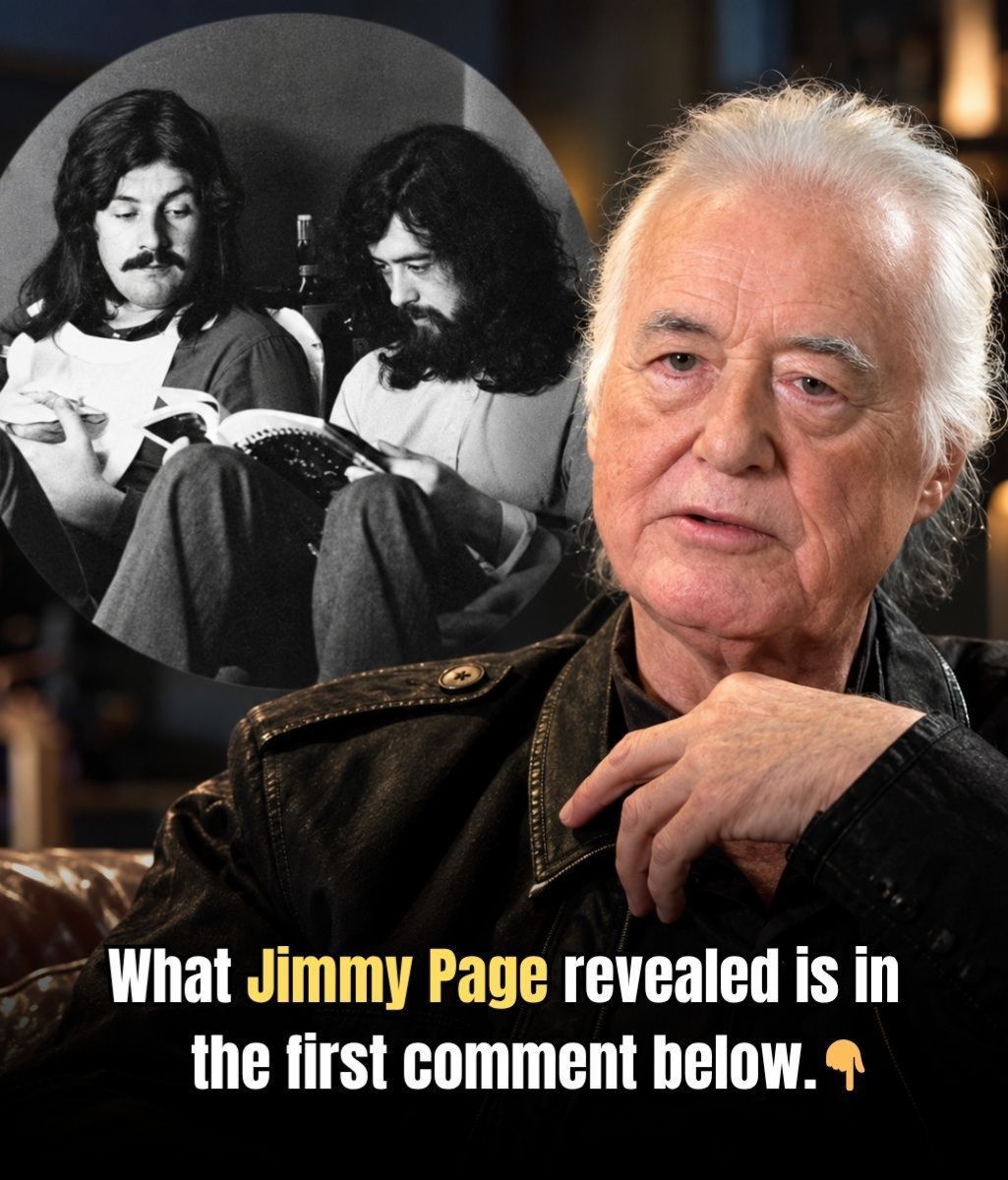
Some losses change the course of a life. Others change the course of music history. For Jimmy Page, the death of John Bonham in September 1980 was both. At 82, the legendary guitarist remains one of the most influential musicians ever to stand on a concert stage, but the story of Led Zeppelin cannot be told without acknowledging the devastating event that brought the band to an abrupt and permanent end. Behind the thunderous drums, unforgettable guitar riffs, and extraordinary success was a friendship and musical partnership that had helped create something the world had never heard before. When Bonham died, the silence that followed was unlike anything the band had experienced. It was not simply the loss of a drummer. It was the disappearance of an essential part of Led Zeppelin’s identity.
To understand why his passing affected the group so profoundly, one must return to the extraordinary chemistry that existed between its four members. Jimmy Page, Robert Plant, John Paul Jones, and John Bonham were not simply four talented musicians brought together for a recording project. They formed a musical partnership whose individual strengths complemented one another in remarkable ways. Page brought a distinctive vision as a guitarist and producer. Plant possessed a powerful, unmistakable voice. Jones provided musical depth through his bass playing and keyboard arrangements. And Bonham supplied the rhythmic force that gave the entire group its unmistakable character. Together, they created a sound that would influence rock music for generations.
John Bonham was particularly important because his drumming was unlike anything audiences had previously experienced. His playing combined extraordinary power with remarkable precision and instinct. He could make a performance feel enormous without losing its musical sensitivity. Songs such as When the Levee Breaks, Kashmir, and Good Times Bad Times demonstrated just how distinctive his approach could be. His drums were not merely keeping time behind the other musicians. They were an essential part of the musical conversation. When Bonham played, Led Zeppelin sounded like Led Zeppelin.
On September 25, 1980, that extraordinary partnership came to an unimaginable end. Bonham died at the age of 32 after an accidental death involving alcohol. His passing shocked the music world and devastated those closest to him. The band suddenly faced a reality none of its members had prepared to confront. They had spent years building a musical identity together, performing before enormous audiences, recording influential albums, and experiencing the extraordinary highs of international success. Now one of their closest collaborators was gone, and there was no way to restore what had existed before.
For Jimmy Page, the loss carried a significance that extended far beyond the professional relationship between guitarist and drummer. The two musicians had developed a remarkable understanding through years of recording and performing together. Page’s guitar arrangements often relied on the power, timing, and instinctive responses of Bonham’s drumming. Their musical connection was built through countless hours of rehearsals, studio sessions, and concerts. Sometimes, the greatest musical partnerships are difficult to explain because so much of their communication happens without words. A change in rhythm, a sudden pause, or a powerful drum fill can completely transform a performance. Page and Bonham understood that language exceptionally well.
The most consequential decision came just weeks after Bonham’s death. On December 4, 1980, Led Zeppelin released an official statement announcing that the group would not continue. The members explained that they could not continue as they had before without their friend and colleague. It was a remarkable decision in an industry where successful groups often attempt to replace departed members and preserve their commercial momentum. But Led Zeppelin’s identity was inseparable from the four musicians who had created it. Replacing John Bonham might have allowed the band to continue performing, but it could never have restored the original chemistry.
That decision also reflected something deeper about the nature of their achievement. Led Zeppelin had never been an ordinary musical project. Its members had built an unmistakable sound through years of collaboration, experimentation, and mutual understanding. Continuing under the same name without Bonham would have meant creating an entirely different group while asking audiences to believe that nothing essential had changed. The remaining members ultimately chose not to do that. Their decision preserved the integrity of what they had accomplished together rather than attempting to recreate something that could never be duplicated.
For fans, the end of Led Zeppelin was difficult to accept. Many had hoped that the group might eventually return, perhaps with another drummer or through a special reunion performance. The surviving members did occasionally share the stage in later years, most notably at the 2007 Ahmet Ertegun Tribute Concert in London, where John Bonham’s son, Jason Bonham, performed alongside them. That evening became a powerful reminder of the music they had created and the enormous affection audiences continued to hold for the original band. Yet even that remarkable performance could not erase the passage of time or change the circumstances surrounding the group’s dissolution.
Jimmy Page’s later reflections on Led Zeppelin have often returned to the importance of the band’s chemistry and the irreplaceable contribution of each member. It is important, however, not to attribute a newly revealed private confession or a specific hidden reason to him without a verified interview or statement. The historical explanation for the band’s ending is already deeply significant. Bonham’s death changed everything, and the surviving musicians recognized that the group could not simply continue as though nothing had happened.
There is something particularly moving about this chapter of rock history. Led Zeppelin reached extraordinary heights during its relatively short existence, yet its story did not end with another farewell tour, a final commercial album, or a carefully organized retirement. It ended because four musicians had created something that depended on all four of them. Their decision was painful, but it demonstrated a profound respect for the friendship and artistic partnership they had shared.
At 82, Jimmy Page stands as one of the great architects of modern rock music. His guitar work continues to inspire musicians, his recordings remain essential listening, and his contribution to Led Zeppelin’s legacy is impossible to overstate. But the story of the band will always return to the drummer whose extraordinary playing helped make its greatest performances possible.
Perhaps the most heartbreaking truth is that Led Zeppelin did not end because its music had run out of power. It ended because one of the people who gave that music its unmistakable heartbeat was gone.
And somewhere in those unforgettable recordings, John Bonham’s drums still answer Jimmy Page’s guitar. The years have passed, the concerts have ended, and the original four musicians can never stand together again. Yet when that familiar sound fills a room, it becomes clear why millions of fans still refuse to let the music go. Led Zeppelin was more than a band. It was a once-in-a-lifetime meeting of four extraordinary musicians, and no replacement could ever recreate what they had together.