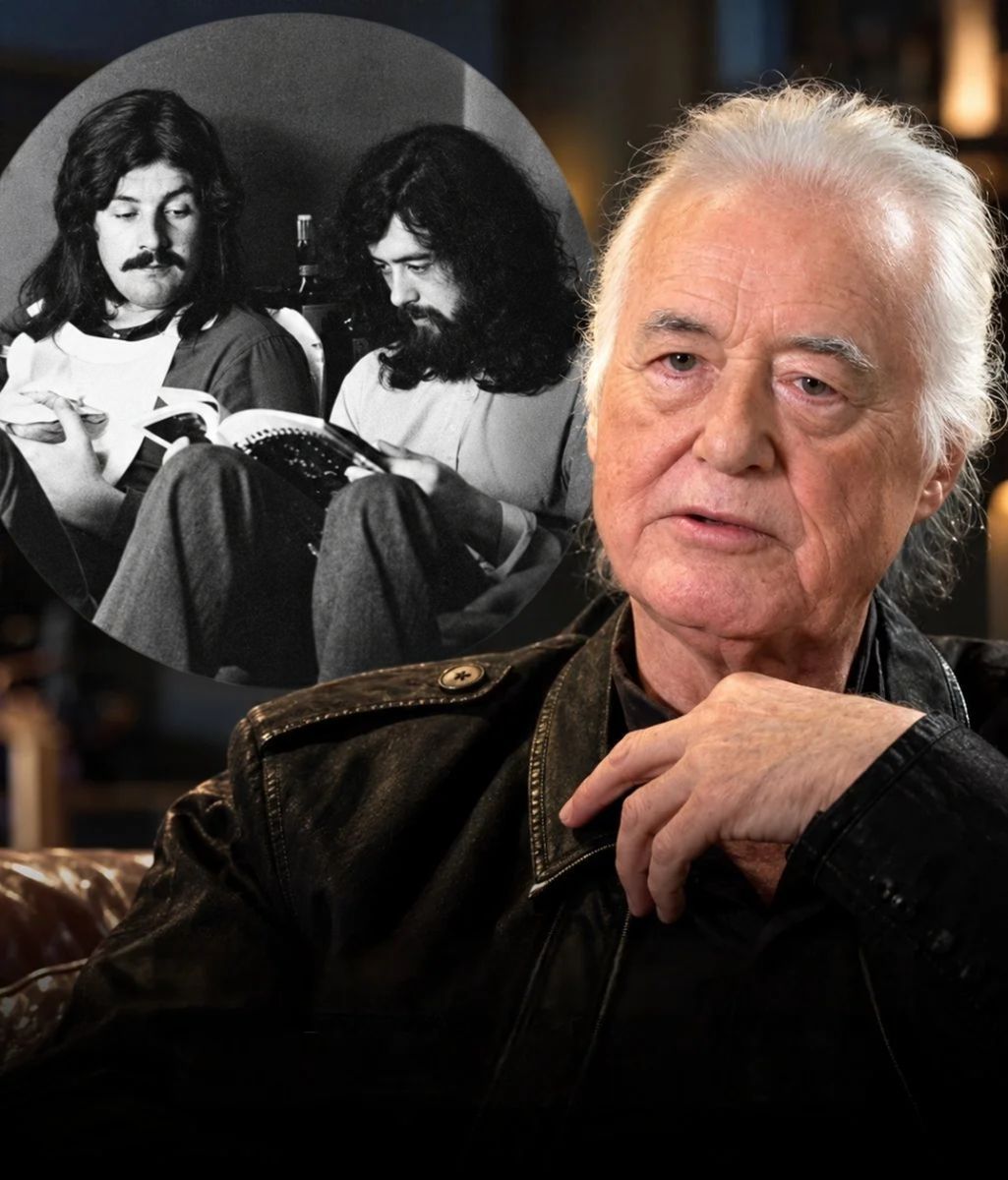
For more than four decades, the name Led Zeppelin has represented something almost impossible to recreate in rock music. Their thunderous sound, extraordinary musicianship, and unforgettable performances helped define an era when rock and roll seemed capable of changing the world. Yet behind the legendary recordings and sold-out concerts was a story of friendship, brotherhood, and a devastating loss that would bring one of the greatest bands in music history to an irreversible turning point. For Jimmy Page, the passing of drummer John Bonham in September 1980 was not simply the loss of a fellow musician. It marked the end of a remarkable musical partnership and the beginning of a chapter that would forever change how he remembered the band they had built together.
Jimmy Page had spent years developing a musical identity that would eventually influence generations of guitarists. His distinctive playing, powerful compositions, and ability to combine blues, folk, hard rock, and experimental sounds helped establish Led Zeppelin as one of the most important bands of the twentieth century. Alongside Robert Plant, John Paul Jones, and John Bonham, he created a musical partnership that seemed almost unstoppable. Each member brought something essential to the group, but Bonham’s drumming gave their music a remarkable foundation. His powerful rhythms were not merely accompaniment. They were an essential part of the band’s identity.
John Bonham was more than the drummer behind Led Zeppelin’s greatest recordings. He was one of the musical forces that made the band sound like Led Zeppelin. His explosive playing on songs such as When the Levee Breaks, Kashmir, and Good Times Bad Times demonstrated an extraordinary combination of strength, precision, and instinct. His technique could be thunderous without losing its musical sensitivity, and his personality brought an unmistakable character to the group. Those who knew the band understood that removing Bonham from the equation would mean changing something fundamental.
On September 25, 1980, Bonham died at the age of 32. His death followed an episode of heavy alcohol consumption, and the tragedy sent shockwaves through the music world. For his bandmates, the loss was almost impossible to comprehend. They had spent years traveling together, recording together, and creating music that connected millions of people. Suddenly, one of the four central figures was gone. The future that had once seemed full of possibilities had become uncertain.
In the weeks following his death, Jimmy Page and the remaining members faced a decision that would define the band’s legacy. They could attempt to continue with another drummer, preserving the Led Zeppelin name and moving forward with their musical careers. But that possibility raised a difficult question: could the group truly remain the same without the man whose drumming had become such an essential part of its sound? After considerable reflection, the surviving members reached their decision.
On December 4, 1980, Led Zeppelin announced that they would disband. Their statement expressed that they could not continue as they had before following the loss of their friend. It was a remarkable decision in an industry where successful bands often attempt to survive changes in their lineups. But for Page, Plant, and Jones, the choice reflected something deeper than professional considerations. They believed that Led Zeppelin’s identity was inseparable from the four musicians who had created it.
For Jimmy Page, the years that followed brought both musical opportunities and the unavoidable memories of what had been lost. He continued working on projects, collaborated with other musicians, and remained connected to the guitar-driven sound that had made him famous. Yet the Led Zeppelin years could never simply become another chapter in a long career. The recordings remained, the performances remained, and the absence of Bonham remained part of the story.
One of the most difficult aspects of losing a longtime friend is realizing that the shared future once imagined will never arrive. There would be no more new Led Zeppelin albums recorded with the original four members, no more ordinary conversations before rehearsals, and no more opportunities to experience that particular musical chemistry onstage. The surviving musicians could continue creating music, but they could never recreate the exact partnership that had existed before September 1980.
Over the decades, Jimmy Page has spoken about Bonham with admiration, recalling his extraordinary talent and the importance of his contribution to the band. His reflections have helped fans understand why the decision to end Led Zeppelin was so significant. It was not simply a business decision or a reaction to changing musical circumstances. It was also a recognition that the loss of one member had fundamentally altered the group.
The band’s later reunions demonstrated just how powerful its legacy remained. The 2007 concert at London’s O2 Arena, featuring Jason Bonham, John’s son, on drums, brought the surviving original members together for a historic performance. For longtime fans, it was an emotional opportunity to hear the music again, with Jason carrying forward the extraordinary rhythmic tradition established by his father. Yet even that remarkable evening could not erase the truth that the original Led Zeppelin era had ended in 1980.
Now, at 82, Jimmy Page stands as one of the last great architects of classic rock’s golden age. His guitar work continues to inspire musicians, while Led Zeppelin’s recordings remain essential listening for generations discovering the band for the first time. The passage of time has not diminished the importance of John Bonham’s contribution or the significance of the decision made by his surviving bandmates.
Perhaps the most heartbreaking truth behind Led Zeppelin’s ending is also the simplest: some musical partnerships cannot be replaced because they are built on something greater than technical ability. Page, Plant, Jones, and Bonham created a sound that belonged to all four of them. When Bonham died, the foundation of that partnership disappeared. Rather than pretending nothing had changed, the surviving members chose to preserve what they had created.
And that is why Led Zeppelin’s final goodbye remains so powerful. Their story did not end because their music had lost its audience or because the world had stopped listening. It ended because one irreplaceable member was gone, and the three remaining musicians understood what that loss meant. John Bonham may have played his final notes in 1980, but his rhythms continue to thunder through rock history. For Jimmy Page and millions of devoted fans, the music remains a lasting reminder of a brotherhood that time could never truly erase.