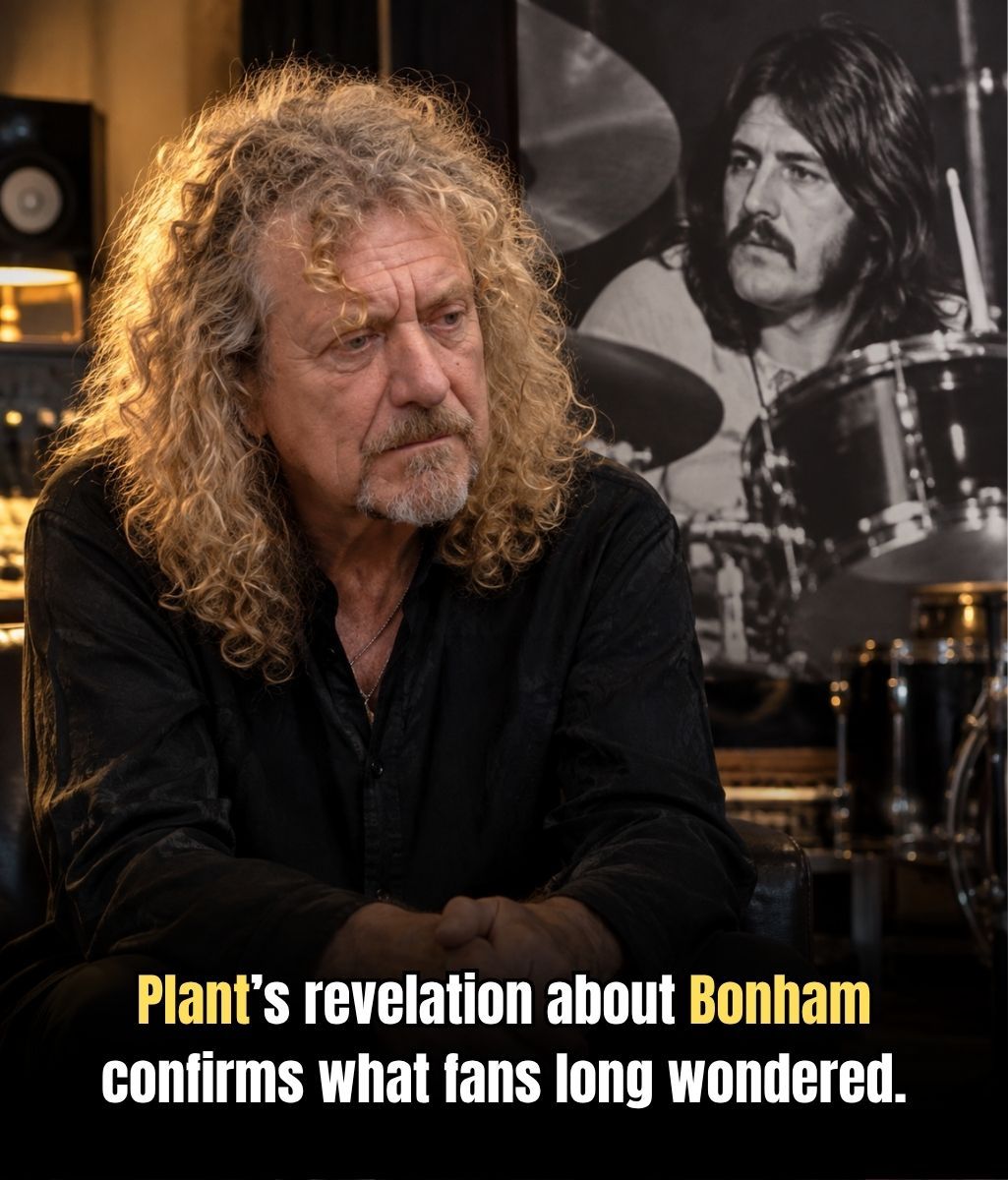
Long before Led Zeppelin became one of the biggest bands on earth, Robert Plant and John Bonham were simply two young musicians from England’s Midlands trying to find their way into music. They played together before Zeppelin existed, traveled the same local circuit and developed a friendship that had nothing to do with platinum albums, private airplanes or sold-out arenas. That history matters because when Bonham died on September 25, 1980, at only 32, Plant did not merely lose the drummer standing behind him. He lost someone who belonged to his life before the rest of the world knew either of their names.
That is the part of the Led Zeppelin story that can disappear beneath the mythology. Fans naturally remember Bonham for the thunder of “When the Levee Breaks,” the explosive opening of “Rock and Roll,” the impossible drive of “Good Times Bad Times” and the monumental rhythms beneath “Kashmir.” To musicians, he became a benchmark for what rock drumming could be. But to Plant, the man behind those drums was Bonzo—a friend from home whose presence connected the unimaginable world of Led Zeppelin to the life they had known before fame.
Their friendship became especially meaningful during one of the darkest periods of Plant’s life. In 1977, while Led Zeppelin was touring America, Plant’s five-year-old son Karac died suddenly. Plant returned home devastated. Bonham, who had known Plant and his family long before Zeppelin conquered America, was among the people whose friendship carried a different weight during that tragedy. Years later, when Plant spoke about Bonham, it was often this personal history—not simply his astonishing ability behind a drum kit—that explained why replacing him was never an ordinary musical decision.
By 1980, Led Zeppelin itself was changing. The excess and relentless momentum of the earlier decade had taken a toll. Plant had endured tragedy and questioned his relationship with the enormous machine surrounding the band. Jimmy Page, John Paul Jones, Plant and Bonham were no longer the carefree young musicians who had entered a rehearsal room together in 1968. Yet they were preparing to move forward again. A North American tour was being planned, rehearsals were underway, and there was still discussion of future music.
Then everything stopped.
Bonham died after a day of heavy drinking during rehearsals. He had gone to sleep at Jimmy Page’s home near Windsor and was found unresponsive the following day. His death was ruled accidental.
There was no grand farewell.
No final Led Zeppelin concert.
No carefully planned last album.
No opportunity for Plant to stand beside his old friend and recognize that this would be goodbye.
That unfinished ending helps explain everything that followed.
On December 4, 1980, the surviving members announced that they could not continue as Led Zeppelin. From a business perspective, it was an extraordinary decision. The name was enormously valuable. Millions of fans would have accepted another tour. There were brilliant drummers capable of playing difficult Zeppelin material.
But the surviving members understood something audiences sometimes forget:
Playing John Bonham’s drum parts was not the same thing as being John Bonham.
Bonham’s relationship with the other three musicians had developed through years of improvisation. Zeppelin’s concerts were not simply reproductions of studio recordings. Songs stretched, contracted and changed direction according to what happened onstage. Plant could phrase a vocal differently, Page could follow him somewhere unexpected, Jones could shift underneath the music—and Bonham would respond.
Remove one part of that conversation and the conversation itself changed.
Plant’s later reluctance to permanently reunite Led Zeppelin has sometimes been interpreted as stubbornness or conflict with Jimmy Page. The reality is more complicated. Page remained deeply attached to the possibility of playing Zeppelin music again, while Plant increasingly pursued different musical directions. But for Plant, there was also an emotional truth that could never be solved with rehearsals or money.
John Bonham wasn’t coming back.
The surviving members did reunite on special occasions, and not all of them went well. Their 1985 Live Aid appearance was hurried and later remembered with considerable dissatisfaction. Other performances followed, but none produced a permanent resurrection of Led Zeppelin.
Then came December 10, 2007.
At London’s O2 Arena, Plant, Page and Jones reunited with Jason Bonham, John’s son, behind the drums. This time the preparation was serious. Jason understood the music from a uniquely personal position, and the resulting performance became the most celebrated Led Zeppelin reunion after 1980.
For one night, something extraordinary happened.
The songs breathed again.
“Kashmir” towered over the arena. “Black Dog” returned. “Stairway to Heaven” filled another enormous room. And behind Plant, Page and Jones sat the son of the man whose death had ended everything twenty-seven years earlier.
Naturally, the world wanted more.
A tour would have been enormous.
But Plant did not commit to turning that single evening into a permanent revival. The decision frustrated fans and helped create years of speculation about disagreements within the surviving members. Yet viewed through Plant’s relationship with Bonham, his reluctance becomes easier to understand.
The O2 concert could honor the past.
It could not restore it.
Jason Bonham could honor his father magnificently, but even Jason was not supposed to erase him. The original Led Zeppelin had been four particular men who found one another at one particular moment in their lives.
And that may be the truth fans had sensed all along.
For Robert Plant, John Bonham was never an empty seat waiting for another drummer.
He was the childhood-era friend who knew Plant before the fame. He was the thunder behind some of the greatest recordings in rock history. He was part of the musical conversation that transformed four musicians into Led Zeppelin.
And when Bonham died, Plant lost something that no reunion contract could recreate.
That is why the most revealing thing Robert Plant has said about John Bonham isn’t a newly discovered secret or a dramatic confession made at 78. The truth has been visible for decades in what Plant chose not to do.
He could return for a night.
He could sing the songs again.
He could stand beside Jimmy Page and John Paul Jones while Jason Bonham honored his father’s place behind the drums.
But permanently pretending that Led Zeppelin had simply survived 1980 was another matter entirely.
Because Robert Plant didn’t only lose Led Zeppelin’s drummer that September morning.
He lost Bonzo—the friend who had been there before Led Zeppelin existed, and the one man no reunion could ever truly bring back.
Follow Led Zeppelin for more rare stories, legendary recordings, unforgettable performances, and memories from the golden age of rock. ❤️🎸