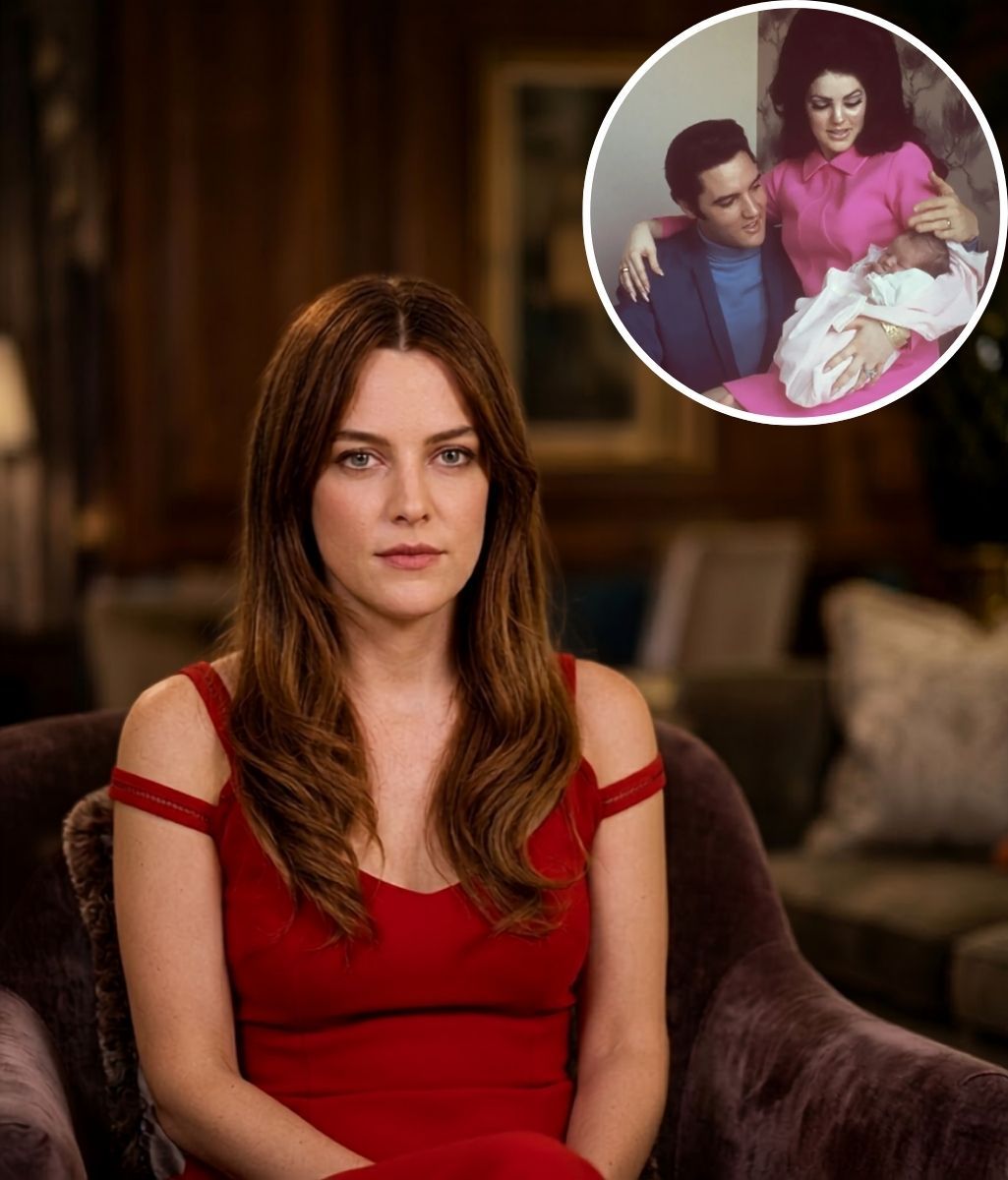
For years, the Presley family has lived under an extraordinary level of public attention, but few moments have been as emotionally complicated as the dispute that followed the death of Lisa Marie Presley in January 2023. When Lisa Marie died at 54, her daughter Riley Keough ultimately became the sole trustee of her mother’s estate, including the trust connected to Graceland. The change immediately raised questions because Lisa Marie’s mother, Priscilla Presley, had previously served as a co-trustee. What followed was a legal disagreement that placed two generations of the Presley family on opposite sides of an estate dispute. Yet the public record shows something considerably more nuanced than the simple claim that Priscilla was “excluded” from the family estate.
The story began with a document dated 2016 that appeared to change the terms of Lisa Marie’s trust. According to court filings, the amendment replaced Priscilla and Lisa Marie’s former business manager, Barry Siegel, with Lisa Marie’s children, Riley Keough and her late son Benjamin Keough, as successor trustees. After Lisa Marie’s death, Priscilla challenged the authenticity and validity of that amendment, raising concerns about the appearance of Lisa Marie’s signature and the circumstances surrounding the document. For fans watching from the outside, the situation was heartbreaking. This was not simply a dispute involving paperwork and property. It involved a mother, a daughter who had died unexpectedly, a grieving granddaughter, and one of the most recognizable family legacies in American entertainment history.
At the center of everything was Graceland. For generations of Elvis Presley fans, Graceland has represented far more than a valuable property. It is the place most closely associated with Elvis’s private life, his family, his career, and his final resting place. After Elvis died in 1977, Lisa Marie inherited his estate and eventually became the central family figure connected to Graceland. After her death, that responsibility passed to Riley. Suddenly, Riley was no longer simply Elvis Presley’s granddaughter or Lisa Marie’s daughter. She had become the person responsible for protecting a major part of her family’s history.
In 2023, Riley and Priscilla reached a settlement rather than continuing the dispute indefinitely. The agreement made Riley the sole trustee of Lisa Marie’s estate. Priscilla stepped down from her role as trustee, but she did not simply disappear from the family’s story. The settlement provided her with financial benefits, reimbursement for certain legal expenses, and a role as a special adviser connected to the trust. Arrangements were also made concerning her eventual burial and memorial service at Graceland. Those details are important because they change the way the headline is often understood.
Priscilla was not simply cast out of the Presley legacy.
Instead, the legal structure surrounding Lisa Marie’s estate changed, and Riley became the person entrusted with managing it. There is a profound difference between being removed from a particular legal role and being erased from a family history that spans generations. Priscilla’s place in the Presley story remains undeniable.
Riley’s position was also shaped by her own relationship with Graceland. In interviews after her mother’s death, she spoke about growing up with the property and the Presley family history while also trying to maintain a sense of normal life. Graceland was not merely a business asset to her. It was a place connected to childhood memories of her mother, her grandparents, and the complicated history of the Presley family. That emotional connection became particularly visible again when an unrelated attempt was made to place Graceland at risk of foreclosure. Riley took legal action to stop the proposed sale, arguing that documents supporting the claim were fraudulent. A Tennessee judge ultimately blocked the proposed sale.
That episode demonstrated something important about Riley’s role. She was not simply inheriting a famous house. She was defending a piece of her family’s history.
For longtime Elvis fans, that responsibility can be difficult to imagine. Graceland represents the place where Elvis lived, but it also represents the connection between several generations of his family. Elvis’s legacy passed to Lisa Marie, and after Lisa Marie’s death, Riley became one of the principal people responsible for carrying it forward.
Priscilla’s place in that story remains equally significant. She was Elvis’s former wife, Lisa Marie’s mother, and Riley’s grandmother. Her own history with Graceland stretches back decades. She was also instrumental in helping preserve and develop the property after Elvis’s death, contributing to the transformation of Graceland into a successful public attraction. So when the legal dispute emerged, it was never simply about ownership.
It was about who would carry the family legacy into the future.
That is what made the situation so emotional. For Riley, the estate represented her mother’s wishes and the responsibility she inherited after Lisa Marie’s death. For Priscilla, the dispute involved a trust in which she had previously served as a trustee and a family legacy to which she had devoted much of her life. The eventual settlement allowed both women to move forward without continuing the legal battle indefinitely.
And perhaps that is the part that deserves more attention.
They found a way forward.
The public often expects family disputes involving celebrities to end with permanent division. But families are far more complicated than headlines suggest. People can disagree over serious matters while still caring about one another. They can have different ideas about responsibility, inheritance, and family history while remaining connected by generations of shared memories.
Riley and Priscilla’s situation illustrates exactly that. The legal dispute was real. The questions surrounding Lisa Marie’s trust were real. But the idea that Priscilla was simply erased from the Presley family is misleading. The settlement itself demonstrates otherwise. She retained important rights and benefits, including a financial settlement, advisory involvement, and arrangements allowing her to remain connected to Graceland in the future.
That makes the story less about a dramatic family rejection and more about a difficult transition between generations.
Lisa Marie had spent her life carrying the Presley name. After her death, that responsibility moved to Riley. Priscilla, who had carried it in her own way for decades, had to accept a different role. That cannot have been emotionally simple.
Imagine losing your daughter and then having to discuss legal documents concerning the estate she left behind. Imagine being the granddaughter who has lost her mother while simultaneously being asked to protect the family legacy. Imagine trying to separate grief from legal responsibility when the two are impossible to keep completely apart.
There was no easy role for anyone.
That may be why the story continues to fascinate Elvis fans. It is not really about money. It is about memory, family, responsibility, and what happens when a famous legacy passes from one generation to another.
Riley Keough now carries an enormous responsibility. She is not Elvis Presley, and she is not Lisa Marie Presley. She is Riley. Yet she has inherited the responsibility of protecting something that belonged to both of them. Priscilla’s role is different now, but her place in the story remains undeniable.
She was there when Elvis was alive.
She helped raise Lisa Marie.
She helped preserve Graceland after Elvis’s death.
And she remains part of the family history that Riley is now entrusted to protect.
Two generations. One extraordinary legacy. And a complicated history that cannot be reduced to a single headline.
Perhaps that is the real story behind the claim that Priscilla was “excluded.” The truth is not nearly as simple as fans may have been led to believe. Riley became the sole trustee after a legal settlement. Priscilla stepped away from the trustee role. But the settlement also preserved important connections between Priscilla, Riley, and Graceland.
And that may ultimately be the most hopeful part of the story.
Because Elvis’s legacy was never simply a house, a collection of possessions, or a trust document.
It was the people.
Elvis. Lisa Marie. Priscilla. Riley. And the generations that came after them.
The legal battles may eventually become footnotes in Presley history. The paperwork will eventually fade into archives. But Graceland will continue to stand as a reminder of the family behind one of the greatest musical legends of all time.
For Riley, the challenge is not simply deciding who belongs in the Presley story. It is protecting that story while allowing the next generation to carry it forward. For Priscilla, the connection to Elvis and Lisa Marie remains part of a lifetime of memories that cannot be erased by a change in legal responsibility.
And for millions of Elvis fans around the world, the Presley family story remains deeply personal because Elvis’s music became part of their own lives. They remember his voice, his performances, his photographs, and the extraordinary era he helped create. They also understand that behind every famous legacy are real people trying to navigate grief, family relationships, and the passage of time.
The Presley legacy was never truly about one person. It was always about what one generation leaves for the next.
And perhaps that is why the story of Riley and Priscilla continues to matter. Beneath the legal documents and headlines is a much more human story: a granddaughter protecting her mother’s legacy, a grandmother carrying decades of family history, and a legendary name that continues to connect them both.