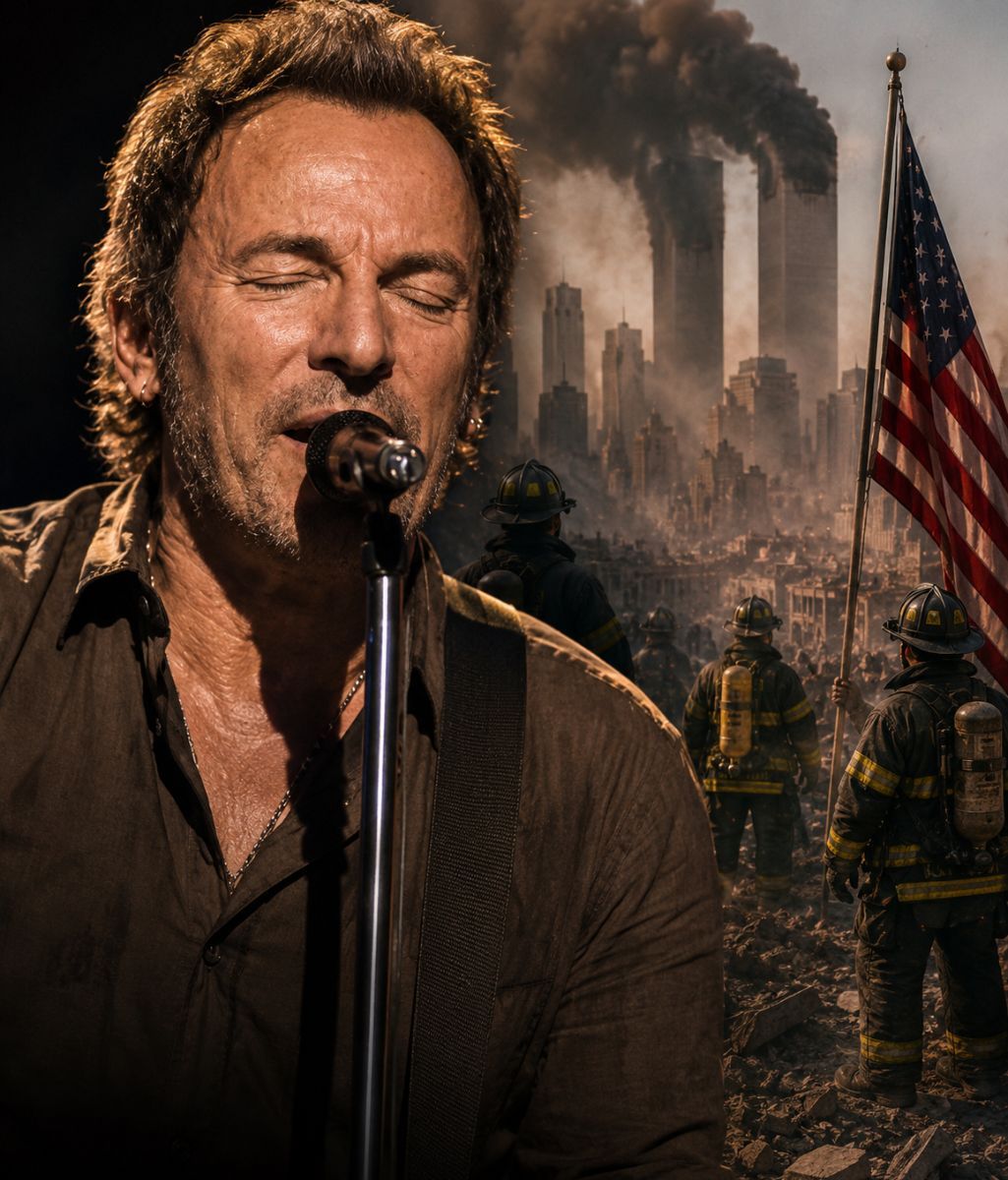
Few songs in modern rock history have carried the emotional weight, compassion, and enduring significance of “The Rising.” Released in 2002 as the title track of Bruce Springsteen’s landmark album of the same name, the song quickly became far more than another addition to his celebrated catalog. It emerged as a powerful reflection on grief, resilience, hope, and the remarkable courage displayed in the aftermath of the September 11, 2001 terrorist attacks. More than two decades later, “The Rising” continues to stand as one of Springsteen’s most meaningful works, remembered not only for its stirring melody but also for its heartfelt tribute to the firefighters, first responders, and ordinary citizens whose extraordinary bravery forever became part of American history.
When Bruce Springsteen began writing the song, the nation was still struggling to process the profound loss and uncertainty that followed the tragic events of September 11. Families were mourning loved ones, communities were searching for comfort, and countless people were trying to find words that could express emotions that often seemed impossible to describe. Rather than attempting to explain the tragedy itself, Springsteen chose to focus on something deeply human—the quiet courage of those who risked everything to help others during one of the darkest moments in modern history.
At the center of “The Rising” is the perspective of a firefighter climbing the stairs of the World Trade Center, fully aware of the danger yet continuing upward because others needed help. This powerful narrative transforms the song into more than a historical reflection. It becomes a moving portrait of selfless service, unwavering commitment, and the remarkable strength that ordinary individuals can demonstrate when faced with extraordinary circumstances.
Springsteen has long been celebrated for writing songs that tell deeply personal stories while speaking to universal experiences. With “The Rising,” he achieved that balance with exceptional sensitivity. Rather than relying on political statements or dramatic imagery, he created a work that emphasizes compassion, dignity, and hope. The lyrics invite listeners to reflect on sacrifice, loss, faith, and the enduring belief that even in moments of overwhelming darkness, humanity possesses the capacity to find light again.
Musically, the song mirrors its emotional journey. It begins with quiet determination before gradually building into a powerful and uplifting anthem. The arrangement blends driving guitars, steady percussion, rich harmonies, and Springsteen’s unmistakable voice into a performance that feels both intimate and inspiring. Every musical element contributes to a sense of perseverance, carrying listeners from sorrow toward renewal without ever diminishing the gravity of the events that inspired the song.
The release of The Rising album marked an important chapter in Bruce Springsteen’s career. It was his first studio album with The E Street Band in many years, reuniting one of rock music’s most celebrated collaborations at a moment when audiences were searching for music that offered both honesty and encouragement. The album received widespread critical acclaim for its thoughtful songwriting, emotional depth, and compassionate perspective, with the title track becoming its defining centerpiece.
For firefighters and first responders across the United States, “The Rising” came to represent a lasting expression of gratitude and respect. Although inspired by the events of September 11, the song’s message extends far beyond a single day in history. It honors everyone who chooses service over personal safety, who places the well-being of others before themselves, and who quietly demonstrates courage without seeking recognition.
The emotional power of “The Rising” has been reinforced through countless live performances over the years. Whenever Springsteen performs the song, audiences often respond with profound silence during its reflective moments before joining together as the music builds toward its uplifting conclusion. These performances create an atmosphere of shared remembrance, allowing listeners from different backgrounds and generations to reflect on the enduring values of compassion, resilience, and unity.
One of the reasons the song continues to resonate so deeply is that it refuses to remain confined to a single historical moment. While its inspiration is rooted in the tragedy of September 11, its themes speak to anyone who has experienced loss, faced uncertainty, or searched for hope during difficult times. The song reminds listeners that healing is rarely immediate, but resilience grows through acts of kindness, courage, and shared humanity.
Over the years, “The Rising” has earned recognition as one of Bruce Springsteen’s greatest achievements as a songwriter. It is frequently included among his most important compositions because it captures not only a defining moment in American history but also timeless qualities that transcend generations. Its message continues to inspire listeners who appreciate music that offers empathy rather than division and hope rather than despair.
More than twenty years after its release, “The Rising” remains a powerful reminder that music can serve as both a source of comfort and a lasting tribute. Through thoughtful storytelling, heartfelt emotion, and unforgettable melodies, Bruce Springsteen created a song that honors the memory of those who lost their lives, recognizes the extraordinary courage of the firefighters and first responders who made the ultimate sacrifice, and celebrates the resilience of communities determined to move forward together.
In the end, “The Rising” is far more than a remarkable rock song. It is a timeless expression of courage, compassion, remembrance, and hope—a musical tribute that continues to remind the world that even after unimaginable tragedy, the human spirit possesses an extraordinary ability to rise with dignity, strength, and unwavering determination.