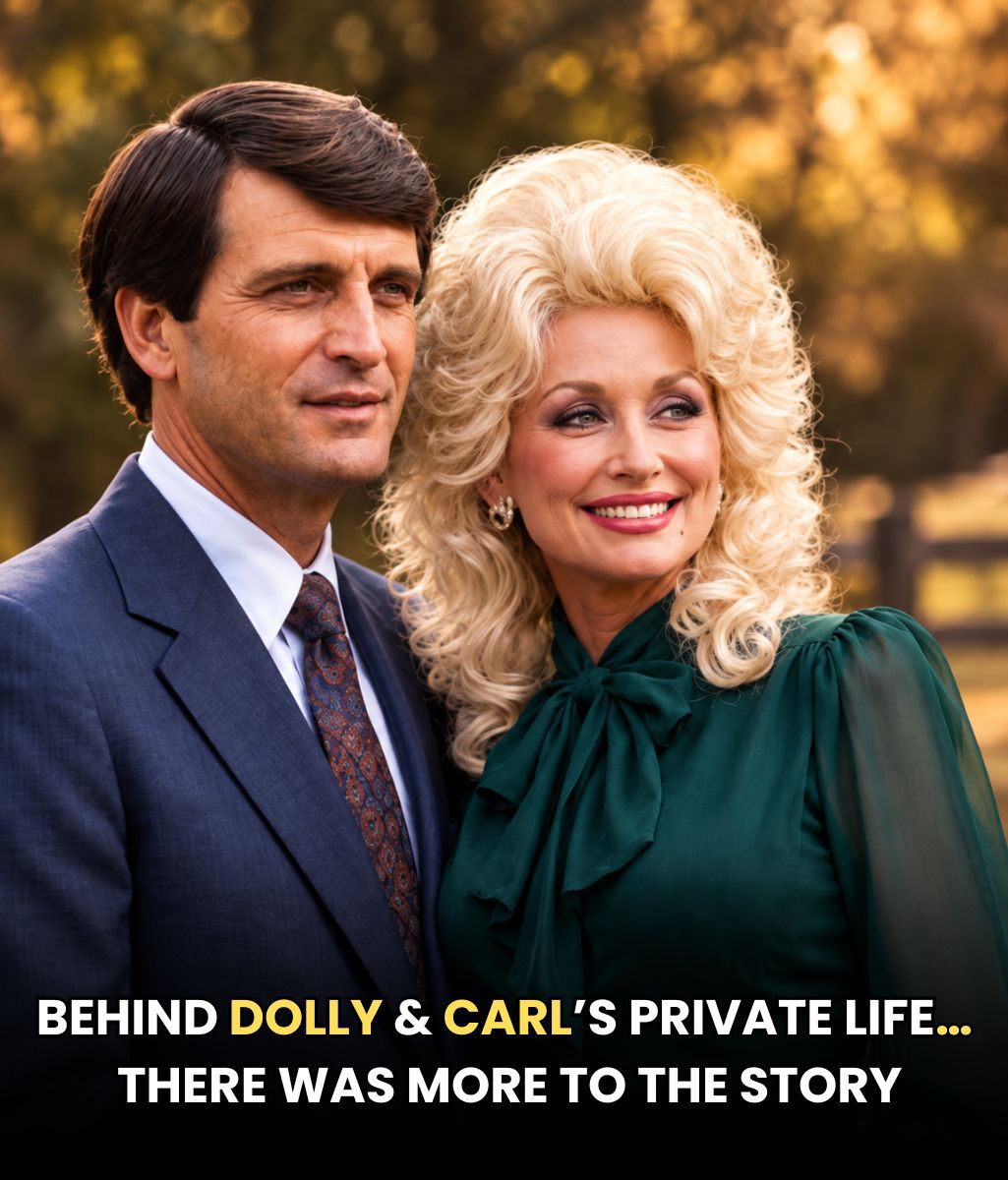
For nearly six decades, Dolly Parton lived one of the most public lives imaginable while Carl Dean remained almost completely outside the spotlight. Dolly appeared on television screens, concert stages, magazine covers, and award shows around the world. Carl, meanwhile, became famous partly because people so rarely saw him. He did not routinely walk red carpets beside his wife, sit for celebrity interviews, or build a public identity around being married to one of America’s most recognizable entertainers. That contrast inevitably fascinated fans. Some wondered whether his absence suggested distance between them. Others imagined there must be a mysterious explanation hidden behind closed doors. But the story Dolly told over the years was both simpler and more interesting: Carl valued his privacy, while Dolly belonged to a profession that required her to live much of her life in public. Somehow, they learned to make those two very different worlds coexist.
Their story began before the awards, the rhinestones, and the international fame. Dolly met Carl Dean in Nashville in 1964, shortly after arriving in the city to pursue her dreams in country music. At the time, she was still a young woman from East Tennessee hoping her songwriting and unmistakable voice might open a door. Carl was not part of the music industry, and he apparently had little desire to become part of it. They married in 1966, when neither could have known just how enormous Dolly’s career would eventually become. As her records climbed the charts and her name became increasingly familiar, Carl largely continued living beyond the cameras. The bigger Dolly’s public world became, the more unusual their arrangement appeared from the outside.
For celebrity watchers, one question persisted: Why was Carl almost never there? The assumption behind that question was that a devoted husband should naturally want to stand beside his famous wife whenever photographers appeared. But Dolly repeatedly described Carl as someone who simply did not enjoy the machinery of celebrity. One famous story she told involved Carl attending an industry event early in their marriage and deciding afterward that such occasions were not for him. Whether Dolly was performing before thousands of people or accepting another honor, Carl did not need to become part of the public presentation of her career. His preference for privacy was not necessarily a rejection of Dolly’s success. It reflected the fact that support does not always have to be performed where everyone can see it.
That arrangement also gave Dolly something fame increasingly threatened to take away: an ordinary place to return to. Imagine spending years surrounded by people who know your songs before they know you, who recognize your face before you have introduced yourself, and who approach you carrying expectations shaped by decades of television appearances. Carl had known Dolly before much of that existed. He remembered the young woman who arrived in Nashville with enormous ambition but without the global reputation she would later carry. That history mattered. The public knew Dolly Parton, the entertainer whose personality could fill a theater. Carl knew the person who existed after the makeup came off, the stage lights went dark, and there was no audience left to entertain.
Their marriage also challenged the idea that two people must share every interest in order to remain close. Dolly loved performing, traveling, writing songs, meeting people, and turning herself into an unforgettable stage presence. Carl preferred life away from the entertainment business. Instead of treating those differences as a problem that needed fixing, they appear to have built their marriage around them. Dolly did not require Carl to become a celebrity husband, and Carl did not require Dolly to abandon the public life she had worked so hard to create. They could have separate interests, spend time apart because of work, and still return to the relationship they had built together. To outsiders accustomed to seeing celebrity couples constantly photographed side by side, that independence could look strange. To Dolly, it was simply part of how their marriage worked.
There was another reason their relationship remained so intriguing: Dolly was remarkably open about some parts of her life while fiercely protective of others. She could tell hilarious stories in interviews, speak candidly about growing up with very little money, discuss her career mistakes, and transform deeply personal memories into songs. Yet that openness did not mean the public was entitled to everything. Her marriage contained ordinary conversations, disagreements, routines, private jokes, celebrations, and difficult moments that were never turned into entertainment. In an era when famous relationships are often documented almost continuously, Dolly and Carl represented another philosophy. Something did not have to be displayed publicly in order to be real. Sometimes keeping a relationship private was itself a way of protecting it.
When Carl Dean died in 2025, after nearly 59 years of marriage, decades of Dolly’s stories about her elusive husband suddenly carried greater emotional weight. The man who had avoided the spotlight had nevertheless been present through an extraordinary transformation. He had watched the ambitious young songwriter he married become a country star, movie actress, businesswoman, philanthropist, and global cultural figure. He had lived through the successes and disappointments that audiences knew about, as well as countless private chapters they never would. The public had measured Dolly’s life in albums, tours, awards, movies, and milestones. Carl had measured it in years shared together. Those are two very different ways of knowing a person.
Perhaps that is the real truth behind Dolly Parton’s famously private marriage. There does not need to be a shocking secret explaining why Carl Dean rarely appeared beside her. The more meaningful explanation is that they created boundaries that made sense to them, even when those boundaries confused people watching from outside. Dolly gave the world her songs, humor, performances, stories, and unmistakable personality, but she never promised the world unrestricted access to her marriage. Carl remained the man waiting beyond the stage rather than another character in the Dolly Parton show. And after almost six decades together, their story leaves behind a surprisingly timeless lesson: the strength of a marriage cannot always be measured by how often two people are photographed together. Sometimes the most important parts of a life are the very parts no audience ever gets to see.