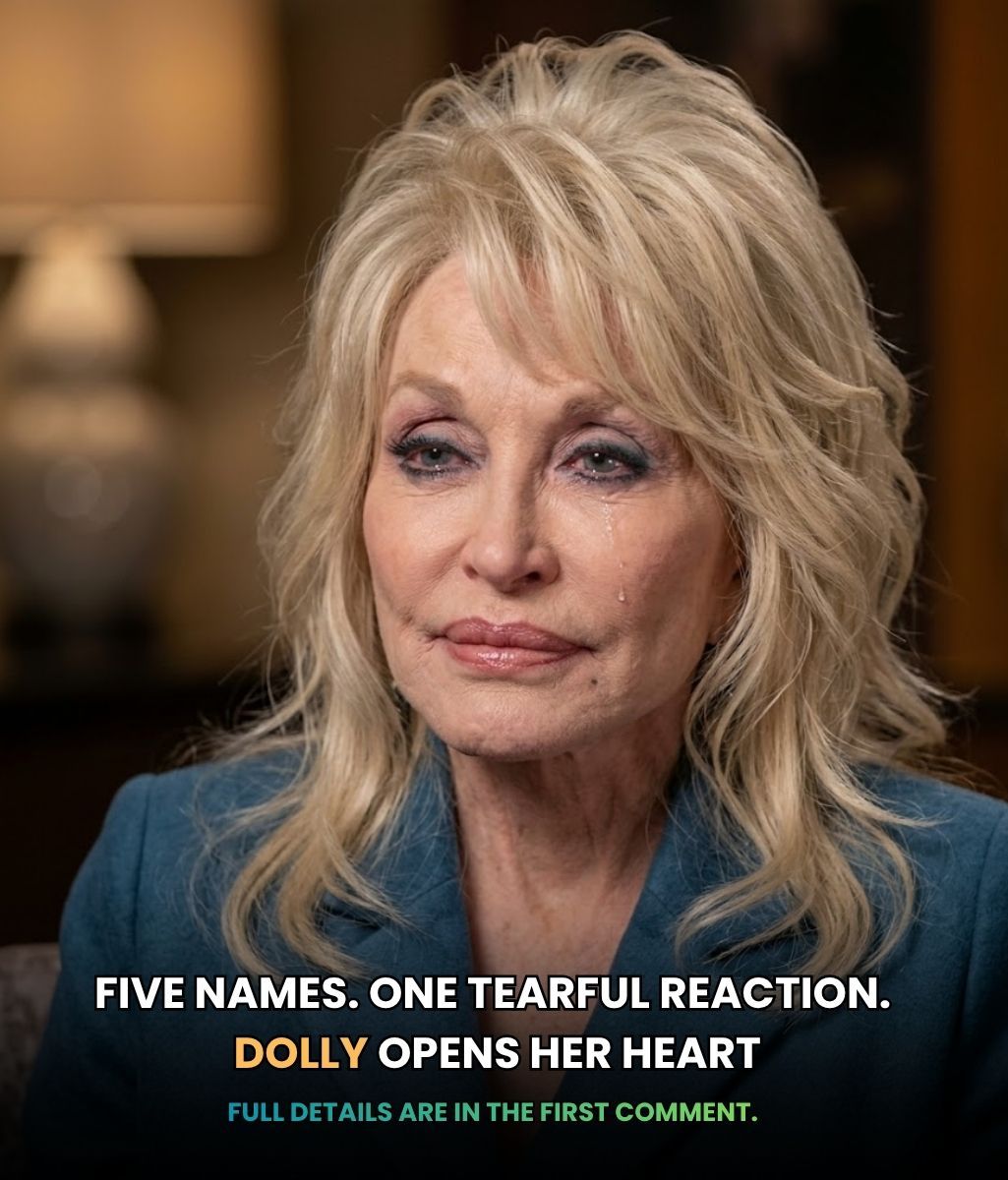
Behind the rhinestones, unforgettable songs, and unmistakable Tennessee voice, Dolly Parton’s story has always been rooted in people rather than possessions. Fame may have carried her around the world, but the relationships surrounding her remained an essential part of the woman audiences came to love. If Dolly were asked to reflect on the five people who shaped her heart most deeply, choosing only five would almost certainly be impossible. Her parents, siblings, husband, friends, collaborators, and goddaughter all occupied different places in her life. Still, looking back across the relationships Dolly has publicly treasured reveals something far more meaningful than a celebrity list: a portrait of the people who helped make Dolly the woman behind the legend.
The first name impossible to overlook is Carl Dean, Dolly’s husband of nearly six decades. They met in Nashville in 1964 and married in 1966, long before Dolly became an international superstar. While her career grew increasingly public, Carl famously preferred privacy. Their lives therefore appeared almost contradictory from the outside—one lived beneath enormous spotlights while the other deliberately avoided them. Yet Dolly repeatedly spoke about Carl with affection and humor over the years. When Carl died in 2025, an extraordinary chapter of her personal life came to an end. No amount of professional success could replace the history contained in such a long marriage: the private jokes, ordinary mornings, disagreements, reconciliations, and memories that never belonged to an audience. Some relationships become so deeply woven into a lifetime that saying the person’s name can open an entire world of memories.
Another central figure was Dolly’s mother, Avie Lee Owens Parton. Dolly grew up as one of twelve children in a family where money was scarce but music, storytelling, faith, and imagination were abundant. Avie Lee helped create that atmosphere. For Dolly, memories of her mother were connected not simply to childhood hardship but to the resourcefulness and warmth that allowed a large family to find dignity even when life was difficult. The emotional world Dolly later captured in songs such as “Coat of Many Colors” grew from those experiences. Her mother represented home before the awards, tour buses, movie sets, and business empire. She belonged to the earliest chapter—the little girl from the Tennessee mountains who had not yet become “Dolly Parton” to the rest of America.
Then there was her father, Robert Lee Parton Sr., whose influence appeared in a different but equally powerful way. Dolly often described her father as hardworking and deeply intelligent despite lacking the educational opportunities she later wished he had received. His life helped shape her respect for working people and influenced her commitment to literacy. Dolly’s Imagination Library would eventually become one of the most recognizable expressions of that commitment. The connection between Dolly’s enormous success and the humble world of her parents never disappeared. Even after she could afford almost anything, she continued telling stories about the people who had possessed comparatively little. That loyalty to her beginnings became one of the defining characteristics of her public life.
A fourth place in this imagined reflection belongs not to one isolated relationship but to the extraordinary Parton family, including siblings who knew Dolly before the world did. Sisters such as Stella Parton shared memories and experiences no fan could ever fully possess—the crowded childhood home, family music, hardship, laughter, and the complicated experience of watching one member of a large family become internationally famous. Siblings occupy a peculiar place in our lives. They remember versions of us that disappear as we grow older. They know stories from before careers, reputations, and carefully preserved public images existed. For someone as famous as Dolly, that connection to people who could still remember the little girl behind the legend would have been particularly precious.
And then there is Miley Cyrus, Dolly’s goddaughter and one of the younger artists with whom she developed a highly visible personal and musical bond. Their relationship became meaningful because it represented something Dolly seemed to value throughout her career: passing encouragement from one generation to another. Miley grew up in a completely different era of entertainment, but Dolly understood better than almost anyone what it meant to develop an identity while millions of strangers watched and judged. Their performances together allowed audiences to see more than two famous singers sharing a stage. There was humor, affection, admiration, and the unmistakable sense of an older artist encouraging a younger woman to find her own path rather than simply imitate those who came before her.
But if one name could bring particularly complicated tears, Carl Dean’s would understandably carry enormous emotional weight. Imagine hearing the name of someone who stood somewhere in the background of nearly sixty years of your life. Suddenly, one word contains thousands of ordinary days. The young couple in Nashville. The years before success was guaranteed. The homecoming after long tours. The private laughter nobody recorded. The aging that happened quietly while the public photographs preserved younger versions of them forever. Grief after a long marriage is not merely missing a person in the present. It is realizing that the only other person who shared countless private memories is no longer sitting beside you to remember them.
Yet reducing Dolly’s heart to exactly five names would ultimately miss the larger truth. Her life was filled with circles of affection rather than a simple ranking. There were eleven siblings, nieces and nephews, longtime friends, collaborators, musicians, neighbors, employees, and younger performers she encouraged. There were also millions of listeners she never met personally but nevertheless treated as an important part of her journey. Dolly’s public generosity suggests that love, in her world, was rarely something to be hoarded. She repeatedly transformed what she had received—opportunity, money, attention, and influence—into something that could reach people beyond her immediate family.
Perhaps that is the more meaningful story hidden beneath a dramatic question about the “five people Dolly loved most.” A lifetime cannot really be reduced to five names. Different people occupy different rooms in the heart: a husband carries one history, parents another, siblings another, and a goddaughter or younger friend something entirely different. What makes Dolly Parton’s story so enduring is not the possibility of discovering a secret ranking before a final goodbye. It is recognizing how faithfully she carried the people and places that shaped her even after becoming one of the most recognizable entertainers in the world. The lights grew brighter, the crowds became larger, and the awards accumulated—but somewhere underneath it all remained the girl from Tennessee who understood that the greatest measure of a life is not how many people know your name, but how deeply you remember the names of those who helped you become who you are.