Some songs seem to belong to a particular year. Others somehow follow us through an entire lifetime.
“I Will Always Love You” is one of those rare songs.
For listeners who first heard Dolly Parton sing it in the 1970s, the memory is very different from the enormous pop ballad that would introduce the song to another generation decades later. Dolly’s original recording was quiet and unmistakably country. There was no need for vocal fireworks. Her voice carried the weight by itself — fragile in places, resolute in others, as though she were saying goodbye while trying not to make the goodbye any harder than it already was.
That restraint remains one of the recording’s greatest strengths.
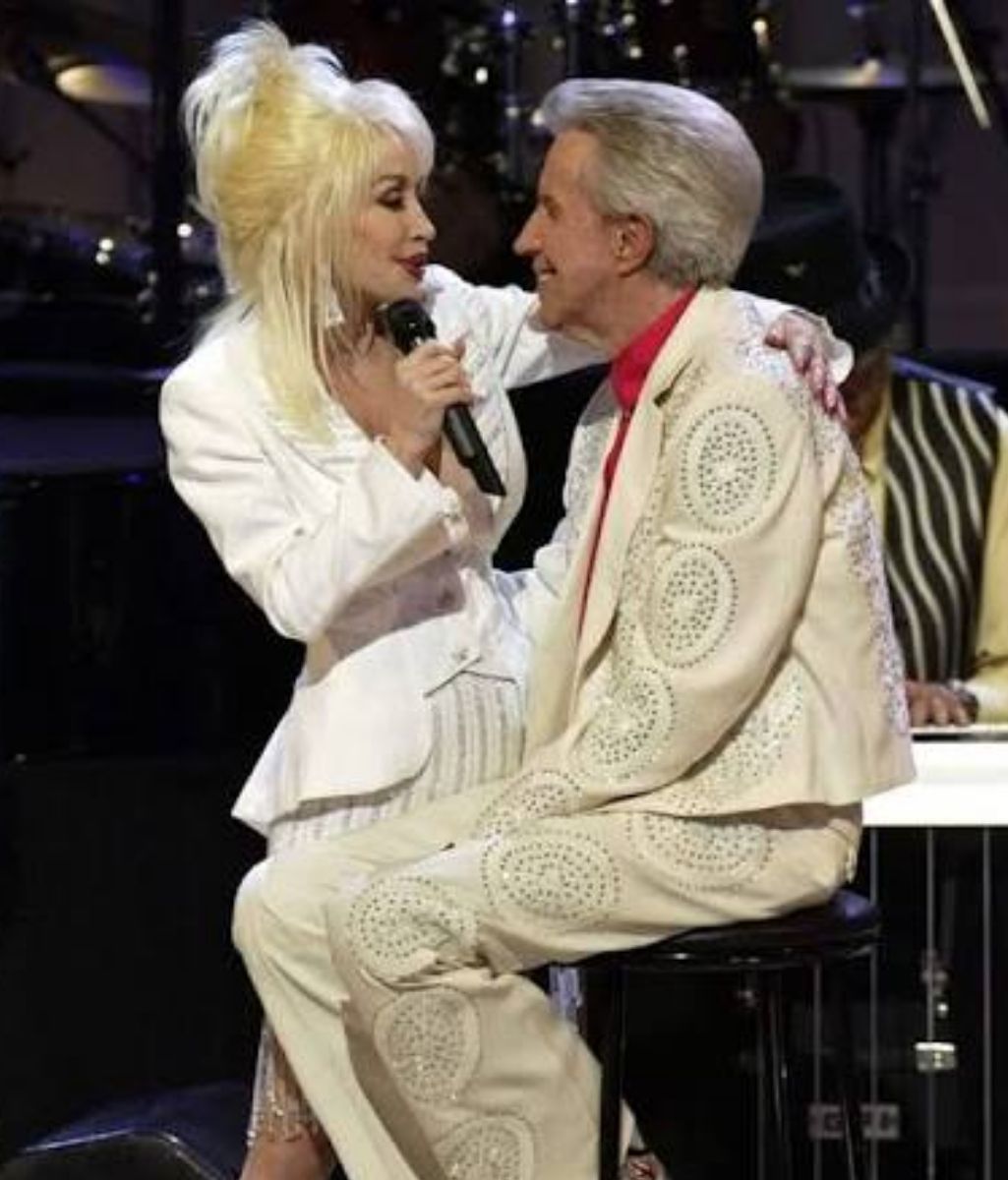
Dolly wrote “I Will Always Love You” during a turning point in her relationship with Porter Wagoner, the country star who had given her a major national platform through The Porter Wagoner Show. Their professional partnership produced numerous recordings and helped establish Dolly with country audiences, but she eventually knew she needed to pursue her career independently.
Rather than expressing that separation through anger, Dolly wrote a farewell.
That background makes the song even more remarkable because the words sound so universal. Nothing in its emotional core requires listeners to know about television shows, Nashville business relationships, or career decisions. It simply sounds like one person looking at another and accepting a painful truth: I care about you deeply, but I have to go.
There is no revenge in the song. No attempt to assign blame. No promise that everything will somehow work itself out.
There is gratitude.
And there is love without possession.
That was an unusually mature emotional position for a breakup song, and it remains so today. Many songs tell us that love means holding on. “I Will Always Love You” suggests that sometimes love can also mean recognizing when it is time to leave.
Produced by Bob Ferguson, Dolly’s recording appeared on her 1974 album Jolene. Released as a single, it reached No. 1 on Billboard’s country singles chart.
Then something extraordinary happened.
Dolly recorded the song again for the 1982 film The Best Little Whorehouse in Texas, in which she starred alongside Burt Reynolds. The new version also reached No. 1 on Billboard’s country chart. The same composition had now topped the country chart for Dolly in two different recordings, eight years apart.
And its story was still far from finished.
In 1992, Whitney Houston recorded “I Will Always Love You” for The Bodyguard. Her interpretation took Dolly’s intimate country farewell and transformed it into a monumental pop performance. Houston’s version spent 14 weeks at No. 1 on the Billboard Hot 100 and won major honors including the Grammy Award for Record of the Year.
For millions of listeners, Whitney’s recording became inseparable from the song.
But hearing Dolly’s original after knowing Whitney’s version can be almost startling.
Whitney builds toward the heavens. Dolly sounds as though she is standing at the doorway.
One interpretation emphasizes the enormous power of love; the other captures the quiet pain of leaving someone you still care about. Both work because the songwriting underneath them is remarkably strong.
That is also why “I Will Always Love You” has escaped the boundaries of the ordinary breakup song. People have heard their own lives inside it. It can recall a former love, a friendship that ended, someone who moved away, or someone who is no longer here. As we grow older, the meaning can change because our understanding of goodbye changes with it.
Perhaps that is why Dolly’s version can become even more affecting with age.
When we are young, we often imagine that the greatest proof of love is refusing to let go. Life eventually teaches something more complicated. Some people can matter enormously to us without remaining beside us forever.
Put Dolly’s original record on today and listen to how little she needs to do. The melody carries the sadness. The words carry the gratitude. Her voice carries everything left unsaid.
More than half a century later, “I Will Always Love You” remains one of Dolly Parton’s greatest achievements because it understands a truth that never grows old:
Sometimes goodbye does not mean the love disappeared.
Sometimes goodbye is simply where the story had to end.
When you hear Dolly sing “I Will Always Love You,” who is the first person you remember?