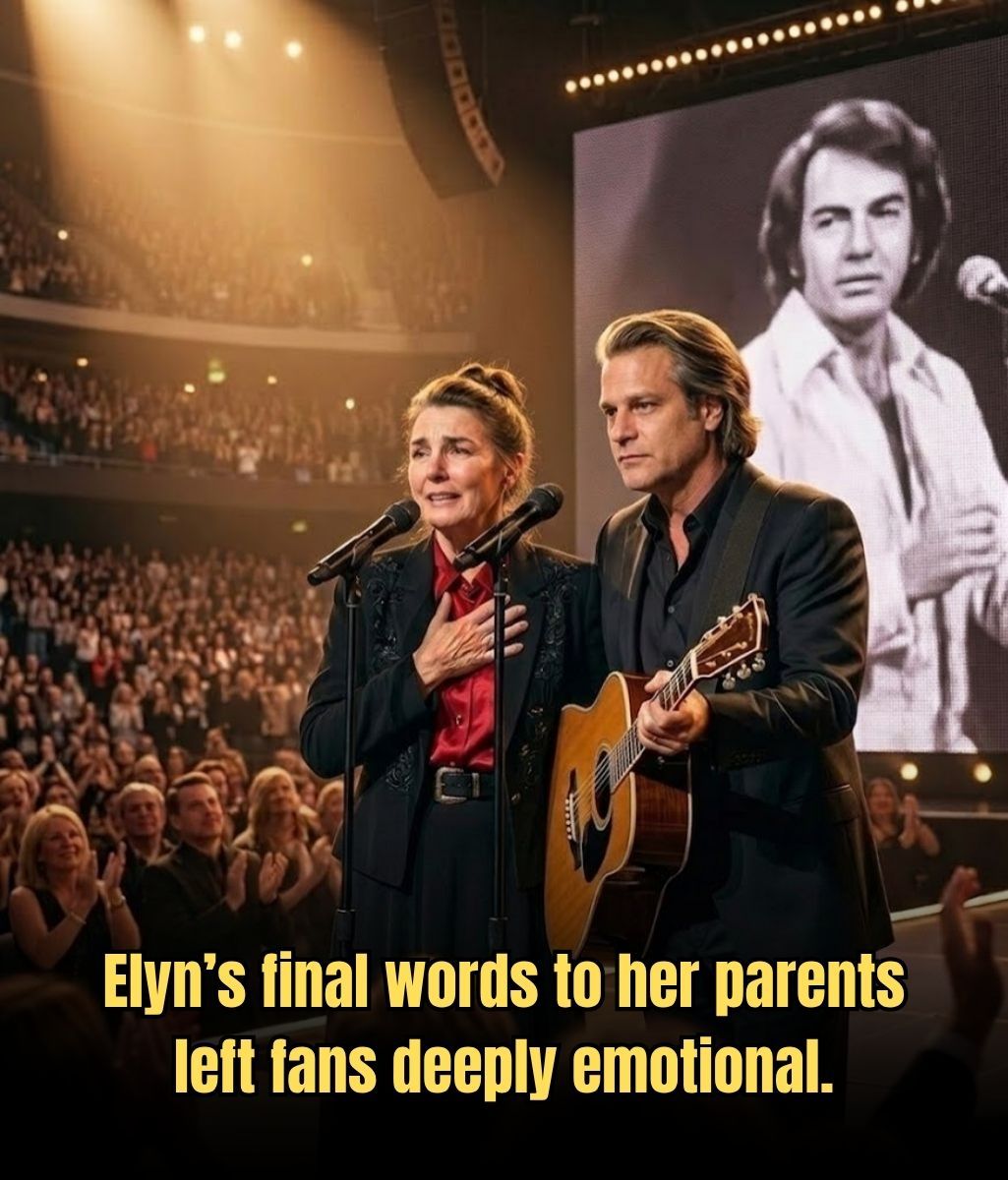
For more than six decades, the name Neil Diamond has belonged to enormous stages, unforgettable melodies and audiences that seem to know every word before he even begins singing. But behind “Sweet Caroline,” “America,” “Cracklin’ Rosie,” “Song Sung Blue” and “I Am… I Said” is another story Neil generally kept much more private: the story of his children. That is why the idea of Jesse and Elyn Diamond stepping into the spotlight together carries an emotional weight far beyond an ordinary family performance.
Neil is the father of four children from his first two marriages. Elyn Diamond is one of the two daughters he shares with his first wife, Jaye Posner, while Jesse Diamond is one of the two sons from his marriage to Marcia Murphey. They grew up during different chapters of their father’s extraordinary rise, watching from inside the family as the quiet Brooklyn songwriter became one of the most recognizable entertainers in American popular music.
A story circulating among fans describes Jesse and Elyn taking the stage together to perform a moving new song, followed by Elyn offering an emotional tribute to her parents. However, there is no reliable documentation confirming this specific performance or the claim that it reached “millions of fans.” The documented Diamond family story is compelling enough without turning an unverified performance into historical fact.
Imagine what taking that stage would represent.
For Jesse and Elyn, Neil Diamond isn’t primarily the man millions of strangers know. He isn’t simply the singer beneath the sequined shirts or the voice that can turn an arena into one enormous chorus during “Sweet Caroline.” He is their father—the person whose life existed before the applause and continued after the audience went home.
Jesse followed a creative path of his own, becoming known for his work as a photographer rather than attempting to reproduce his father’s career. That choice carries its own significance. Growing up with the Diamond name could easily have created pressure to become another singer or songwriter, but Jesse developed an artistic identity outside the enormous musical shadow surrounding his family.
Elyn has also largely lived outside the relentless spotlight that followed her father. And perhaps that is precisely why the idea of her standing before an audience and speaking about her family feels so powerful. The public knows Neil through recordings and concerts. A daughter knows the private spaces between those moments—the years when success came at a personal cost, the periods when her father was traveling and the complicated reality of belonging to a family whose name was familiar to millions of strangers.
Neil himself has acknowledged that fame demanded sacrifices. His career exploded during years when his children were growing up. Recording, songwriting and touring required enormous amounts of time, and the same ambition that created an extraordinary musical legacy also complicated his personal life. Behind the photographs of sold-out concerts was a father trying to balance two worlds that could never fit perfectly together.
That reality gives any imagined tribute from his children a meaning no professional tribute could reproduce. Another superstar could sing “Sweet Caroline.” Thousands of musicians could perform “America.” But only Neil’s children could speak about the person who existed after the lights went down.
And now that Neil is in the later chapter of his life, those family connections feel even more significant. His 2018 Parkinson’s diagnosis ended his regular concert touring and forced him into a quieter rhythm after decades spent moving from city to city. Neil later spoke publicly about struggling to accept that change before eventually finding greater peace with himself.
For his audience, that transition was difficult to witness. Neil Diamond had seemed permanent. There would always be another concert, another familiar opening chord and another room full of people shouting the chorus back at him.
But children experience aging differently.
They do not simply watch a legend become older.
They watch their father become older.
That is what makes the Diamond family story so moving without needing an invented surprise. Jesse, Elyn and Neil’s other children possess something no fan can purchase and no archive can completely preserve: memories of the man before and after the performance.
The world remembers Neil Diamond beneath the lights.
His children remember what happened when he came home.
And if Jesse and Elyn ever do stand together before an audience to celebrate that legacy, perhaps the most meaningful moment would not be whether their song became a hit or whether millions watched it online.
It would be the realization that Neil Diamond’s greatest legacy cannot be measured only in records.
Songs eventually leave the charts.
Concert halls become empty.
Awards gather dust.
But families carry pieces of one another forward.
For decades, Neil Diamond gave millions of strangers words they could attach to their own memories. “Sweet Caroline” became somebody’s childhood. “September Morn” became somebody’s first dance. “America” became somebody’s memory of arriving in a new country. “I Am… I Said” became somebody’s companion through loneliness.
His children received something different.
They received the man behind those songs.
And perhaps that is why the image of Jesse and Elyn Diamond standing together feels so emotional, even before a single note is played. They do not have to become Neil Diamond. They do not have to recreate his career.
They simply carry part of his story.
The world inherited Neil Diamond’s music.
Jesse and Elyn inherited something far more private—the memories of the father who existed when the music stopped.