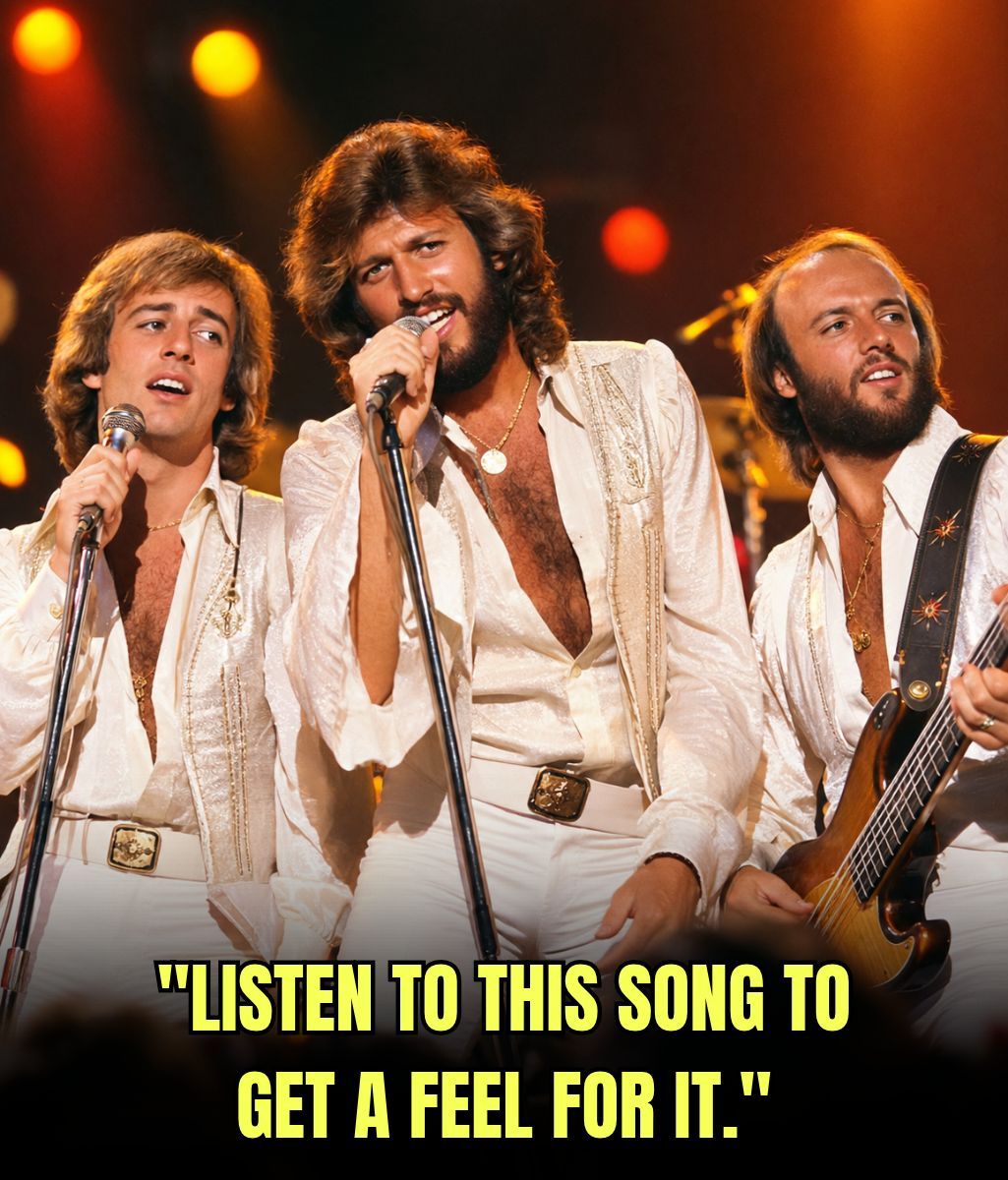
In 1973, the Bee Gees stood at a fascinating crossroads in their remarkable career. Barry, Robin, and Maurice Gibb had already earned international recognition for their distinctive harmonies and emotionally rich songwriting. Yet the musical world around them was changing, and so were the brothers themselves. Their live performances of “Wouldn’t I Be Someone” and “Saw a New Morning” captured a moment when their earlier sound still carried its familiar warmth, even as new creative possibilities began to emerge. Looking back, these performances offer a glimpse of a group standing on the threshold of another chapter.
There was something special about seeing the Bee Gees perform live during this period. Their voices blended with a natural closeness that could never be fully reproduced in a studio recording. Barry’s expressive lead vocals, Robin’s unmistakable emotional intensity, and Maurice’s musical sensitivity created a sound that felt both polished and deeply personal. The brothers did not simply sing together; they seemed to understand one another through music. Each harmony carried a subtle feeling, each phrase adding another layer to the story they were telling.
“Wouldn’t I Be Someone” reflected the introspective spirit that shaped much of the Bee Gees’ early-1970s work. Beneath its melodic beauty was a sense of longing—a desire to understand one’s place in the world and to imagine what life might have been. The song’s emotional character suited the brothers’ voices, allowing their harmonies to move between tenderness and quiet intensity. In a live setting, that feeling became even more immediate. The performance offered listeners not merely a song, but a moment of reflection wrapped in melody.
Then came “Saw a New Morning,” a composition that carried a different kind of energy. Its hopeful atmosphere suggested renewal, possibility, and the promise of a fresh beginning. The Bee Gees approached it with a musical confidence that revealed how much their sound had developed. The performance still carried the unmistakable character of the group’s earlier years, but there was also a sense of movement—as though the brothers were beginning to look beyond the musical landscape that had first brought them success. It was a compelling contrast to the more contemplative mood of “Wouldn’t I Be Someone.”
For longtime fans, the beauty of these performances lies partly in what they represent. The Bee Gees were not yet the global phenomenon associated with the later disco era. They were still a group of three brothers exploring the possibilities of their voices, their songwriting, and their shared musical instincts. Their work in this period often balanced delicate melodies with rich arrangements, creating songs that could feel intimate even when performed before a large audience. The year 1973 preserved that delicate balance, making it an especially meaningful moment in the group’s history.
The brothers’ musical journey was never a straight line. They experienced changing trends, creative uncertainty, and the challenge of remaining relevant in an industry that rarely stood still. But their ability to adapt would become one of the defining strengths of their legacy. The music they created in the early seventies helped form the foundation for the transformations that followed. These performances remind us that a lasting musical identity is not built in a single moment. It develops through years of experimentation, collaboration, and the courage to move forward.
There is also a deeply human quality in watching the Bee Gees during this chapter. Beyond the fame and the familiar names, they were brothers sharing a gift that had grown with them since childhood. Their harmonies seemed to carry the closeness of family—the unspoken understanding, the occasional tension, and the enduring connection that only years of making music together could create. That connection gave their performances a warmth that continues to reach listeners across generations. The voices may belong to another era, but the emotions remain remarkably present.
For those who remember discovering the Bee Gees in the early seventies, these songs can bring back more than memories of a particular performance. They can recall a time when music accompanied everyday life: a song playing on the radio, a record spinning at home, or a melody heard during a long drive. For younger listeners, the performances offer a chance to discover the brothers before their sound took another dramatic turn. Either way, the music reveals a group whose artistry was always larger than any single style or era.
The Bee Gees in 1973 were capturing something fleeting and unforgettable—a moment when their past and future seemed to meet in the same harmony. “Wouldn’t I Be Someone” carried the ache of reflection, while “Saw a New Morning” offered the promise of renewal. Together, they preserved a remarkable chapter in the brothers’ story, just before their musical legacy moved in a new direction. And all these years later, their voices still seem to reach across time, reminding us that some performances do not simply belong to the past. They continue to live in the hearts of those who hear them.