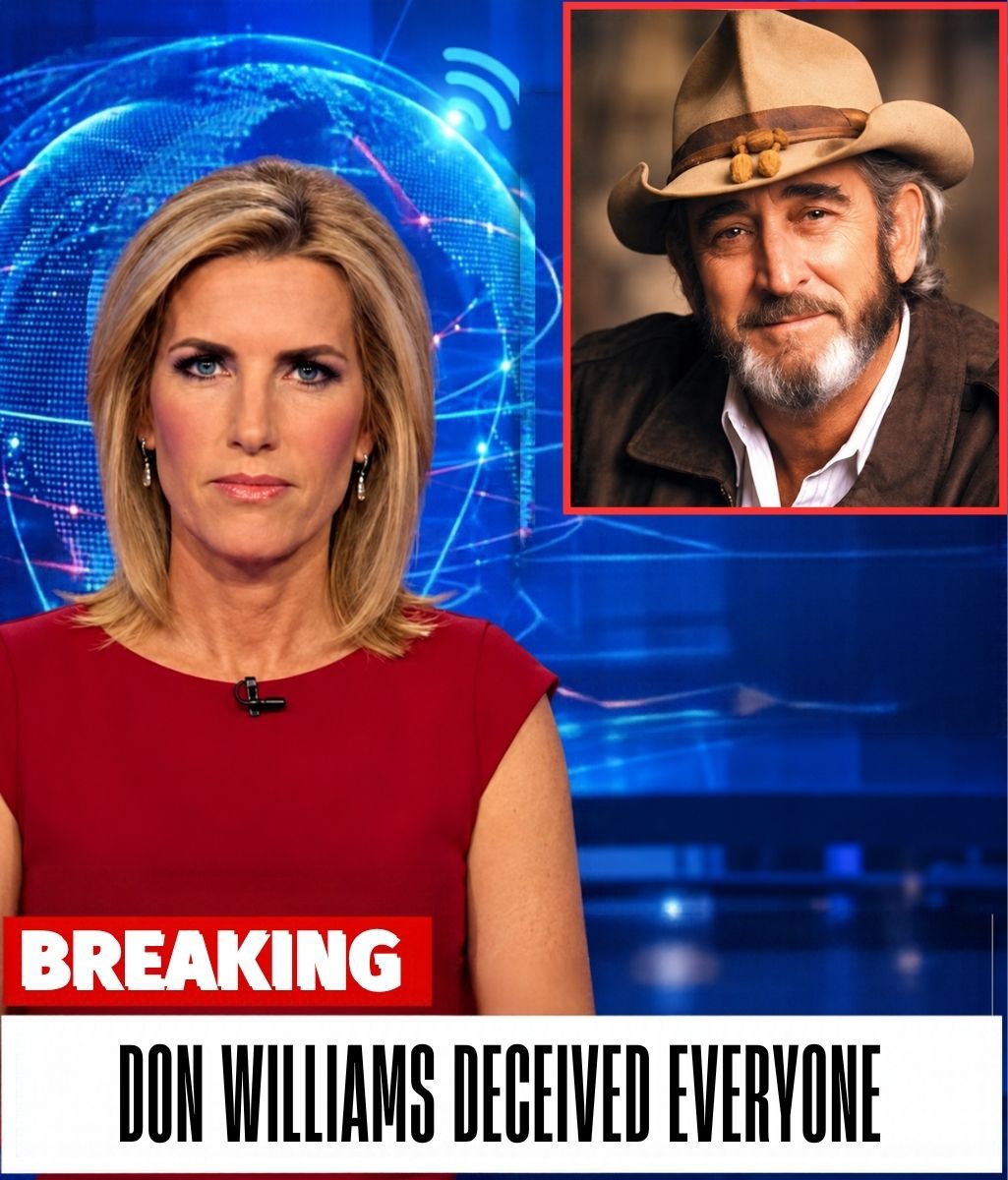
For more than 30 years, millions of country music fans believed they knew Don Williams. They knew the deep, comforting voice, the familiar cowboy hat, and the gentle smile of a man who could turn an ordinary love song into something unforgettable. But away from the concert halls and recording studios, Williams lived another life—one he carefully protected from the spotlight.
It was not a secret marriage, a hidden family, or a scandal. There is no credible evidence supporting those sensational claims. The remarkable truth is that one of country music’s most beloved superstars spent much of his career quietly resisting the very celebrity lifestyle that his success could have given him.
To the world, he was “The Gentle Giant,” the man behind classics such as “I Believe in You,” “Tulsa Time,” “Amanda,” and “You’re My Best Friend.” His music crossed generations and international borders, reaching listeners who found something deeply reassuring in his warm Texas baritone.
But when the applause ended, Don Williams wanted something remarkably ordinary.
He wanted to go home.
Long before Nashville made him famous, Williams married Joy Janene Bucher in 1960. Together, they raised two sons, Gary and Tim. Their family life began years before the gold records, sold-out concerts, and industry awards that would eventually make his name familiar around the world.
And as his career grew, Williams made a choice that set him apart from many performers of his generation. Rather than chase constant publicity, he kept interviews to a minimum, avoided many music-industry gatherings, and deliberately limited his touring schedule so he could spend more time with his family.
While audiences saw the celebrated performer standing beneath bright stage lights, those closest to his everyday life knew a man who valued the peace of his Tennessee farm.
That contrast was extraordinary. During the 1970s and 1980s, Williams became one of country music’s most consistent hitmakers. His records filled radio playlists, and his understated performances attracted devoted audiences across the United States, Europe, and beyond.
In 1978, he was named the Country Music Association’s Male Vocalist of the Year. In 2010, he was inducted into the Country Music Hall of Fame. Yet those honors never seemed to change his preference for a quieter existence.
Perhaps the most revealing part of his story is how closely his personal values matched the songs he chose to sing.
When Williams recorded “You’re My Best Friend,” listeners heard a tender declaration of lasting companionship. When he sang “Lord, I Hope This Day Is Good,” he gave voice to the simple hopes of ordinary people. And in “Good Ole Boys Like Me,” he captured the complicated emotions of growing older and remembering where we came from.
Those songs helped create the impression of a man who understood the value of everyday life. His documented choices away from the stage suggest that impression was not merely a carefully manufactured public image.
For years, Williams maintained an unusual distance from the machinery of fame. He did not need to make every personal moment public. He did not seem interested in turning his marriage or family into a continuing celebrity spectacle.
And perhaps that is why his music felt so different.
He never needed to shout to command attention. He never needed an elaborate performance to convince listeners that a song mattered. Often, a few carefully delivered words were enough.
When Don Williams died on September 8, 2017, at the age of 78, country music lost one of its most recognizable voices. But the private life he had protected for so many years remained an important part of understanding the man behind the music.
Today, fans still return to his recordings for comfort, especially during moments when life feels uncertain. His voice carries something that never seems to grow old: the quiet reassurance that love, loyalty, family, and home are worth holding on to.
So was Don Williams living a double life?
In one sense, yes. There was the international country star the world celebrated, and there was the husband, father, and private man who preferred the comforts of home to the demands of celebrity.
But the two lives were not built on deception. They were two sides of the same person.
And perhaps the most surprising truth about Don Williams is that while the world wanted more of the superstar, he never stopped valuing the simple life that made him who he was.