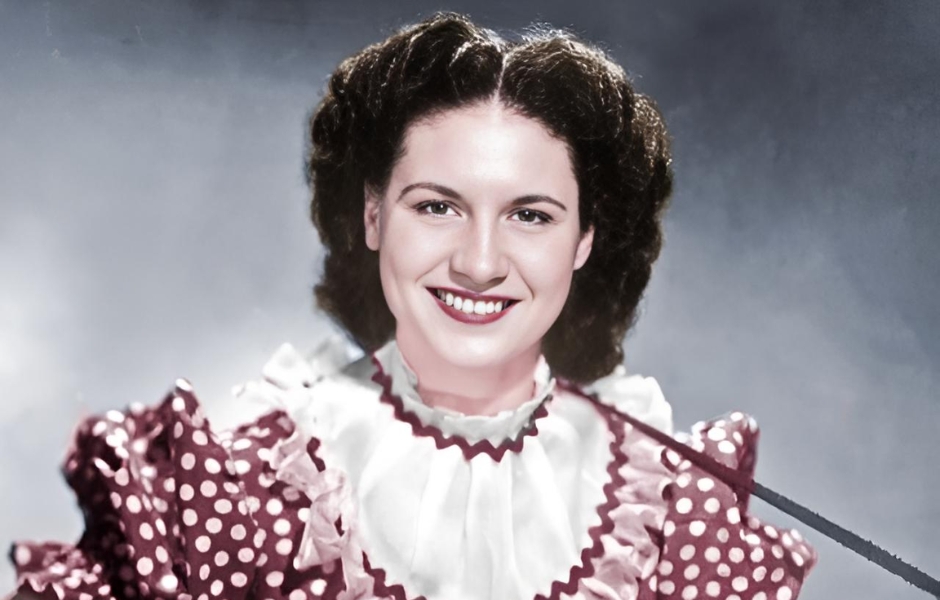
A Quiet Revolution in Three Minutes: The Enduring Power of Kitty Wells’s “It Wasn’t God Who Made Honky Tonk Angels”
In the vast and storied history of country music, there are songs that not only entertain but also subtly shift the very ground beneath the genre’s feet. Kitty Wells’s landmark recording, “It Wasn’t God Who Made Honky Tonk Angels,” is undeniably one of these, a watershed moment that challenged prevailing social norms and, in doing so, forged a new path for female artists. To appreciate its full significance, one must first understand the landscape of early 1950s country music—a world where the narratives of heartbreak and infidelity were often told from a distinctly male perspective.
The era was dominated by a specific kind of heartache ballad, often referred to as the “cheatin’ song.” These popular tunes, many of them huge hits, frequently lamented the actions of a woman who had strayed from the path of domesticity, lured away by the allure of a different, wilder life. Hank Thompson’s colossal hit from a few months prior, “The Wild Side of Life,” perfectly encapsulated this sentiment, placing the blame squarely on a woman who had abandoned her home for the bright lights and fast pace of the honky-tonk scene. The message was clear, and it was a sentiment widely accepted by a conservative, post-war audience.
It was into this environment that Kitty Wells, a woman known for her gentle demeanor and clear, sincere vocal delivery, offered a powerful and dignified counter-narrative. Written by J.D. Miller, “It Wasn’t God Who Made Honky Tonk Angels” was a direct and unflinching response to Thompson’s song. It didn’t shout in anger or preach from a soapbox; instead, it calmly and logically reversed the script. The lyrics suggested that perhaps the so-called “honky tonk angels” weren’t born that way, but were instead shaped by the circumstances created by the men in their lives. The song’s most pivotal line—”It’s been the men folks since the world began who’s made honest women turn their backs on God and all their loved ones just to be a plaything for every man”—was a quiet yet seismic statement. It shifted the focus from female transgression to male accountability, suggesting a more complex, and more truthful, picture of a relationship’s breakdown.
The reaction to the song was immediate and far-reaching. Despite being banned by some radio stations who deemed its message too controversial, It Wasn’t God Who Made Honky Tonk Angels struck a profound chord with listeners, particularly with women who felt their side of the story had long been ignored. The public’s demand for the record was overwhelming, propelling it to the very top of the country charts. In doing so, it made Kitty Wells the first female solo artist to ever have a number-one hit on the Billboard country chart, an achievement that stands as a testament to both the song’s resonance and Wells’s courage in recording it.
Musically, the song is a masterclass in subtlety. The traditional country arrangement, featuring a prominent steel guitar and a straightforward rhythm, provides the perfect backdrop for Wells’s vocal performance. Her delivery is not a fiery condemnation, but a matter-of-fact observation, lending the lyrics an undeniable sense of authority and truth. It’s this quiet strength, this dignified refusal to be silenced, that made the song so revolutionary.
The legacy of It Wasn’t God Who Made Honky Tonk Angels extends far beyond its commercial success. It was a foundational moment for women in country music, proving that there was a massive audience eager to hear their perspectives and that their stories could be told with conviction and honesty. Kitty Wells didn’t just sing a hit song; she opened a door, creating a space for future generations of female artists to express their own truths, sorrows, and triumphs. Her bold stand in 1952 solidified her status as the “Queen of Country Music” and ensured that her resonant anthem would forever remain a powerful touchstone in the genre’s ongoing narrative.