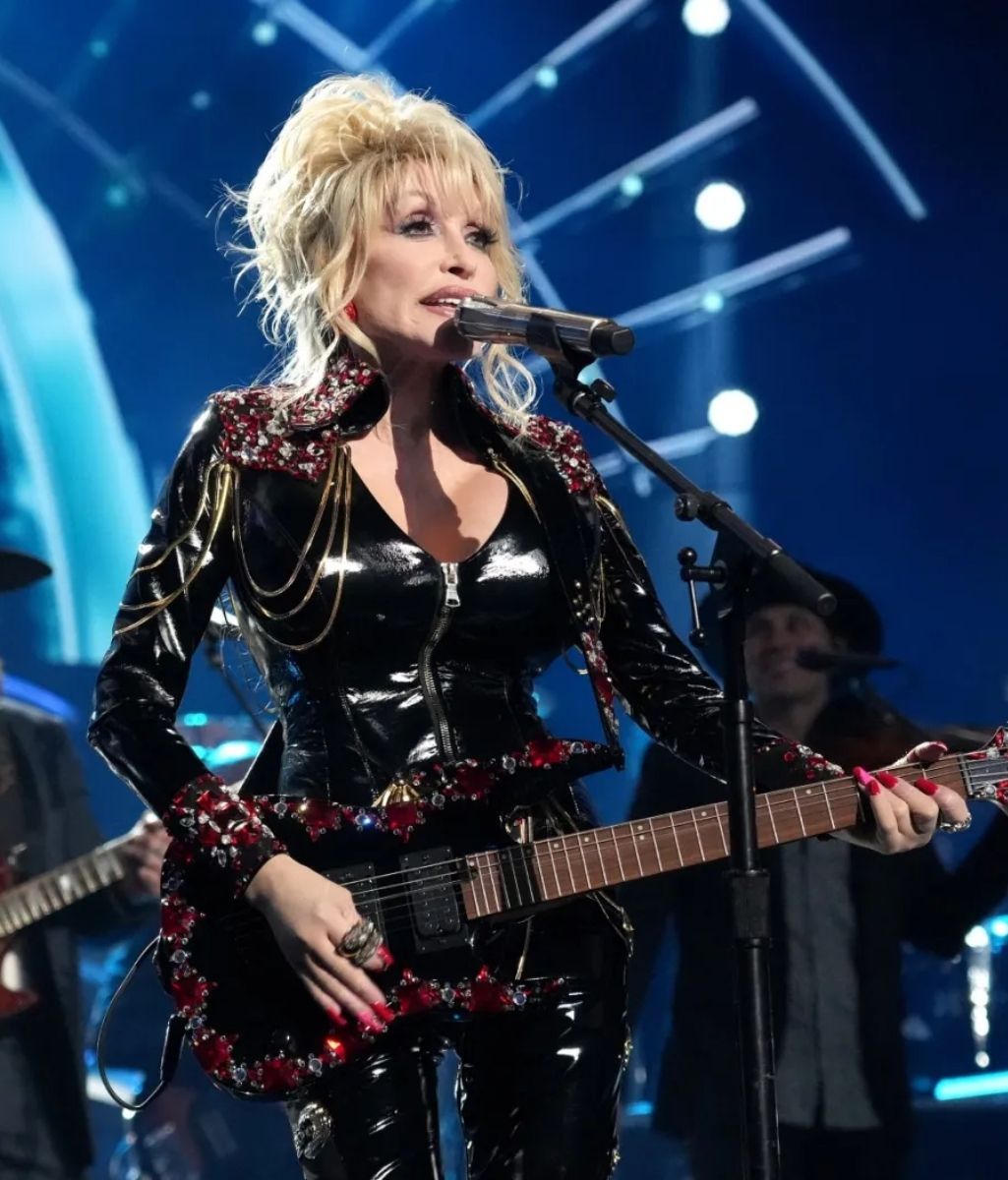
There are certain records you recognize before the singer has even finished the first line. “Jolene” is one of them.
For listeners who lived through the 1970s, its sound can still bring back the physical world in which songs once arrived: an AM radio glowing across a kitchen, a record spinning beneath a needle, a jukebox in the corner of a neighborhood bar, or a country station keeping someone company on a long drive home. Then comes Dolly Parton’s unmistakable voice — urgent, exposed, almost breathless — repeating one woman’s name as though saying it enough times might somehow change what happens next.
Released as a single in 1973, “Jolene” became one of the defining recordings of Parton’s career. The song entered Billboard’s country chart that September and eventually reached No. 1 in early 1974, becoming her second solo country chart-topper. It also gave Parton an important foothold beyond country music, including her first appearance on the Billboard Hot 100. Dolly Parton
Yet numbers have never really explained “Jolene.”
Its enduring power comes from something much more human.
Parton wrote the song herself, and instead of creating a conventional tale in which one woman angrily confronts another, she made a far more interesting choice. The narrator does not threaten Jolene. She does not pretend to be stronger, prettier, or more desirable. She admits exactly what frightens her.
She believes Jolene possesses something she cannot compete with.
That vulnerability changes everything.
The narrator describes another woman’s beauty while revealing her own insecurity, then makes the simplest plea imaginable: please don’t take the man I love. There is jealousy here, certainly, but there is also admiration, fear, helplessness, and the terrible realization that love does not always make us feel powerful. Sometimes love shows us exactly where we are weakest.
Musically, the recording gives that anxiety nowhere to hide. The persistent guitar figure seems to keep moving beneath Parton, creating tension even when the arrangement remains spare. Her vocal does not need theatrical excess. She sounds focused and increasingly desperate, and the repetition of Jolene’s name becomes almost hypnotic.
That combination helped make the record unusual. A listener did not need to have lived through the exact situation described in the song to understand it. Anyone who had ever feared losing someone — or wondered whether they were enough — could recognize something of themselves in it.
The song became the title track of Parton’s Jolene album, which also contained another extraordinary Parton composition, “I Will Always Love You.” The album reached No. 6 on Billboard’s country albums chart and was eventually certified gold. Dolly Parton
“Jolene” also earned Grammy nominations for Parton’s original performance, and decades later its stature only grew. The original RCA recording was inducted into the Grammy Hall of Fame in 2014. In another remarkable chapter of the song’s life, Parton recorded “Jolene” with Pentatonix; that collaboration won the 2017 Grammy for Best Country Duo/Group Performance. Grammy
That kind of longevity says something important.
“Jolene” belongs unmistakably to the country music of its era, yet it has never remained trapped there. Artists from different genres and generations have returned to it because its emotional architecture is so simple and sturdy. Strip away the production, change the tempo, rearrange the harmony, and the central drama remains.
One person is afraid of losing another.
And Dolly Parton had the courage to let that person sound afraid.
Perhaps that is why “Jolene” can still stop a room after more than half a century. We know what is coming. We know the name. We know the melody. But when Dolly begins pleading again, the story somehow feels unresolved — as if Jolene still has not made her decision.
For those who remember hearing it when country radio was filled with voices like Parton’s, the record carries another emotion now: time itself. It can take us back to younger years, old cars, vanished places, and people who once listened beside us.
And when that familiar guitar begins again, perhaps the question isn’t simply whether we remember “Jolene.”
It is who we remember when we hear it.
FULL LYRICS
Full lyrics are not reproduced here.