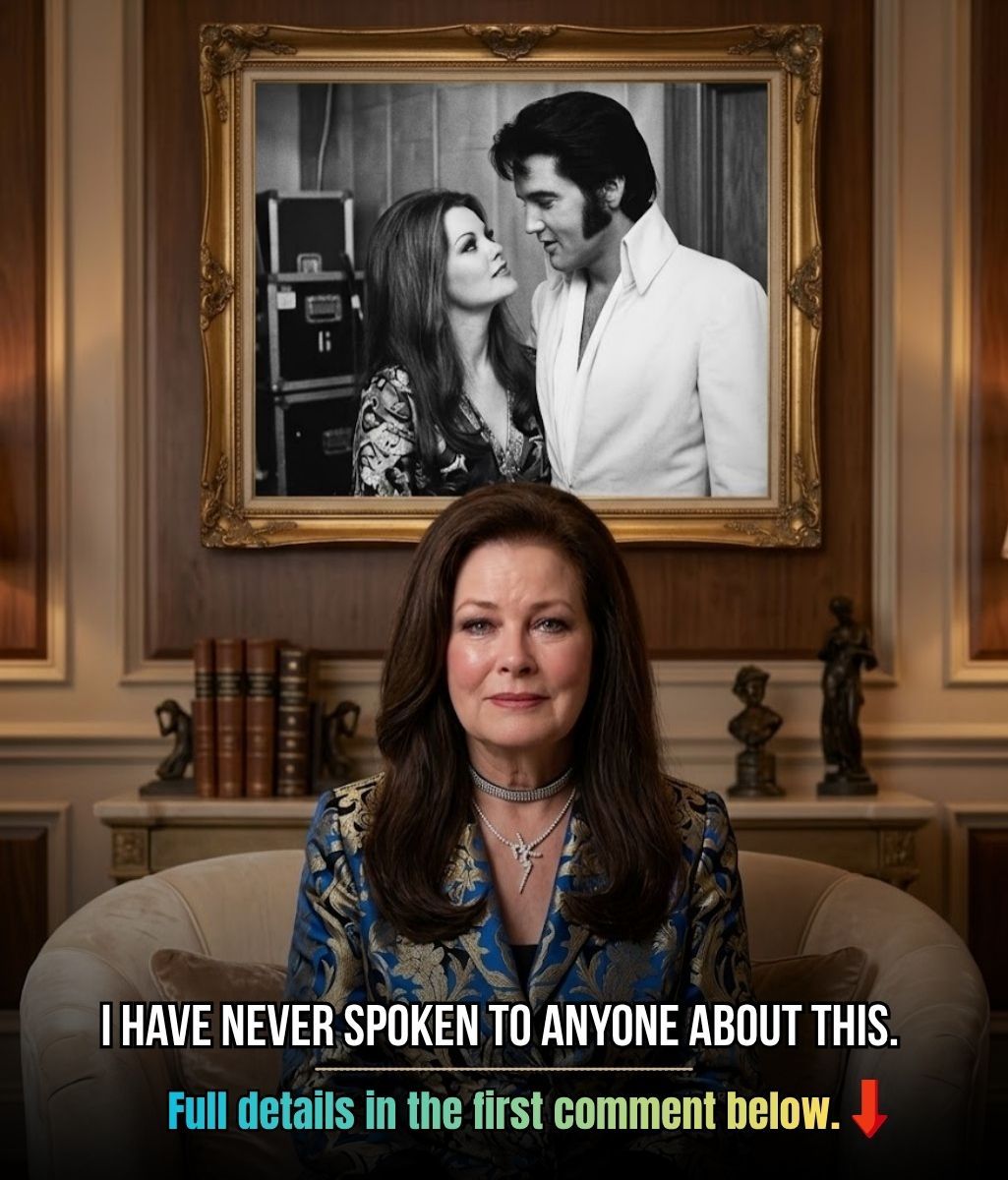
There are some promises that remain with a person for a lifetime. They are made in quiet moments, far away from the flashing cameras, the cheering crowds, and the enormous attention that follows a world-famous name. For Ginger Alden, the woman who shared the final chapter of Elvis Presley’s life, those memories have carried a weight that few people could ever fully understand. Her connection to the King of Rock and Roll placed her at the centre of one of music history’s most closely remembered personal stories. Yet behind the photographs, public appearances, and headlines was a private world filled with conversations, hopes, disappointments, and moments that never belonged to the public.
When Ginger first entered Elvis’s life, she could hardly have imagined how profoundly that experience would shape her future. Elvis was no ordinary entertainer. He was a cultural phenomenon whose voice had travelled across generations, whose performances had changed popular music, and whose presence could transform an ordinary evening into an unforgettable occasion. To millions of admirers, he was the King. But to the people closest to him, he was also a man with private thoughts, personal struggles, and a life that was far more complicated than the extraordinary image presented to the world.
The most difficult part of their story, however, was not the attention that came with being associated with such an extraordinary figure. It was the responsibility of living with memories that the rest of the world could only imagine. Elvis valued his privacy, particularly when it came to the people and moments that mattered most to him. Ginger later described how he wanted to protect their relationship from unnecessary attention and how much of their time together took place away from the public eye. Behind the gates of Graceland, there were conversations and personal experiences that could never be captured by concert recordings or newspaper photographs. Those private moments became part of a history that Ginger would carry long after the music stopped.
For years, fans heard countless versions of what Elvis’s final months had been like. Some accounts portrayed him as a man who had lost his happiness, while others repeated stories that Ginger believed were exaggerated or simply untrue. Rather than allowing those accounts to define her experience, she eventually decided that it was time to share her own perspective. In September 2014, she published Elvis & Ginger: Elvis Presley’s Fiancée and Last Love Finally Tells Her Story, a deeply personal memoir that offered readers an opportunity to understand their relationship through her eyes. It was not simply another book about a famous musician. It was her attempt to preserve the memories of someone she had known beyond the spotlight.
One of the most moving aspects of Ginger’s recollections was the way she described Elvis as a person who enjoyed reading, discussing spiritual subjects, and sharing his thoughts about life. His interest in spiritual exploration was something that brought them together during their time at Graceland. According to her interviews, they sometimes spent evenings reading together, discussing ideas, and enjoying the quieter side of life. These details offered a different perspective on the entertainer whose public image was often dominated by spectacular performances, extravagant surroundings, and the enormous demands of fame. Elvis was more than the voice behind the legendary recordings. He was a complicated human being with hopes, questions, and dreams of his own.
Their relationship also included plans for a future that neither of them could have imagined would end so suddenly. Ginger recalled that Elvis had proposed marriage, and the two had discussed a wedding date. Christmas Day was among the plans they had considered, a detail that gives their story an especially poignant quality when viewed through the passage of time. They were not simply looking back at a collection of happy memories; they had been thinking about the life they might build together. There were conversations about marriage, family, and the possibility of a new chapter beyond the demands of his career. For Ginger, those unfinished plans became part of the heartbreak that followed.
Then came August 16, 1977, the day that changed everything. Elvis Presley was found unresponsive at Graceland, and the news of his death sent shockwaves around the world. For millions of admirers, it was impossible to accept that the man whose voice had accompanied so many important moments in their lives was gone. For Ginger, the loss was intensely personal. She had been part of his final chapter, had shared plans for a future together, and had witnessed the sudden end of a relationship that had seemed to hold so many possibilities. In later interviews, she spoke about how devastating that day had been and how difficult it was to accept what had happened. The world mourned an icon, but Ginger mourned someone she had known privately and personally.
In the decades that followed, Ginger chose a quieter life. She eventually married, raised a son, and devoted herself to her family rather than pursuing constant public attention. Yet the memories of her time with Elvis never completely disappeared. In a 2019 interview, she explained that she had always valued the experience of sharing his life and would not exchange those memories for anything. She also expressed gratitude to the fans who continued to appreciate his music and legacy. Her words revealed something important: although her relationship with Elvis belonged to the past, the affection and respect she felt for the memories remained part of her story.
Perhaps that is why the story of Ginger Alden and Elvis Presley continues to fascinate generations of fans. It is not merely a story about fame, romance, or the final days of a legendary performer. It is also a reminder that history is often remembered differently by the people who experienced it firsthand. Ginger has already shared many of her recollections in her memoir, but questions surrounding Elvis’s final years continue to inspire discussion among admirers. And perhaps the greatest lesson in her story is that behind every legendary voice was a human being whose private hopes and unfinished dreams deserve to be remembered with compassion. Elvis Presley may have left the stage in 1977, but the memories of those who knew him continue to keep his story alive.