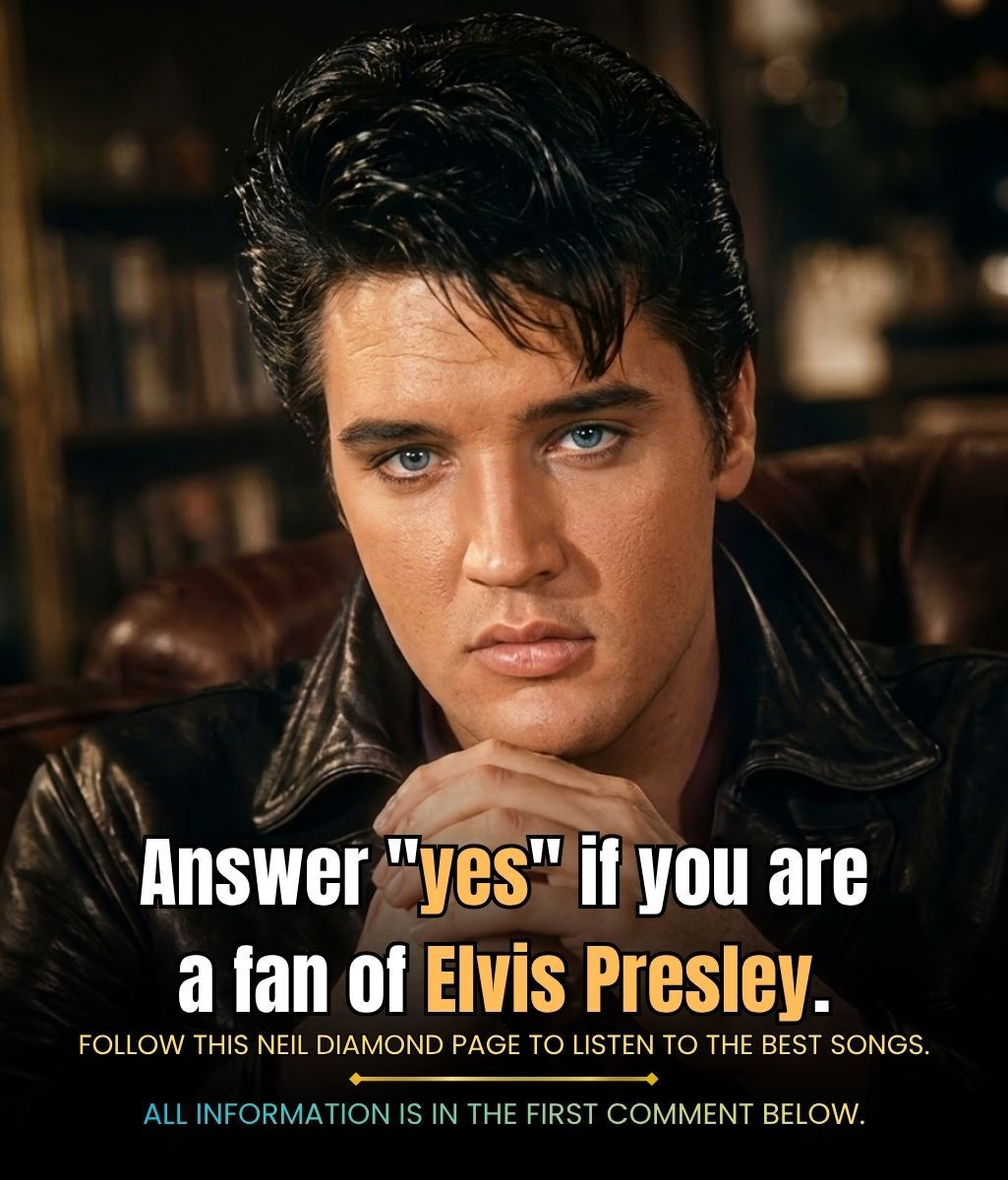
Elvis Presley could walk into a Cadillac dealership, point toward a car, and change someone’s life before lunchtime. He could hand a stranger money, buy a house for someone he cared about, or surprise a friend with a gift so extravagant that the story would be repeated for decades. Generosity became part of the Elvis legend, almost as recognizable as the black hair, the unforgettable voice, and the crowds that followed him everywhere. Yet behind those stories was a striking contradiction. Elvis spent much of his adult life surrounded by wealth, possessions, employees, friends, musicians, and admirers, but none of those things could fully restore what fame had gradually taken away: the freedom to live an ordinary life without being watched.
Long before Graceland became one of the most famous homes in America, Elvis knew what it meant to have very little. Born in Tupelo, Mississippi, in 1935, he grew up in a working-class family where money could not be taken for granted. His parents, Vernon and Gladys Presley, lived through difficult years, and young Elvis understood the difference between wanting something and being able to afford it. That background helps explain why success affected him so deeply. When the money finally arrived, Elvis did not simply buy things for himself. He often shared what he had. Cars became one of his most famous gifts, but his generosity extended far beyond automobiles. To Elvis, giving could be a spontaneous way of saying, “I see you. I appreciate you. Let me make today a little better.”
By the mid-1950s, however, his world had changed at breathtaking speed. The young man who once walked the streets of Memphis could no longer casually enter a restaurant or store without attracting attention. Elvis Presley had become ELVIS, a cultural phenomenon whose presence could turn an ordinary sidewalk into a gathering place within minutes. Imagine what that transformation must have felt like. The same success that allowed him to provide for his family also created invisible walls around him. A simple evening at a movie theater required planning. Shopping could become an event. Eating in public could draw crowds. Even taking a quiet drive could become complicated once people recognized the man behind the steering wheel.
That may be one reason stories about Elvis giving things away remain so moving. He could buy almost anything except anonymity. Money could purchase beautiful cars, jewelry, clothing, horses, airplanes, and an extraordinary home, but it could not purchase the experience of walking unnoticed through a grocery store. It could not guarantee a peaceful meal at a neighborhood diner. It could not return him to the days when he could wander through Memphis without strangers watching every movement. Fame had given Elvis opportunities beyond anything the boy from Tupelo could have imagined, yet it had also made some of life’s simplest pleasures surprisingly difficult.
There is something deeply human in that contradiction. Most people spend part of their lives dreaming about having more—more security, more comfort, more choices. Elvis eventually possessed those things on a scale few people ever experience. Yet the older he became, the more valuable ordinary moments must have seemed. A quiet room. A trusted friend. A late-night conversation. A drive without photographers or crowds. A few hours when nobody expected “Elvis Presley” to appear. Those experiences required no gold records or expensive possessions. They depended on something far harder for one of the most recognizable people in the world to obtain: privacy.
Graceland itself came to represent both sides of his extraordinary life. It was a symbol of achievement, especially for a young man who had grown up with financial uncertainty. It was also a home where Elvis could retreat from the enormous public attention surrounding him. Inside those gates, he could spend time with family and friends, listen to music, watch television, laugh, talk, and enjoy some measure of normality. But even there, the outside world was never very far away. Fans gathered near the property, reporters followed developments in his life, and professional obligations continued. The gates protected his privacy, but they also symbolized how different his life had become.
Perhaps this is why Elvis’s generosity should be remembered as more than a collection of colorful stories about expensive gifts. His giving reflected someone who remembered what it was like to struggle and who understood how dramatically one unexpected gesture could brighten another person’s day. The dollar amount was not always the most important part. What mattered was the impulse behind it. Elvis seemed to take genuine pleasure in surprising people. For someone whose own life had become increasingly controlled by schedules, expectations, security, and public attention, giving him a rare opportunity to create a spontaneous moment. For a few seconds, he could watch another person’s face light up—and perhaps reconnect with the young man who once dreamed about what a better life might look like.
More than four decades after his death, people still remember the records, the movies, the jumpsuits, the television appearances, and the electrifying performances. They also remember the Cadillacs, the jewelry, and the astonishing stories of generosity. But beneath all of that is a quieter story that may explain something essential about Elvis Presley. He achieved the kind of success that could buy nearly everything the world had to offer, yet some of the things that mattered most had no price tag. Peace, privacy, ordinary friendship, freedom, and the ability to disappear into a crowd could not simply be purchased. Elvis gave away fortunes because he could. But what he may have valued most were the ordinary moments money could never guarantee—and perhaps that is one reason his story still feels so profoundly human today.