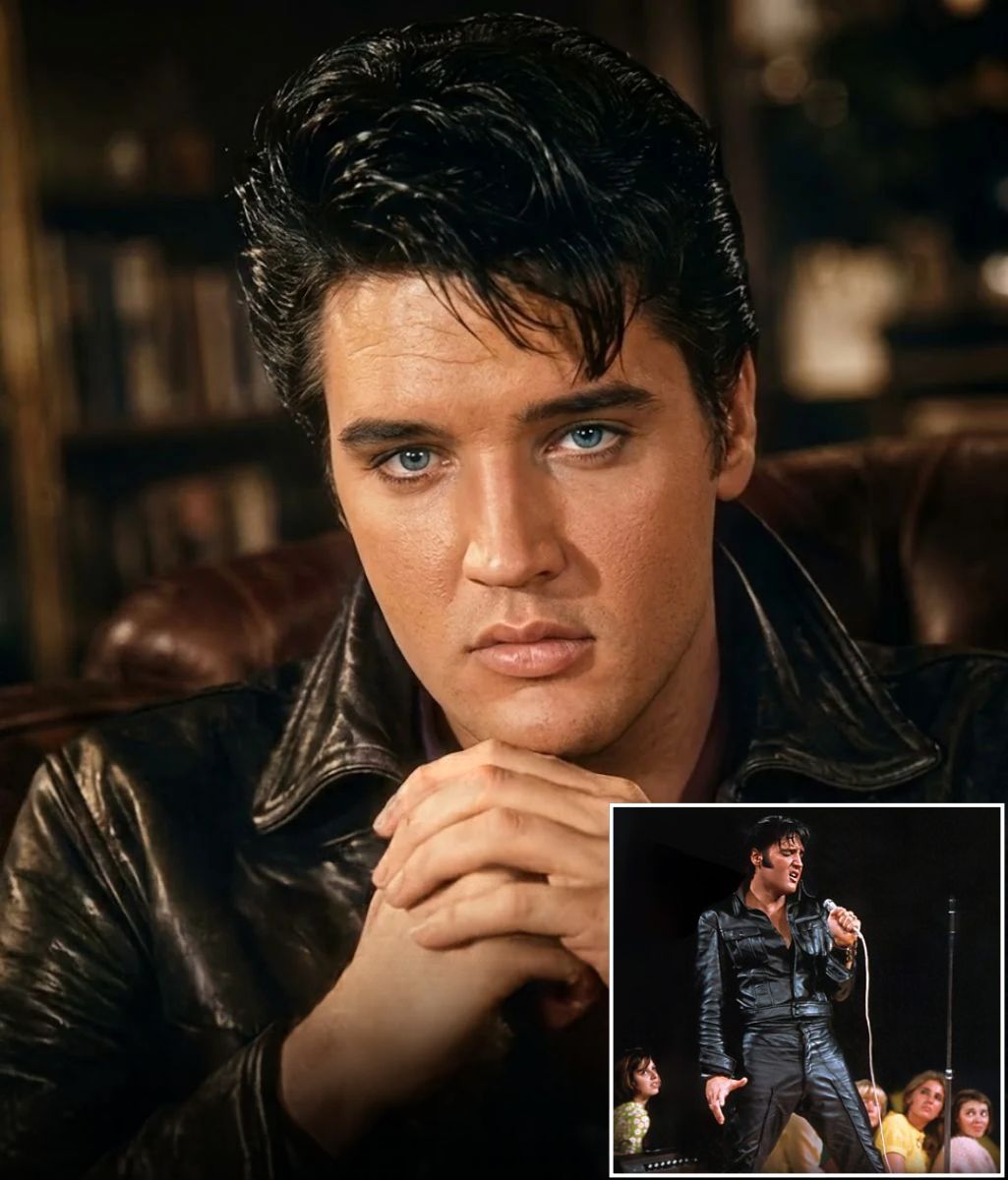
He could give away a Cadillac without hesitation, surprise a stranger with an extraordinary gift, and turn an ordinary day into a life-changing memory for someone he had never met. Yet there was one thing Elvis Presley could never buy, no matter how much money he earned or how much fame surrounded his name: the simple peace of an ordinary life.
To the outside world, Elvis Presley seemed to possess everything a person could dream of. He had international fame, extraordinary wealth, beautiful homes, expensive cars, and millions of admirers who considered him one of the greatest entertainers of all time. His voice had become recognizable across the world, his performances attracted enormous audiences, and his name represented an entire era of popular music. Yet behind the spectacular public image was a complicated human story, filled with generosity, personal relationships, responsibilities, and a longing for something that money could never guarantee.
Elvis had a remarkable reputation for generosity. Throughout his life, stories circulated about his willingness to give expensive gifts to friends, relatives, employees, and even complete strangers. Luxury automobiles were among his favorite gifts, and he became particularly associated with surprising people by giving them Cadillacs. For Elvis, generosity was often spontaneous. He could see someone in need, hear about a difficult situation, or simply decide that a person deserved a special moment. Rather than spending hours considering the expense, he sometimes acted immediately.
One of the most fascinating aspects of his generosity was that he appeared to enjoy the reaction as much as the gift itself. The surprise, the disbelief, and the happiness on another person’s face seemed to bring him genuine satisfaction. His wealth gave him opportunities to make extraordinary gestures, but his willingness to share what he had became one of the most frequently remembered aspects of his personality.
His generosity was not limited to expensive automobiles. Elvis also supported charitable causes, contributed to organizations, and made donations to people and institutions that mattered to him. His charitable activities became especially visible in Memphis, the city that remained closely connected to his life and career. In 1961, he performed a benefit concert that helped raise funds for the construction of the USS Arizona Memorial in Hawaii. It was an important example of how his extraordinary popularity could be used to support something beyond his own professional ambitions.
But there was another side to Elvis that the public could not always see. Fame brought opportunities, but it also created enormous demands. His schedule, professional obligations, public appearances, and constant attention from admirers made privacy increasingly difficult. Even when he was surrounded by people, the experience of being one of the world’s most recognizable entertainers could make ordinary moments difficult to enjoy.
Imagine wanting to visit a restaurant without attracting attention, take a quiet drive without being recognized, or spend an afternoon with friends without cameras and public expectations becoming part of the experience. For most people, these are simple pleasures. For someone as famous as Elvis, they could become complicated challenges.
The more extraordinary his public life became, the more valuable ordinary experiences could seem. There was a world beyond the concert stage that could not be measured in record sales, expensive possessions, or the number of people waiting to see him perform. It was the world of personal connection, familiar surroundings, and moments when he did not have to be the King of Rock and Roll.
His relationship with his family was an important part of that private world. Elvis was particularly close to his mother, Gladys Presley, whose influence remained significant throughout his life. His early years in Tupelo and Memphis, his family’s financial struggles, and the sacrifices made during his childhood helped shape his understanding of success and responsibility. His rise to international fame changed his circumstances dramatically, but the memories of where he came from remained part of his identity.
The loss of Gladys in 1958 was one of the most painful experiences of his life. Her death affected him deeply, and those who knew his story often point to their close relationship when discussing the more personal side of the entertainer. No amount of professional success could reverse that loss. No expensive gift could restore the conversations, familiar presence, or reassurance of someone whose importance went far beyond material possessions.
That reality reveals something deeply human about Elvis’s story. Money can provide comfort, but it cannot purchase more time with someone we love. It can open doors, create opportunities, and make difficult circumstances easier, but it cannot guarantee happiness or protect anyone from grief.
His later years also remind us that extraordinary success does not make a person immune to the difficulties of life. Behind the celebrated recordings and concert appearances were personal challenges that deserve to be understood with compassion rather than reduced to sensational stories. Elvis remained a remarkably talented performer, but he was also a human being navigating the pressures of a life that had become larger than anything he could have imagined as a young boy.
For millions of admirers, revisiting his performances today creates a mixture of admiration and reflection. They see the confident entertainer, the unmistakable smile, the powerful voice, and the extraordinary ability to command an audience. But they also remember that the man behind those performances had hopes, disappointments, relationships, and memories like everyone else.
Perhaps the most meaningful part of Elvis Presley’s legacy is not how much he owned, but how much he gave. His generosity became part of the stories people told about him, while his music gave millions of listeners something that money could never replace: comfort, inspiration, and memories that remained with them throughout their lives.
When we listen to songs such as “Can’t Help Falling in Love,” “If I Can Dream,” and “American Trilogy,” we are reminded of the remarkable emotional range he brought to his music. Each performance reveals another dimension of an artist who understood how to communicate through melody and voice. His recordings continue to reach people who were not even born during his lifetime, proving that genuine artistry can survive generations.
Today, Graceland stands as a lasting reminder of his extraordinary journey. Visitors travel from around the world to learn about his life, see the place he called home, and remember the music that changed popular culture. They come not simply to admire the possessions associated with his fame, but to connect with the story of the young man from humble beginnings who became an international legend.
And perhaps that is where the greatest lesson lies. Elvis Presley could give someone a Cadillac, but he could never give himself another childhood afternoon with his mother. He could fill an enormous concert hall with thousands of cheering admirers, but no applause could replace the comfort of genuine human connection.
He gave away fortunes, created unforgettable memories, and left behind a musical legacy that continues to inspire the world. Yet the things that mattered most were never displayed in a showroom or measured by a bank account.
Because the greatest treasures in life are not always the things we can afford. Sometimes, they are the people, the memories, and the moments we wish we could hold on to just a little longer.