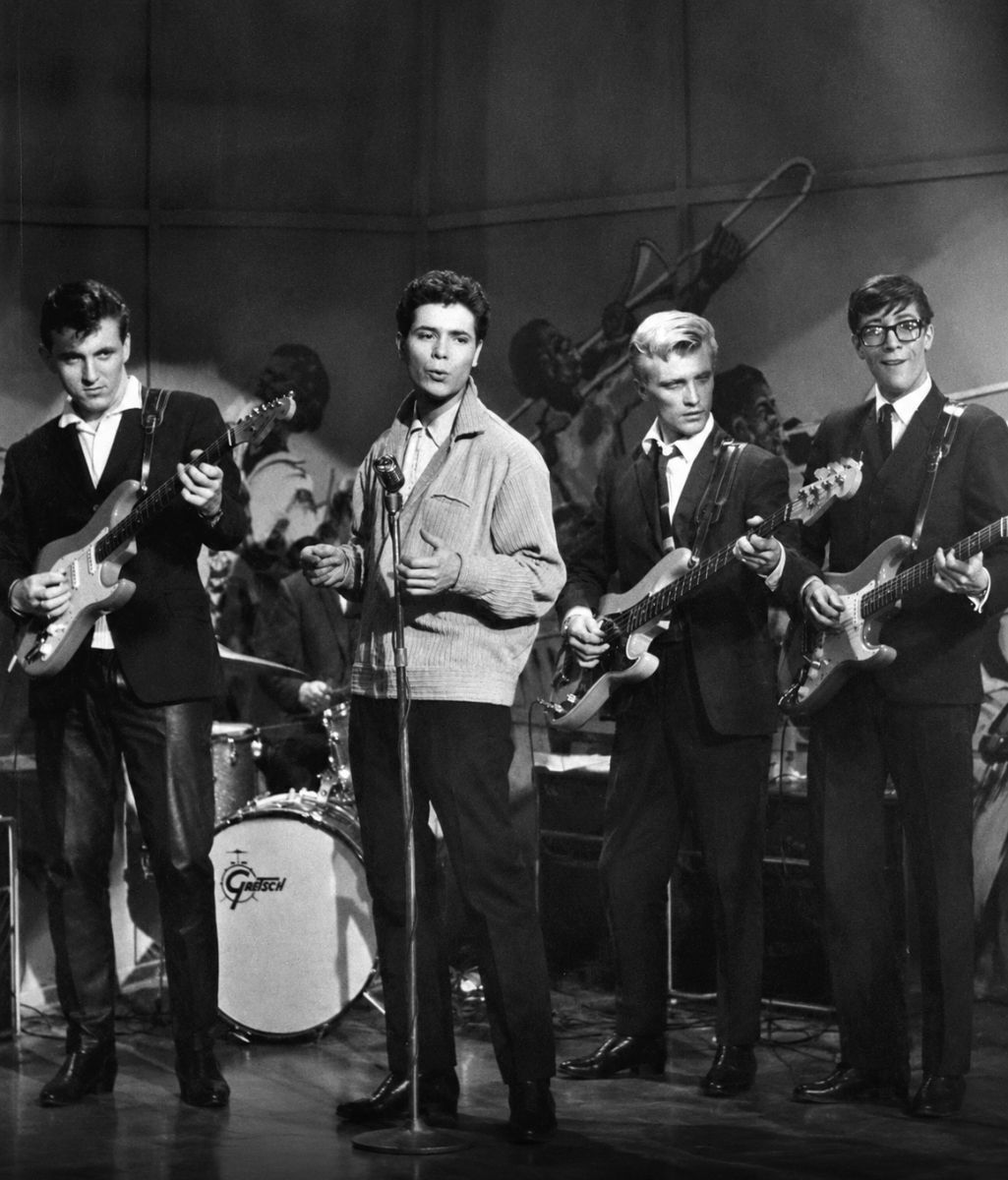
There are performances that entertain an audience for a few minutes, and then there are performances that seem to bring an entire generation back to life. When Cliff Richard and The Shadows come together, something extraordinary happens. The opening guitar notes, the familiar rhythm, and Cliff’s unmistakable voice awaken memories that have remained quietly tucked away for decades. Suddenly, the years seem to disappear. Listeners remember the songs they once played on the radio, the dances they shared, the friendships they formed, and the excitement of discovering music that would stay with them for the rest of their lives. It is more than nostalgia. It is a reminder of a time when a handful of musicians could change the sound of popular music.
The story began in the late 1950s, when a young Cliff Richard emerged as one of Britain’s most exciting new performers. At a time when rock and roll was transforming the musical landscape, his energetic voice and confident stage presence captured the attention of audiences hungry for something fresh. Alongside him stood The Shadows, whose distinctive instrumental sound became an essential part of his early success. Their combination created a musical identity that was instantly recognizable: Cliff’s expressive vocals supported by the band’s clean guitar melodies, steady rhythm, and remarkable musical precision. Together, they helped define the sound of British popular music at the beginning of a remarkable new era.
The Shadows were never simply a group standing quietly behind a famous singer. They developed an identity of their own, becoming one of Britain’s most influential instrumental bands. Hank Marvin’s distinctive lead guitar sound, Bruce Welch’s rhythm guitar, and the contributions of the band’s rhythm section helped create recordings that musicians would study and imitate for years. Their 1960 instrumental hit “Apache” became a landmark recording, demonstrating that a guitar melody could command the attention of an audience just as powerfully as a vocal performance. It was a sound that seemed both adventurous and beautifully simple, and it helped inspire countless young people to pick up a guitar.
Meanwhile, Cliff Richard was building an extraordinary collection of songs that would become part of the soundtrack of the 1960s. “Move It,” “Living Doll,” “Travellin’ Light,” “The Young Ones,” and “Summer Holiday” each captured a different side of his musical personality. Some were energetic rock-and-roll performances, while others carried a softer, more romantic atmosphere. His ability to move between styles helped him reach a remarkably broad audience. For many listeners, these songs were connected to their younger years, when a new record could transform an ordinary afternoon into something exciting and unforgettable.
Their live performances brought that musical partnership to life. Cliff’s charisma and the Shadows’ precise musicianship created a combination that worked beautifully onstage. The audience was treated not only to familiar songs but also to the excitement of watching talented musicians perform together. The Shadows could step forward with their instrumental numbers, allowing the guitars to take center stage, before returning to accompany Cliff on another beloved hit. There was a natural chemistry between them, built through years of recording, touring, and performing before enthusiastic crowds. It was a musical relationship that could not be manufactured overnight.
As the decades passed, the musical world changed dramatically. New artists arrived, new sounds dominated the charts, and the excitement of the early rock-and-roll years gradually became part of music history. Cliff Richard and The Shadows eventually followed separate professional paths, but their connection was never entirely forgotten. They reunited on several occasions, giving longtime fans opportunities to experience the familiar combination once again. Their 50th anniversary reunion tour in 2009 and 2010 became a particularly meaningful celebration, bringing their music to audiences across several countries. For many concertgoers, it was a chance to revisit a chapter of life they had never stopped remembering.
What makes those performances so special is not simply the opportunity to hear famous songs again. It is the way the music connects people to their own histories. A few notes from “The Young Ones” may bring back the excitement of a first cinema visit. The opening of “Apache” may remind someone of learning guitar in a childhood bedroom. “Living Doll” may carry memories of a radio playing in the kitchen while parents prepared dinner. Every listener has a different story, yet the melodies provide a common language. The songs remain the same, but the memories surrounding them grow richer with every passing year.
There is also something deeply admirable about the musicianship behind this enduring partnership. Cliff Richard’s voice became familiar across generations, while The Shadows established a guitar sound that influenced musicians far beyond Britain. Their work helped open doors for later British performers and contributed to the musical environment that would soon produce another generation of internationally successful artists. Their legacy is not limited to chart positions or record sales. It can be heard in the guitarists who discovered their instruments through Hank Marvin, in singers inspired by Cliff’s performances, and in audiences who still recognize their songs within the first few seconds.
Today, when an old performance of Cliff Richard and The Shadows appears on a screen, it can feel as though the years have briefly turned backward. The stage may look different, the fashions may belong to another era, and the audience may have changed, but the music still carries its original spirit. It reminds us that great performances do not lose their meaning simply because time moves forward. They become part of the memories people carry with them. Decades have passed, but the magic remains — in every guitar note, every familiar chorus, and every heart that still remembers the golden days when Cliff Richard and The Shadows made music history together.