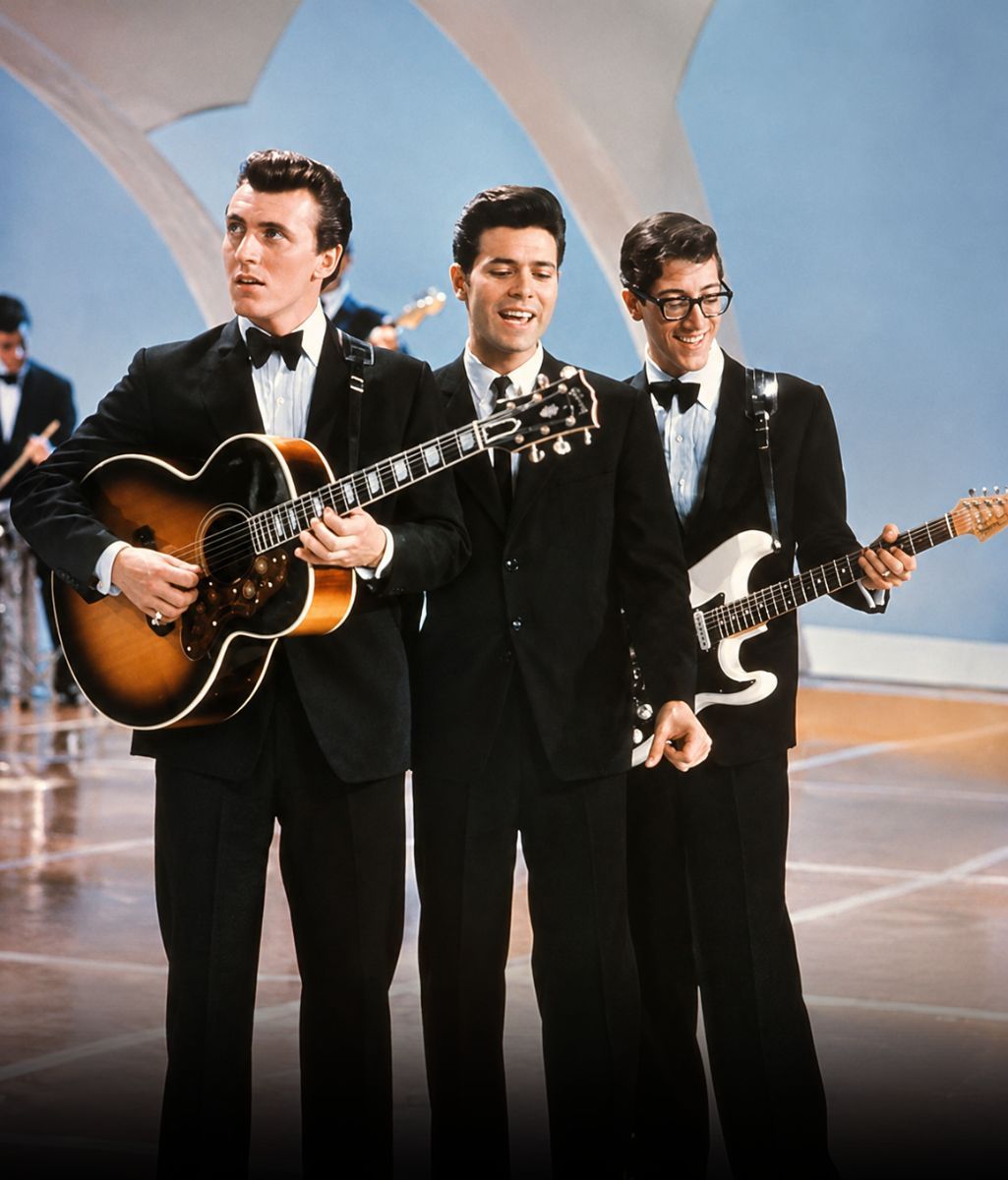
Long before British rock ’n’ roll became a treasured chapter in music history, Cliff Richard and The Shadows stood together beneath the lights, carrying the sound of a generation that was just beginning to discover its own voice. Their performances were more than television appearances or chart-making moments. They were glimpses of a musical partnership that helped shape the rhythm, style, and spirit of British popular music.
In the early 1960s, the world was changing quickly. Young people were finding new ways to express themselves, and music was becoming a powerful symbol of independence and possibility. At the center of that movement stood Cliff Richard, whose warm voice and unmistakable presence brought a fresh energy to the stage. Behind him, The Shadows supplied the distinctive instrumental sound that made their collaboration instantly recognizable.
The partnership was built on a remarkable balance. Cliff brought the voice, the charisma, and the emotional connection with the audience. Hank Marvin’s unmistakable guitar sound, Bruce Welch’s rhythm guitar, and the steady musical foundation of the group gave the songs their character. Together, they created a sound that felt exciting without losing its melody—a combination that would remain close to the hearts of listeners for decades.
By 1963, their place in British popular music was already significant. Yet the era was moving at a breathtaking pace. New artists were emerging, the sound of pop was evolving, and the British music scene was preparing for a transformation that would soon reach audiences around the world. Cliff Richard and The Shadows were not simply watching history unfold. They had helped prepare the stage for it. Their success had shown that British performers could build a lasting identity of their own.
One memorable television milestone came on August 10, 1963, when Thank Your Lucky Stars celebrated its 100th edition. Cliff Richard and The Shadows appeared on the program, performing “It’s All in the Game.” The show also featured artists including The Searchers, Alma Cogan, Brian Poole and The Tremeloes, and Billy J. Kramer. It was a celebration of the vibrant musical world that had grown around British pop. <Cite refs={[“turn893882search1″,”turn893882search6”]}/>
Looking back, the significance of such appearances is not measured only by the songs performed or the number of viewers who watched. It lies in the feeling they preserved: the excitement of a young musical era, the confidence of performers discovering their place, and the shared anticipation of audiences who knew they were witnessing something special. A television stage could become a time capsule, holding a moment that would otherwise have slipped quietly into the past.
The Shadows’ contribution was especially important. Their instrumental recordings had already established them as a major force in British music, while their work alongside Cliff helped define the sound of his early career. Their clean, melodic guitar style influenced countless musicians, and their partnership demonstrated how a vocalist and a band could become something greater than the sum of their individual talents. <Cite refs={[“turn893882search5″,”turn893882search4”]}/>
Of course, the story did not remain frozen in 1963. The arrival of new groups and changing musical tastes brought fresh competition. The charts grew more crowded, and the sound of popular music continued to evolve. But Cliff Richard and The Shadows adapted, continued to record and perform, and remained connected through a musical history that stretched far beyond the first wave of their success. Their legacy was not built on a single moment; it was built through years of songs, performances, and a partnership remembered with affection by generations of fans. <Cite refs={[“turn893882search4”]}/>
There is something deeply moving about seeing them together in those early years. The stage may have been modest by today’s standards, and the recording may carry the gentle grain of another time, but the spirit remains unmistakable. They were young performers standing at the threshold of a lasting legacy—unaware, perhaps, of how many memories their music would one day awaken.
Some moments become unforgettable not because the world stopped, but because time never truly took them away. Cliff Richard and The Shadows gave audiences more than a glimpse of 1963. They left behind a sound that still carries the warmth of that era, reminding us that the music we cherish is often born in the simplest of places: a stage, a melody, and a few remarkable people standing together.