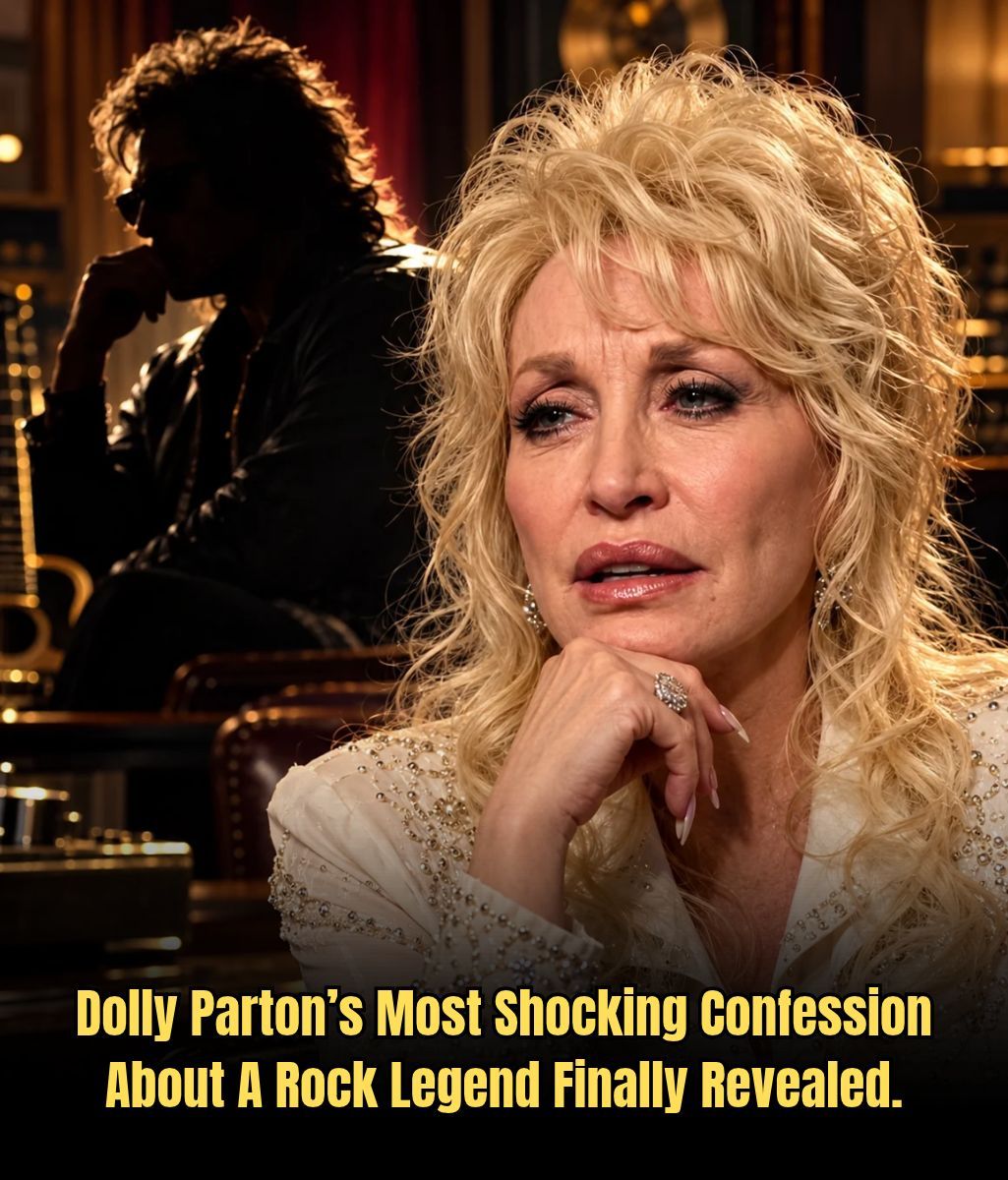
For decades, Dolly Parton has been one of the most recognizable and beloved figures in American music. Her sparkling personality, unmistakable voice, and extraordinary gift for storytelling have made her a legend far beyond the boundaries of country music. Yet even the brightest public figures have opinions, complicated relationships, and private experiences that the world may never fully understand. That is why a headline suggesting Dolly once revealed the rock legend she disliked most would immediately capture the imagination of fans. The possibility sounds startling—but the story deserves a closer look before anyone accepts it as fact.
Dolly built her career in an industry where strong personalities often collided, musical traditions overlapped, and artists from different backgrounds competed for the attention of the same audiences. Country music and rock may have developed distinct identities, but their histories have always been connected. Both genres tell stories about heartbreak, freedom, loneliness, rebellion, and the stubborn hope that carries people through difficult times. Dolly understood those connections instinctively. Her songwriting could be tender and reflective one moment, bold and mischievous the next, allowing her to reach listeners who might never have expected to find themselves moved by a country song.
Over the years, Dolly has crossed musical boundaries with remarkable ease. She has worked with artists whose sounds, personalities, and audiences differ greatly from her own. Her collaboration with Kenny Rogers on “Islands in the Stream” became a timeless favorite, while her later work with rock and pop performers demonstrated that a great song can bring seemingly different musical worlds together. These collaborations were not simply career experiments. They reflected an artist who understood that music is most powerful when people are willing to listen beyond familiar labels.
That openness makes the idea of a bitter feud with a famous rock musician particularly intriguing. Fans naturally wonder whether there might have been a clash of personalities, an uncomfortable encounter backstage, or a remark that remained buried for years. The history of popular music certainly contains disagreements between artists, some playful and others deeply personal. But curiosity alone cannot establish that a particular confrontation happened. Without a credible interview, recording, or firsthand account, naming a rock legend as Dolly’s most disliked musician would be speculation, not a verified revelation.
It is also important to understand Dolly’s public personality. Her humor has often been sharp, her wit quick, and her responses to difficult situations memorable. She has demonstrated an ability to laugh at herself while remaining firm about her values and ambitions. That combination has helped her navigate an entertainment business that has not always been kind to women who refused to fit conventional expectations. She learned to turn criticism into determination, setbacks into songs, and painful experiences into stories that made other people feel less alone.
Perhaps that is one reason rumors about her private opinions attract so much attention. People who have listened to Dolly for half a century may feel that they know her—not merely as a performer, but as a familiar presence in their lives. Her songs have accompanied weddings, family gatherings, long journeys, difficult farewells, and quiet evenings when a few honest words seemed more comforting than any advice. When an artist becomes part of a listener’s personal history, even a suggestion of an unexpected conflict can feel like the opening of a much larger story.
Yet Dolly’s legacy cannot be reduced to the people she may or may not have disliked. It rests on the songs she wrote, the performances she gave, and the extraordinary determination that carried her from her childhood in the Smoky Mountains to international recognition. “Jolene,” “Coat of Many Colors,” and “I Will Always Love You” reveal different sides of her artistry: the ache of insecurity, the dignity of humble beginnings, and the courage required to let someone go. These songs have endured because their emotions are recognizable across generations, regardless of a listener’s musical preferences.
The connection between country and rock offers another reason to approach such stories carefully. The two genres have influenced each other for generations, from early rock-and-roll artists who borrowed from country traditions to later performers who embraced country songwriting and instrumentation. Many musicians who appeared to occupy opposite sides of the musical landscape shared the same influences and admired one another’s craft. A disagreement, if one occurred, would not necessarily erase that artistic respect. Nor would a sharp joke or a moment of frustration prove lasting hostility.
For longtime fans, the most interesting question may not be which rock legend Dolly supposedly detested. It may be why audiences remain so fascinated by the hidden corners of a legendary performer’s life. We want to understand the person behind the rhinestones, the laughter, and the familiar songs. We want to know what made her angry, what disappointed her, and which experiences taught her to become the woman the world came to admire. Those questions are understandable, but the answers should come from reliable accounts rather than headlines designed only to provoke surprise.
Ultimately, Dolly Parton’s extraordinary career reminds us that a legend can be both deeply human and larger than life. She has spent decades turning personal observations into songs that speak to millions, while keeping parts of her private world beyond public reach. Until reliable evidence establishes that she named a particular rock musician as someone she detested, the claim should remain unconfirmed. What is certain is that Dolly’s influence has crossed musical boundaries, outlasted changing fashions, and touched generations of listeners. Long after the rumors fade, her voice—and the songs she gave the world—will remain the more meaningful part of her story.