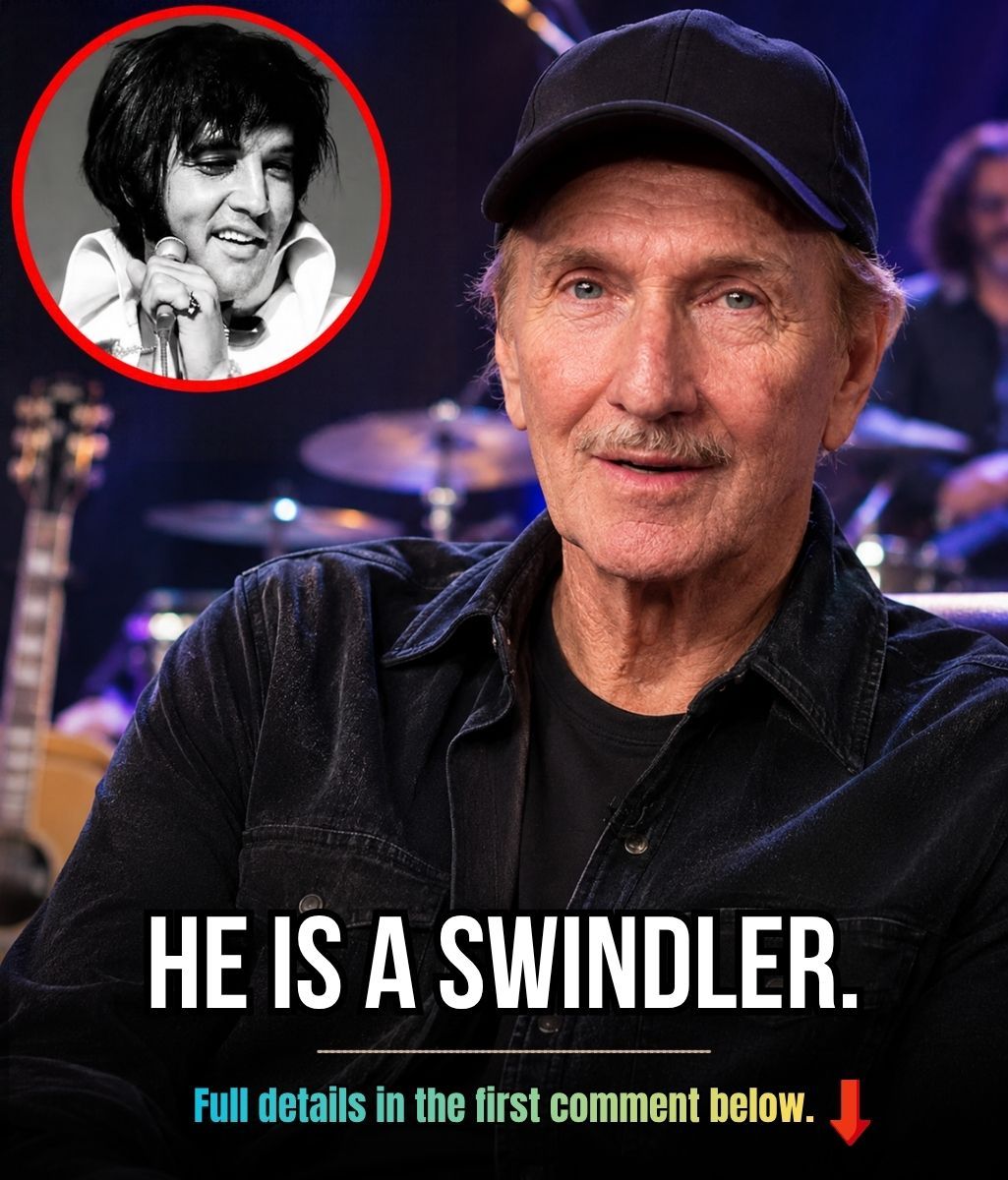
Some friendships are built through years of ordinary moments, while others are forged in the extraordinary world of music, fame, and life on the road. For James Burton, one of the most important relationships of his remarkable career was the friendship he shared with Elvis Presley. He was not simply another musician hired to accompany a superstar. He was the guitarist whose unmistakable playing helped shape the sound of Elvis’s later recordings and legendary live performances. Behind the bright stage lights, roaring audiences, and unforgettable concerts was a professional relationship that developed into a lasting personal bond.
James Burton’s story began long before he became known as the guitarist who stood beside the King of Rock and Roll. Born in Dubberly, Louisiana, in 1939, he showed an extraordinary interest in music at an early age. He taught himself guitar and developed a distinctive style that combined precision, creativity, and an instinctive understanding of rhythm. By his teenage years, he was already working professionally, demonstrating a musical ability that would eventually attract the attention of some of the biggest names in the entertainment industry.
His early career included work with influential performers such as Ricky Nelson, whose television appearances and recordings helped introduce Burton’s guitar playing to a national audience. His contribution to songs such as Hello Mary Lou demonstrated his ability to create memorable guitar parts without overwhelming the melody. Other musicians quickly recognised that Burton possessed something special. He could make a song sound fuller, more exciting, and more distinctive with just a few carefully chosen notes.
But nothing could quite prepare him for the phone call that would change the direction of his career.
In 1969, Elvis contacted Burton personally. The two men spoke on the telephone for approximately three hours. Elvis explained that he wanted to return to performing live after spending years concentrating on motion pictures. He was preparing for a major Las Vegas engagement and needed a guitarist capable of helping him build a powerful new musical group. He had followed Burton’s work with Ricky Nelson and admired his distinctive guitar style. The invitation was extraordinary, but Elvis was not simply looking for someone to play a few familiar chords. He wanted musicians who could understand his musical instincts and help create something exciting on stage. Burton accepted the offer, and a remarkable chapter in music history began.
Burton then helped assemble the musicians who would become known as the TCB Band, with the name standing for Taking Care of Business. The group included pianist Glen D. Hardin, bassist Jerry Scheff, drummer Ronnie Tutt, and rhythm guitarist John Wilkinson, alongside other musicians and vocalists who contributed to Elvis’s performances. Together, they helped create the powerful sound associated with Elvis’s Las Vegas years and his extensive touring schedule. Their first major engagement at the International Hotel in August 1969 marked the beginning of a new era for the King. After years away from regular live performances, Elvis was once again standing before enormous audiences, delivering the kind of energetic shows that had made him famous.
Burton later described the opening night as an experience he would never forget. Despite his enormous reputation, Elvis was reportedly nervous before walking onto the stage. He had spent years making films and wondered whether audiences would still respond to him in the same way. Just before the performance, Elvis approached Burton backstage and admitted how anxious he felt. Burton reassured him that all he needed to do was walk out there. What happened next was extraordinary. When Elvis finally appeared, the audience erupted. The sound of the cheering crowd was so overwhelming that Burton recalled barely being able to hear the music during parts of the opening performance. It was a powerful reminder that the connection between Elvis and his audience had never disappeared.
What developed between Elvis and Burton went beyond the ordinary relationship between a singer and his guitarist. In a 2019 interview with The Daily Beast, Burton explained that when he joined Elvis, he felt as though he had become part of the family. Elvis wanted his musicians to feel comfortable and appreciated. He encouraged Burton to express himself musically, and the two developed an extraordinary understanding during performances. Whenever Burton played a particularly exciting guitar passage, Elvis would turn around and respond enthusiastically. Burton remembered that communication as something difficult to describe. They were not simply playing music together; they were responding to one another in real time.
The Daily Beast+1
One particularly touching aspect of Burton’s recollections concerns the way Elvis treated the people around him. Burton remembered a man who wanted his musicians to be happy and who paid attention when something was not right. He also recalled Elvis as someone who genuinely loved music and wanted performances to sound exactly the way he imagined them. These memories offer a different perspective from the enormous public image of the King. The audiences saw the costumes, the scarves, the dramatic entrances, and the powerful voice. Burton saw the musician standing just a few feet away, listening carefully, responding to every note, and taking an active interest in the people sharing the stage with him.
But their years together also included difficult moments. As the 1970s progressed, Elvis’s touring schedule remained demanding. The band travelled extensively, performing night after night before audiences who continued to adore him. Burton witnessed the extraordinary commitment required to maintain that schedule, even as the final years of Elvis’s life became increasingly difficult. Yet he has generally spoken about those experiences with affection rather than attempting to turn them into sensational stories. He has never needed to invent dramatic revelations to explain what Elvis meant to him.
That morning, Burton and the other musicians were travelling by chartered aircraft from Las Vegas towards Portland, Maine, where another concert was scheduled. Suddenly, they received instructions to turn back. At first, nobody understood what had happened. The aircraft needed to stop in Pueblo, Colorado, to refuel. During that stop, Burton’s colleague Marty Harrell made a telephone call. When he returned, Burton noticed that something was terribly wrong.
In a 1983 interview with Guitar World, Burton recalled that Harrell approached him with tears in his eyes and delivered the devastating news: Elvis had died that morning.
Burton later described the return journey as one of the longest flights he had ever experienced. Everyone aboard was overwhelmed by the news. They had been preparing to perform alongside Elvis once again, and suddenly the future they had taken for granted had disappeared. The guitarist who had stood beside the King for eight years was now facing the reality that their musical partnership would never continue.
The years since have brought Burton numerous honours, including his induction into the Rock and Roll Hall of Fame in 2001. His contribution to music extends far beyond Elvis, with an extraordinary recording career involving artists such as Ricky Nelson, Merle Haggard, Emmylou Harris, and many others. Yet his association with the King remains one of the defining chapters of his professional life.
What makes Burton’s recollections particularly meaningful is that he has continued speaking about Elvis throughout the decades. He discussed their relationship in interviews as early as 1970, and he has shared detailed memories in numerous later conversations. Therefore, the suggestion that he remained completely silent for 48 years is not historically accurate. What is genuine, however, is the affection and respect that continue to come through whenever he remembers his former bandleader.
Perhaps the most touching words from Burton came when he reflected on the kind of person Elvis had been to him. He remembered someone who wanted his musicians to feel valued, someone who appreciated good music, and someone who made an effort to ensure that the people around him were happy.
Elvis Presley gave James Burton an extraordinary opportunity, but he also gave him eight years of memories that no recording could ever fully preserve.
Today, when audiences hear the opening notes of an Elvis concert recording and recognise Burton’s unmistakable guitar, they are hearing more than the work of a talented musician. They are hearing the sound of a remarkable partnership between two men who helped create one of the most memorable musical eras of the twentieth century.
And perhaps that is the greatest tribute James Burton could ever offer his old friend: not a sensational confession, not a manufactured secret, but a lifetime of remembering the man behind the music.