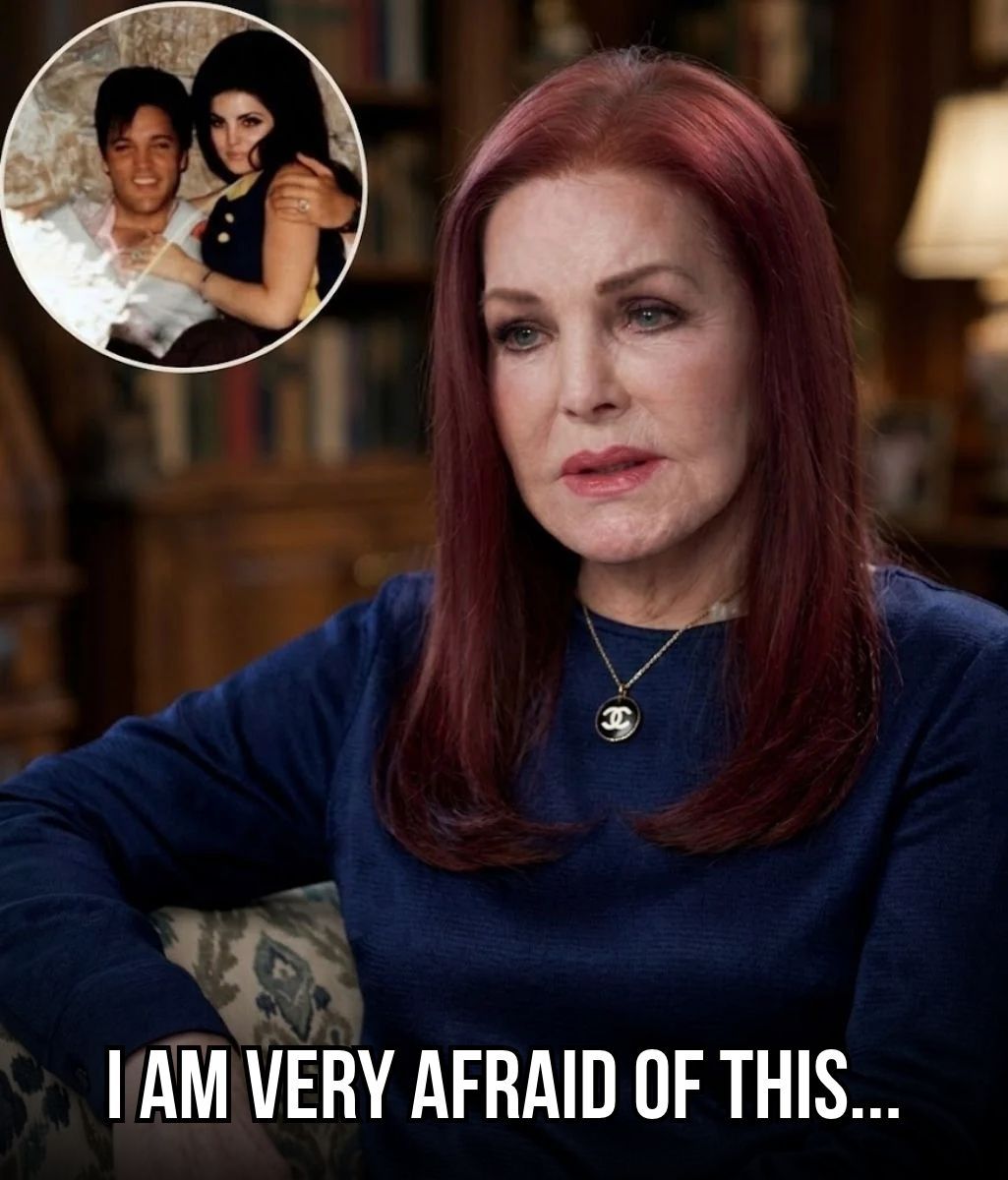
For generations, Elvis Presley has remained one of the most fascinating figures in the history of popular music. His unmistakable voice, magnetic stage presence, and extraordinary influence transformed the entertainment world forever. Millions of admirers remember the excitement of his performances, the unforgettable recordings, and the remarkable personality that earned him the title of the King of Rock and Roll. Yet behind the music, the fame, and the carefully photographed public appearances was a much more complicated personal world. Few people witnessed that world as closely as Priscilla Presley, the woman who shared an important chapter of Elvis’s life. After all these years, her reflections continue to offer a deeply personal perspective on the man behind the legend.
When Priscilla first met Elvis in 1959, he was already an international sensation. He was serving in the United States Army and stationed in West Germany, where their paths crossed through circumstances that would eventually change both their lives. Priscilla was still very young, while Elvis was already an established entertainer whose name was recognised around the world. Their early connection unfolded far from the bright lights of Hollywood and the excitement of American concert halls. Nevertheless, the attention surrounding Elvis meant that even their private experiences would eventually become subjects of enormous public interest.
For Priscilla, getting to know Elvis meant discovering a side of him that audiences rarely saw. Onstage, he was confident, energetic, and capable of commanding the attention of thousands. Away from the cameras, however, he could be thoughtful, humorous, reflective, and deeply interested in the people and experiences that mattered to him. His love of music was not simply a profession. It was central to his identity, influencing his daily routines, friendships, ambitions, and the way he understood the world around him.
Their relationship eventually led Priscilla to move to Memphis, Tennessee, where she became part of the extraordinary world surrounding Graceland. The mansion was more than a famous address. It was Elvis’s home, a place where family, friends, musicians, and trusted companions frequently gathered. For admirers, Graceland represented the glamour and mystery of the King of Rock and Roll. For those who lived within its walls, it was also a home filled with ordinary routines, conversations, celebrations, and personal challenges.
In May 1967, Elvis and Priscilla married in Las Vegas. Their wedding attracted enormous attention, as the marriage of one of the world’s most celebrated entertainers became an international story. A year later, in February 1968, they welcomed their daughter, Lisa Marie Presley. Becoming parents introduced another important dimension to their lives. Despite the extraordinary circumstances surrounding Elvis’s career, they now shared the responsibility and joy of raising a child. For Priscilla, motherhood became one of the defining experiences of her life, and Lisa Marie would remain an important part of her story long after the marriage ended.
But life alongside a global superstar was not always as glamorous as the public might have imagined. Elvis’s professional responsibilities demanded enormous amounts of time and energy. Recording sessions, film productions, concert commitments, and the constant attention of admirers created a lifestyle that was difficult to separate from everyday family life. The public often saw the finished performances, but rarely understood the complicated circumstances surrounding them. Priscilla’s experiences offered a reminder that behind every legendary performer is a human being whose private life cannot always keep pace with public expectations.
One of the most revealing aspects of Priscilla’s reflections over the years has been her recognition that Elvis was a complex individual. He could be generous and affectionate, but he also carried the pressures associated with extraordinary fame. He had personal ambitions, strong opinions, and a demanding professional environment around him. Like many people whose lives unfold under constant public attention, he experienced challenges that could not simply be solved by wealth or popularity. Understanding that complexity is essential to appreciating his story without turning his life into an unrealistic fairy tale.
Their marriage eventually ended in divorce in 1973. Yet the end of their relationship did not erase the importance of the years they had shared. Priscilla and Elvis maintained a connection through their daughter and continued to have a place in each other’s lives. Their story reminds us that relationships can change without making every shared memory meaningless. The passage of time often gives people a different perspective on experiences that once seemed difficult to understand.
Then came August 16, 1977. Elvis Presley died at Graceland at the age of 42, shocking admirers throughout the world. His passing brought an end to a remarkable life and left millions of fans struggling to accept that the voice they had grown up hearing would never again perform on a new stage. For Priscilla, however, the loss was deeply personal. The world had lost a musical icon, but she had lost someone with whom she had shared an important part of her life and the father of her daughter.
In the decades that followed, Priscilla became one of the most important guardians of Elvis’s public legacy. Through her involvement with Graceland and her efforts to preserve his memory, she helped ensure that future generations could understand the significance of his life and career. Her work also allowed admirers to discover more about the personal history behind the music. She has spoken publicly about their relationship, the challenges they experienced, and the memories that remained meaningful to her. Those reflections have helped audiences understand that the story of Elvis Presley cannot be told through concert recordings and photographs alone.
Perhaps the most moving lesson from Priscilla’s experiences is that the man behind the legend was never simply the King of Rock and Roll. He was also a son, a father, a husband, a friend, and an individual navigating the extraordinary pressures of a life unlike almost anyone else’s. His fame made him appear larger than life, but his personal experiences were shaped by many of the same emotions that ordinary people understand: hope, disappointment, affection, uncertainty, and the desire to be understood.
Today, when fans revisit Elvis’s performances, they often see the extraordinary entertainer who changed music history. But Priscilla’s memories offer another way of looking at him. They invite people to consider the quieter moments behind the famous photographs and the personal experiences that existed beyond the stage. The greatest legends are not always the easiest people to understand, and perhaps that is precisely what makes their stories worth remembering.
After all these years, Elvis Presley remains a voice that refuses to disappear from popular culture. His recordings continue to bring generations together, while Graceland remains a place where admirers can connect with his history. And through Priscilla’s reflections, the world is reminded that behind the music, the fame, and the unforgettable name was a real person whose life was every bit as human as the people who continue to love his songs.