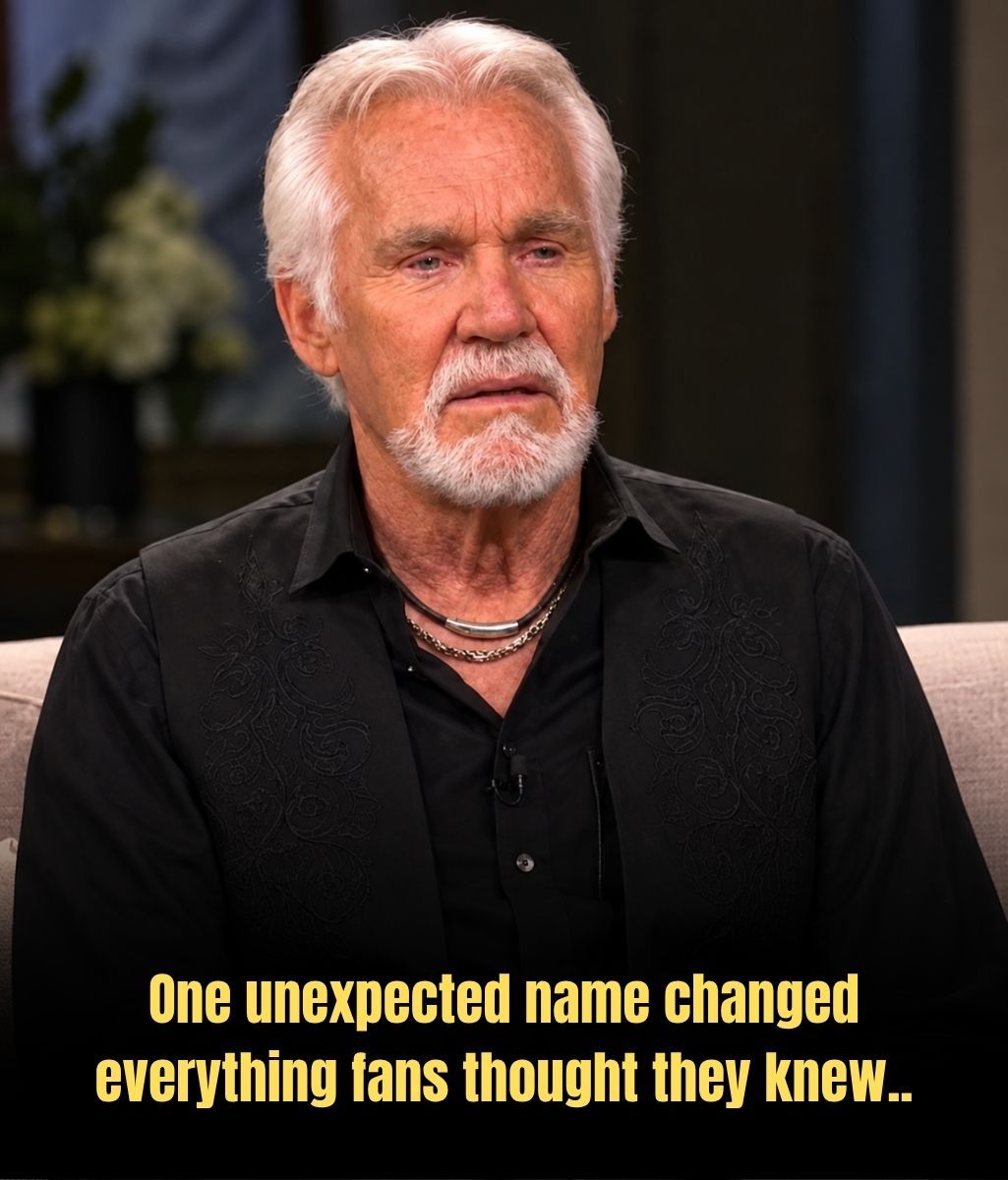
Stories sometimes claim that Kenny Rogers revealed five people he resented most before his death, but there is no reliable interview, memoir excerpt, or documented statement supporting such a list. Rogers was remarkably candid about his mistakes, disappointments, marriages, family relationships, and regrets, but his later reflections were generally about understanding and forgiveness rather than naming enemies. His 2012 memoir, Luck or Something Like It, reveals something far more personal: as Rogers grew older, many of the people he thought about most were connected not to anger, but to things he wished he had understood sooner. Diane Rehm
One of the deepest examples involved his father, Floyd Rogers. Kenny grew up watching his father struggle with alcohol, and as a child he could see the consequences without understanding everything behind them. Only much later did Rogers begin considering his father’s life from an adult perspective—the difficulty of providing for a large family, unemployment and the pressures surrounding him. Looking back, Kenny said he deeply regretted that he had never really known his father “as a man.” The pain was not resentment toward his father. It was the realization that understanding had arrived after there was no longer time to have the conversations he wished they could have shared. Diane Rehm
Then there were the women he married. Rogers was married five times, and it would have been easy for an autobiography to turn those relationships into stories about blame. Instead, he made an unusually revealing admission: “I loved every woman I married.” Writing his memoir forced him to confront something uncomfortable about himself. He realized there could be a remarkably thin line between being driven and being selfish—and acknowledged that during parts of his life, his determination to succeed had crossed that line. Diane Rehm
The cost was measured in absence. Rogers explained that his career required him to spend enormous stretches of time away from home. Months on the road could gradually create distance even where love remained. As a younger man, he had often approached the end of a marriage practically: if two people were no longer getting along, they separated and life continued. Age changed the way he understood what those decisions could mean to children and families. He later said he wished he had handled some situations with greater sensitivity. Diane Rehm
Perhaps that is why his later relationship with Wanda Miller Rogers became so important. Rogers described Wanda as his soulmate and spoke admiringly of her as a mother. By then, he had learned lessons that fame could not teach him when he was younger. In an AARP interview, Rogers acknowledged that earlier in life he had wanted success so badly that he sacrificed family for it. Growing older changed his priorities. Instead of constantly asking what came next professionally, he increasingly recognized what he already had and wanted to protect it. AARP
That change became especially emotional when Rogers spoke about his twin sons, Justin and Jordan. During his 2012 interview with Diane Rehm, Rogers contemplated the reality of becoming a father again relatively late in life. His voice broke as he admitted that he worried he might not be there during the years when his sons would most need his guidance. He had even signed copies of his memoir for them, hoping the book might someday help them understand the life their father had lived before they were old enough to know that part of him. Diane Rehm
There was another regret Rogers discussed publicly, although it was far less profound. He acknowledged regretting the result of cosmetic surgery around his eyes. Yet even there, his attitude was characteristically pragmatic. He could not know what he would have looked like had he made a different choice, so eventually he accepted it and moved forward. That attitude—acknowledging a mistake without allowing bitterness to become the entire story—appears repeatedly in his later reflections. CBS News
Even relationships that could easily have become sources of resentment were often described differently by Rogers. Discussing the complicated circumstances surrounding his eldest daughter and the man who became her father in everyday life, Rogers expressed appreciation rather than hostility. He said he loved the man for stepping into that role during a difficult period. It is another reason the supposed story about Rogers identifying “five people he resented most” does not fit the documented record particularly well. Fox News
By the later years of his life, the man who had spent decades singing stories such as “The Gambler,” “Lady,” “Lucille,” “Through the Years,” and “You Decorated My Life” seemed increasingly interested in something fame could not restore: time. He could recognize where ambition had helped him escape poverty and build an extraordinary career while simultaneously recognizing where that same ambition had taken him away from people he loved. Those two truths did not cancel each other out.
Kenny Rogers died on March 20, 2020, at the age of 81. What he left behind was not a secret list of five enemies. His own words reveal something considerably more human: a man looking backward and realizing that some of life’s greatest regrets are not about the people we hated.
They are about the people we loved but did not understand soon enough, the relationships we wished we had handled differently, and the ordinary years we assumed would always be waiting for us.
And perhaps the most surprising name on Kenny Rogers’ list of people he had learned to question was not an enemy at all.