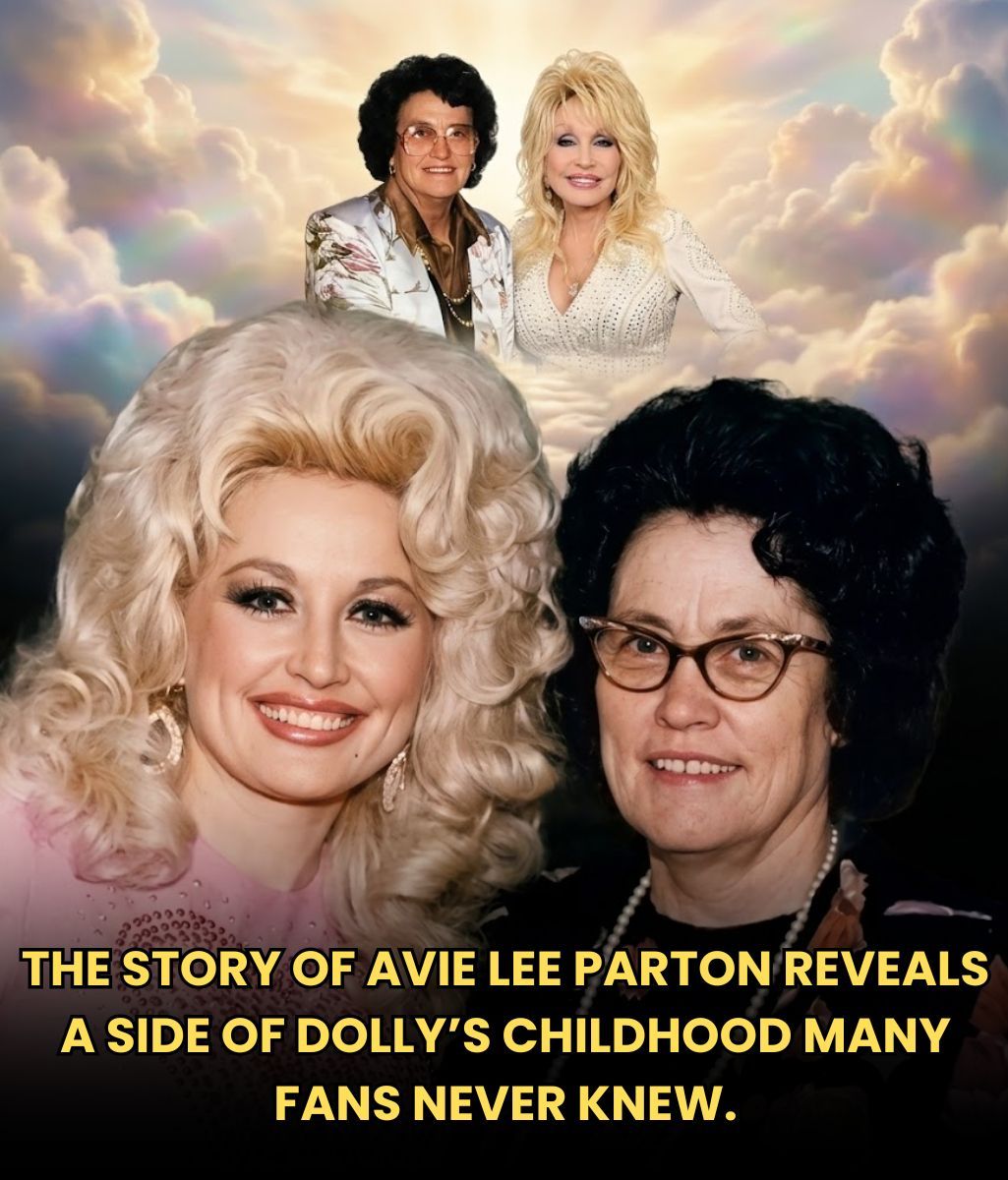
Long before Dolly Parton became one of the most recognizable voices in American music, there was another remarkable woman whose story unfolded far from television cameras, recording studios, and glittering stages. Her name was Avie Lee Owens Parton, Dolly’s mother, and her life was rooted in the mountains of East Tennessee, where raising a large family demanded extraordinary patience, resourcefulness, and strength. Dolly would eventually become famous for turning memories of childhood into unforgettable songs, but behind many of those memories stood a mother doing everything she could to hold her household together. Before there was a country music legend, there was a mother quietly shaping the heart of the little girl who would one day become one.
Dolly was born in 1946 into a family that would eventually include twelve children, and money was often scarce. Her father, Robert Lee Parton, worked hard to provide, while Avie Lee carried much of the daily responsibility of caring for the children and maintaining the household. Their circumstances were modest, and the challenges were real, but Dolly’s later recollections rarely reduced her childhood to hardship alone. Instead, she often remembered the music, humor, faith, family stories, and affection that surrounded her. That distinction matters. The Parton family may not have possessed many material comforts, but their home contained something that would become priceless to Dolly: stories, melodies, imagination, and a powerful sense of belonging.
Avie Lee’s influence reached especially deeply through music and storytelling. She came from a musical family and filled the Parton household with old songs, traditional ballads, hymns, and stories passed from one generation to another. For young Dolly, those sounds were more than entertainment. They became an education. Before she understood songwriting as a profession, she was learning that a simple melody could carry a family memory, that a few carefully chosen words could make people laugh or cry, and that ordinary lives could contain extraordinary stories. Some of Dolly’s earliest lessons in becoming a storyteller were learned not in Nashville, but at home, listening to her mother.
Perhaps no song captures that connection more powerfully than “Coat of Many Colors.” Dolly famously wrote about a coat her mother made for her from pieces of fabric, lovingly stitching them together while telling Dolly the biblical story of Joseph and his coat of many colors. When Dolly wore the coat to school, other children mocked her because it had been made from scraps. Yet the song does not ultimately dwell on embarrassment. Its emotional center is the love Dolly associated with what her mother had created. What appeared inexpensive to someone else could be priceless to the person who understood the love behind it. That lesson became one of the most enduring themes in Dolly’s work: dignity does not come from wealth, and value cannot always be measured in dollars.
There was also another side to Avie Lee’s life that deserves to be remembered. Raising twelve children in a rural household was an enormous responsibility, especially during an era when many domestic burdens fell heavily upon mothers. There were meals to prepare, clothes to mend, illnesses to tend to, arguments to settle, and frightened children to comfort. There was little glamour in such work and often little public recognition. Yet those repetitive, exhausting responsibilities helped create the environment from which Dolly emerged. Avie Lee’s strength was not the kind that appeared beneath spotlights. It was the strength required to keep going when nobody was watching. For many older readers, particularly those who remember parents and grandparents from similarly modest backgrounds, that kind of quiet perseverance may feel deeply familiar.
As Dolly grew older and began reaching beyond the mountains toward a career in music, the lessons of home traveled with her. Nashville would eventually give her opportunities, collaborators, recording contracts, and a worldwide audience, but it could not manufacture the qualities that had already been planted during childhood. Her humor, storytelling instincts, attachment to family, and ability to speak about hardship without losing warmth all reflected something deeper than professional training. The mountains gave Dolly her memories, but her family gave those memories their meaning. Avie Lee’s influence can be heard whenever Dolly transforms an ordinary detail—a homemade coat, a childhood room, a family story, a prayer, or a difficult season—into something universal.
That may be why Dolly’s story continues to resonate with generations who grew up far from Tennessee. Beneath the rhinestones and enormous success is a remarkably familiar American story: a child raised by hardworking parents who had limited resources but enormous hopes for their family. Millions of people know some version of that story. They remember mothers who stretched meals, repaired clothing instead of replacing it, saved what others might have thrown away, and somehow found ways to make children feel secure during uncertain times. Avie Lee’s story belongs specifically to the Parton family, but the values associated with it—resourcefulness, devotion, faith, humor, and endurance—reach far beyond one household.
Dolly Parton would eventually travel farther than anyone in that small Tennessee home could have imagined. She became a songwriter, performer, actress, businesswoman, philanthropist, and an enduring figure in American culture. Yet some of the most important threads running through her extraordinary career lead back to Avie Lee Parton and the childhood world she helped create. Long before audiences applauded Dolly, her mother was teaching her how stories could carry love across generations. Long before expensive costumes became part of Dolly’s unmistakable image, there was a handmade coat stitched together from scraps. And long before the world knew Dolly Parton as a legend, a determined mother in the Tennessee mountains was quietly giving her daughter something fame could never provide: the memories, values, music, and emotional foundation that would remain with her for the rest of her life.